
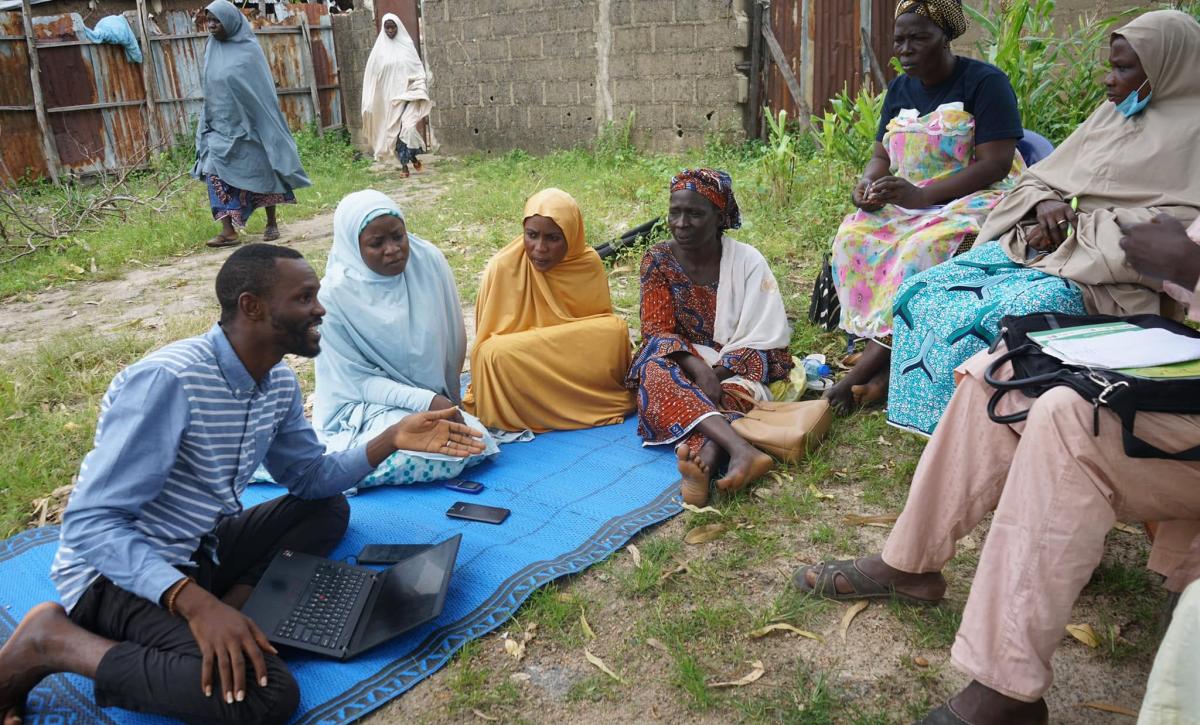
"One of the biggest inclusivity mistakes we make in development is assuming that language inclusion is completed once we have done translation."
For more than a decade, I have worked in the fragile and conflict-affected areas of northern Nigeria, supporting local organisations to strengthen their monitoring, evaluation, research and learning (MERL) systems. Much of this work has involved rural farming communities where food insecurity remains a major development challenge. In these settings, I often used “Ngausa”, an informal blend of Hausa and English to communicate with partners and community members.
The Limits of Translation
I delivered training sessions, facilitated focus group discussions, and moderated validation workshops in Hausa. Community members expressed themselves more openly, local facilitators became more confident, and discussions became richer when people could communicate in the language they used every day. These experiences led me to believe that translation was the key to more inclusive evaluation. I later discovered that it was only part of the answer.
Across organizations implementing food security, agriculture, and livelihood programmes, I repeatedly met field staff who understood monitoring concepts perfectly when explained verbally but struggled to use training materials written in English. I assumed the solution was simple: translate the materials. In early 2026, I completed a project I had wanted to undertake for years. With support from my colleague Abdullahi Dada, I developed a MERL Basic Training Manual and translated it into Hausa. I initially believed that we had removed the main barrier to access. However, conversations with community facilitators later revealed that few intended users were reading the Hausa version.
The Inclusion Gap I Had Missed
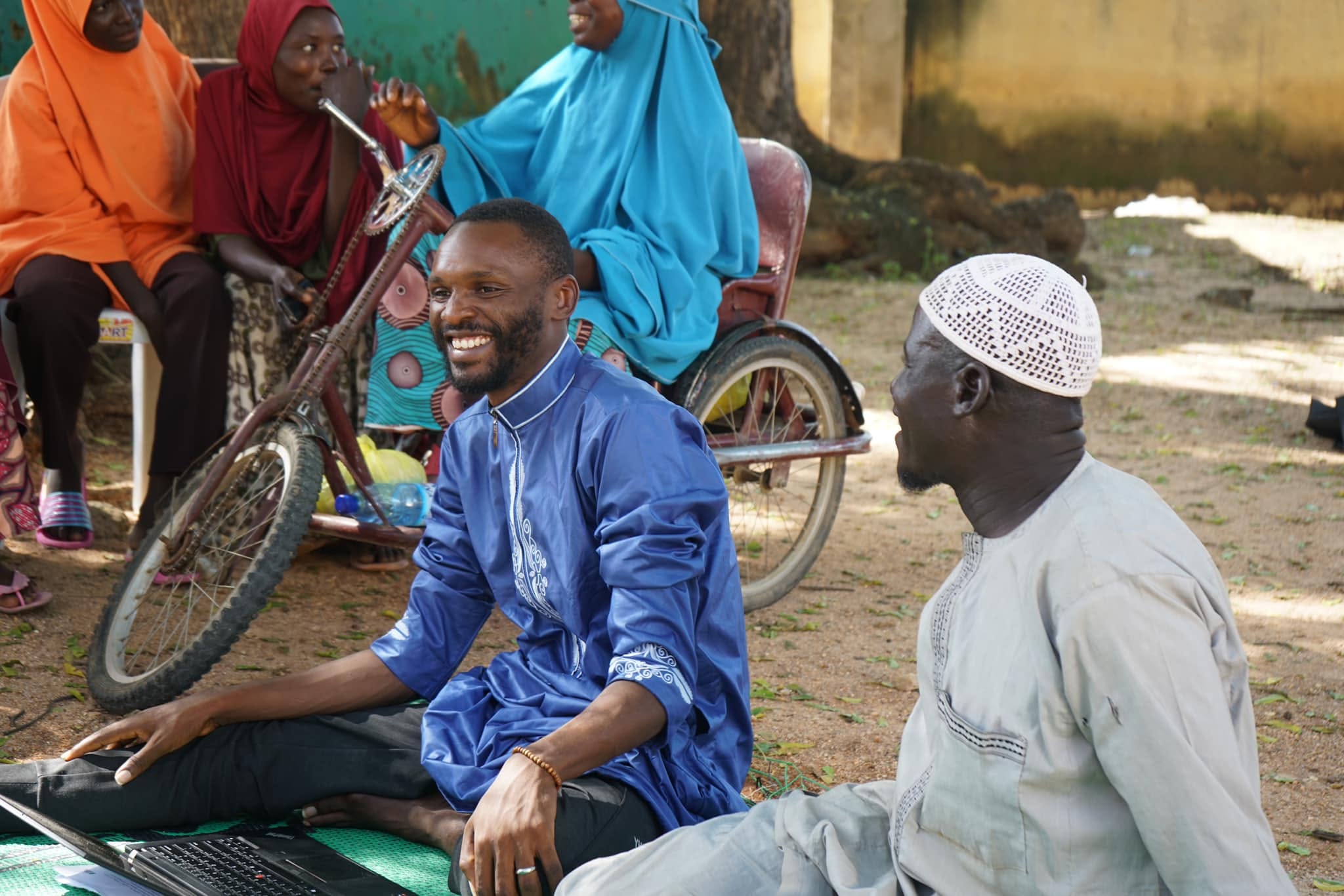
©Olawuyi Oyewusi
At first, I thought the manual might simply be too technical or long. But after speaking with community facilitators, I began to understand what I had missed: many people who could not read English also were not comfortable reading Hausa either, and some could not read it at all.
They spoke Hausa every day and expressed themselves with ease, but they had never received education in reading or writing the language. Development programs often divide communities into "English-speaking" and "local-language speaking." In reality, the distinction is far more nuanced. Speaking a language fluently does not necessarily mean being able to read or write it.
Looking back, I now realise signs had been there all along. Back in 2019, our team produced thousands of information, education and communication (IEC) flyers and banners in Hausa and distributed them across project communities, convinced we were making information more accessible. It never occurred to me that many people might not be able to read them. . We had translated the words, but not necessarily the access to it!
Language Access Is Not the Same as Literacy
This experience fundamentally changed how I think about inclusive evaluation. The OECD-DAC Quality Standards consistently emphasize that evaluations should be useful, accessible, and responsive to the needs of their intended users (OECD, 2021). Likewise, the United Nations Evaluation Group (UNEG) advocates for culturally responsive evaluation that removes barriers to participation (UNEG, 2024). Yet accessibility is often discussed in terms of disability, gender or language, while a more fundamental question is overlooked: "Can people actually understand and use the information in the format we have chosen?"
In many farming communities across northern Nigeria, information is shared primarily through conversation rather than written text. Radio, storytelling, village meetings, religious gatherings, and community dialogue remain among the most trusted ways of exchanging knowledge. So when evaluators rely solely on written materials, they risk excluding many of the very people they hope to reach.
The Medium Matters as Much as the Language
The lesson extends well beyond Nigeria. Across Africa, many agriculture and food security programs are implemented in communities where oral communication traditions remain central to everyday life. If our goal is to support behavior change, strengthen accountability, promote learning, and encourage the use of evidence, then choosing the right communication format can be just as important as choosing the right language.
Looking back, I suspect an audio version of the manual would have reached far more people than the printed version alone. Voice notes, interactive radio programs, participatory community theatres, and animated videos with local-language narration are all examples of formats that can make information more accessible. The right solution will vary from one community to another, but the starting point should always be the same: understand how people prefer to receive information (FAO, 2017).
My Biggest Lesson? Translating the manual into Hausa was an important step, but it was only part of the solution. The experience changed the way I think about designing training materials and sharing knowledge. Now, before I ask what language something should be translated into, I ask a different question: How do people in this community actually learn?
What This Means for Food Security Evaluations
Food security programs increasingly emphasize community ownership, adaptive management, and accountability to affected populations. But these principles are difficult to put into practice if evaluation findings remain inaccessible to communities they are meant to benefit.
- Know Your Audience First: Before developing IEC materials or dissemination products, take time to understand not only which languages people speak, but also how they prefer to receive information, which channels they trust, and who they rely on for information.
- Share Knowledge Back: As evaluators, we spend a great deal of time collecting knowledge from communities. We should put the same effort into sharing what we have learned in ways that communities can understand and use. Otherwise, dissemination risks becoming a one-way process, rather than an opportunity for communities to benefit from the knowledge they helped generate.
- Choose the Right Communication Format: Differentiate oral fluency from literacy during baseline studies and stakeholder mapping. Work with local facilitators to develop communication materials that reflect how communities access information, rather than assuming printed materials will always be effective.
- Measure What People Receive: I now think about dissemination in terms of four dimensions: Relevance, Reach, Resonance and Response. Relevance asks whether the audience actually needs the information being shared. Reach asks whether the information arrived. Resonance asks whether people understood, related to and remembered the message. Response asks whether the information influenced discussion, decisions or behaviour. We can count how many materials we distributed, but until we understand how many people truly received the message, understood it and internalised it, we cannot judge whether communication has been successful.
Inclusive evaluation is achieved when every intended user can genuinely understand and use the knowledge generated.
- ^ Ngausa is a nickname of multilingual communication using English and Hausa at the same time