
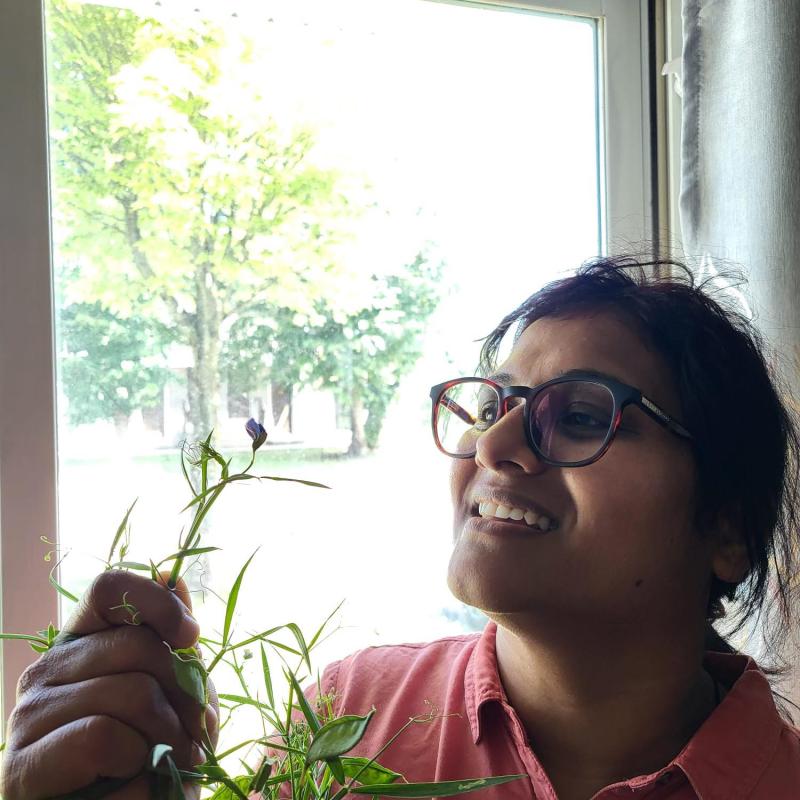
Plant Scientist | Scientific Consultant | Crop Improvement & Global Research Collaboration
I am a plant scientist with 13+ years of international experience in crop improvement, plant breeding, and applied genomics, working across Canada, Europe, Africa, and South Asia.
As a Scientific Consultant with the Fernand Lambein Fund, I support global research coordination on grasspea (Lathyrus sativus), a climate-resilient crop with potential for food and nutritional security in marginal environments.
My work focuses on advancing climate-resilient and underutilized crops through research collaboration, data integration, and community-building. I have contributed to projects on wheat and legume systems, with an emphasis on adaptation to climate stress and sustainable agriculture.
Beyond research, I am actively involved in science communication and capacity building, including mentoring early-career scientists and supporting global research networks.
Canada
Priyanka Gupta
Scientific Consultant
Fernand Lambein Fund
Posted on 28/10/2025
Thanks for continuing this important discussion.
1. Collaboration with local staff/partners
Involving local teams early helps ensure messages are culturally relevant and shared through channels people actually use. This builds ownership and increases the chance the findings lead to real decisions.
2. Low- or no-cost communication
I’ve found simple tools work best: short summaries or infographics, WhatsApp updates, quick storytelling videos, and small group discussions to walk through results. These methods make findings clear and actionable without needing big budgets.
Communication isn’t just a final step; it’s what turns evidence into action. Excited to learn from others’ approaches as well.
Warm regards,
Priyanka