

Webinar Objectives
(i) Highlighted lessons on what has worked in strengthening resilience in Small Island Developing States (SIDS), as well as persistent gaps and challenges.
(ii) Drew cross-cutting lessons to inform future programming.
(iii) Provided insights into evaluation modalities that are specific to SIDS.
The webinar combined evaluation findings with reflections on evaluation methodologies and organizational approaches, taking into account SIDS-specific challenges such as high travel costs and significant intra- and inter-regional diversity.
Substantive findings covered:
(i) programme results, including marine area protection, disaster resilience and recovery, reforestation, livelihood diversification, and improvements in food security; and
(ii) implementation issues, including national institutional capacity, stakeholder coordination, and cooperation between national and sub-regional and regional entities.
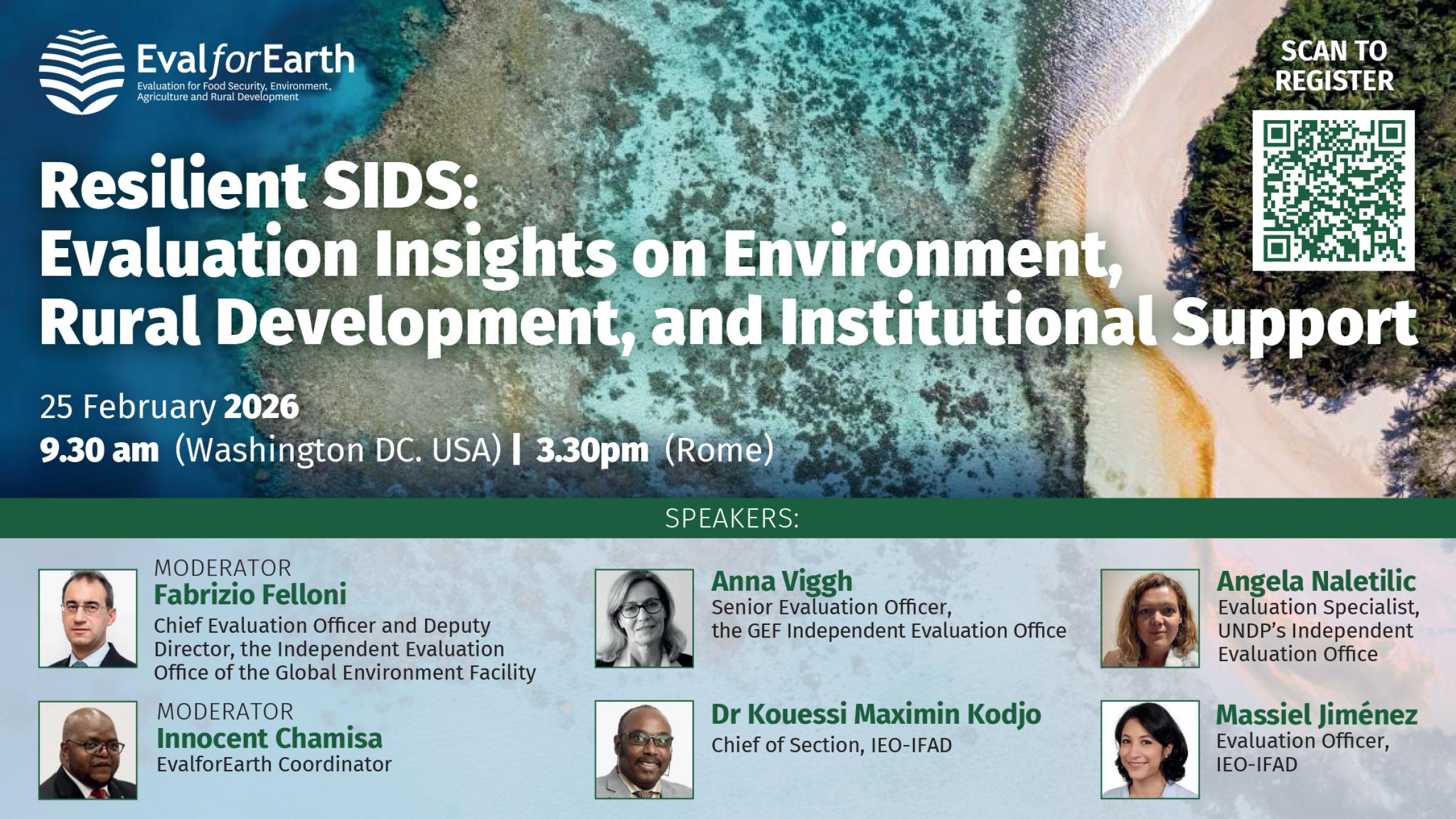
MODERATOR(S):
Innocent Chamisa EvalforEarth Coordinator
Fabrizio Felloni (GEF)- Fabrizio Felloni Chief Evaluation Officer and Deputy Director at the Independent Evaluation Office of the Global Environment Facility. He was previously, Deputy Director at the Independent Office of Evaluation of IFAD, Lead Evaluation Officer in the same office and Evaluation Specialist at UNDP. He has led project, country-level, sub-regional, thematic and corporate evaluations in over 25 countries (Africa, Asia, Eastern Europe, Latin America). He holds a Master’s Degree in Agricultural Economics from Washington State University and a Master-equivalent degree in Social and Economic Sciences from Bocconi University (Italy). He is the author / co-author of several peer-reviewed publications
SPEAKERS:
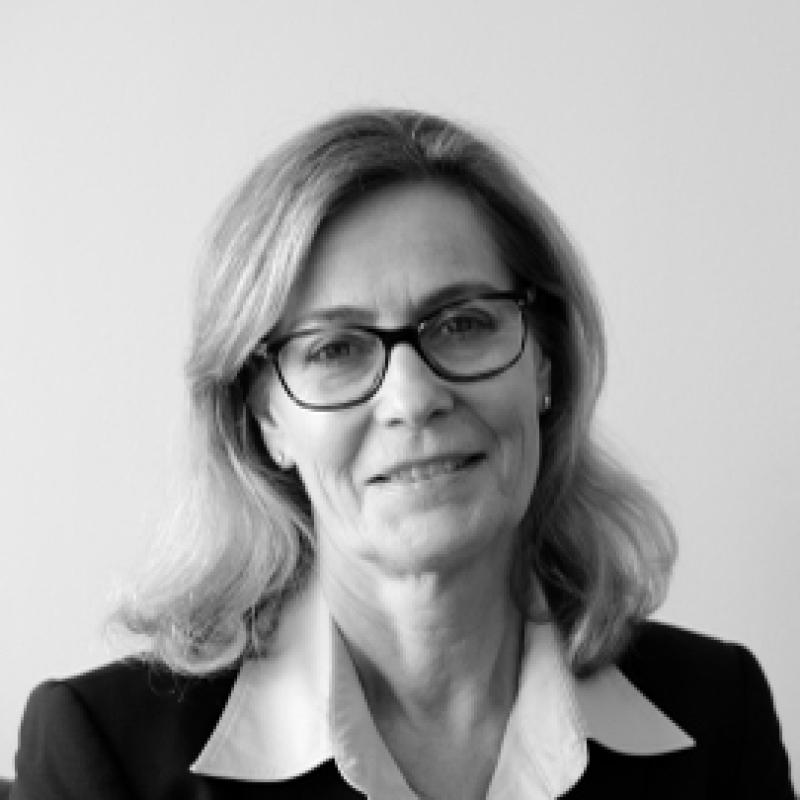
Anna Viggh Senior Evaluation Officer in the GEF Independent Evaluation Office, bringing extensive expertise in environment and development. She manages the Office’s evaluation work for the Least Developed Countries Fund (LDCF) and the Special Climate Change Fund (SCCF), and leads a range of thematic evaluations, including those focused on adaptation to climate change, Least Developed Countries (LDCs), Small Island Developing States (SIDS), and the Small Grants Programme (SGP). Before joining the GEF IEO, Anna held several positions with UNDP in Sierra Leone and Mexico, the World Bank, and various NGOs.
Angela Naletilic Evaluation Specialist at UNDP’s Independent Evaluation Office, leads Independent Country Programme Evaluations across multiple regions. With 18 years of experience, her work spans governance, resilience, environment, and climate action, with focus on gender and human rights. Prior to UNDP, she worked with several UN agencies, the EU, bilateral donors, development banks, and governments on strategic planning, programme design and large-scale evaluations. Angela brings deep expertise in Latin America and the Caribbean, particularly in Small Island Developing States (SIDS), and previously served as Deputy Regional Director of an international NGO in Central America.
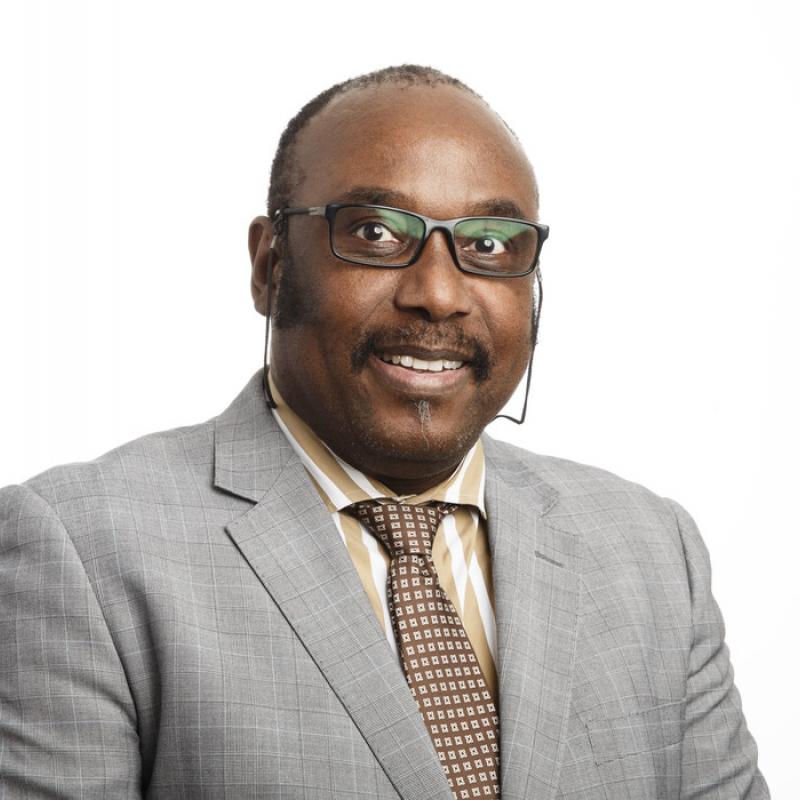
Dr Kouessi Maximin Kodjo Chief of Section at IOE, with extensive working experience (>25 years) in technical cooperation, including programme management, monitoring and evaluation. Before joining IFAD, Max Kodjo held several positions, at international level, including monitoring and evaluation expert for the Technical Cooperation Programme of the International Atomic Energy Agency; Monitoring and Evaluation Component Manager for FAO – Field office of Nigeria in Abuja, Senior Advisor for research and evaluation for international NGOs in Nairobi (Kenya).
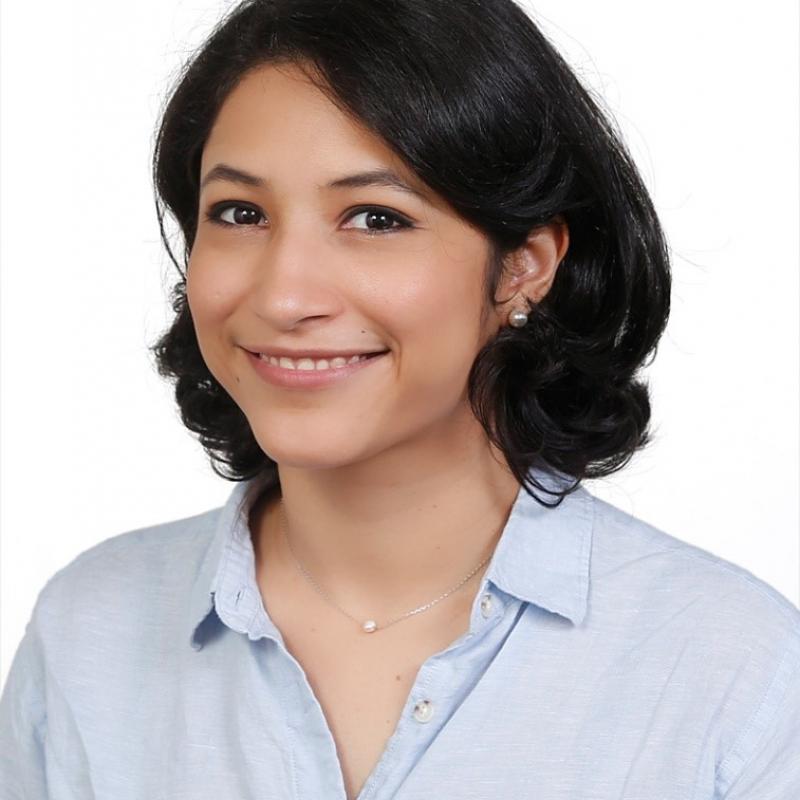
Massiel Jiménez Evaluation Officer at IOE, with over 10 years of professional experience in local economic development and monitoring and evaluation. Prior to joining IOE, Massiel supported programme monitoring and evaluation and design of country-level cooperation strategies with national institutions, the International Finance Corporation of the World Bank Group, the World Food Programme and the Japan International Cooperation Agency.