
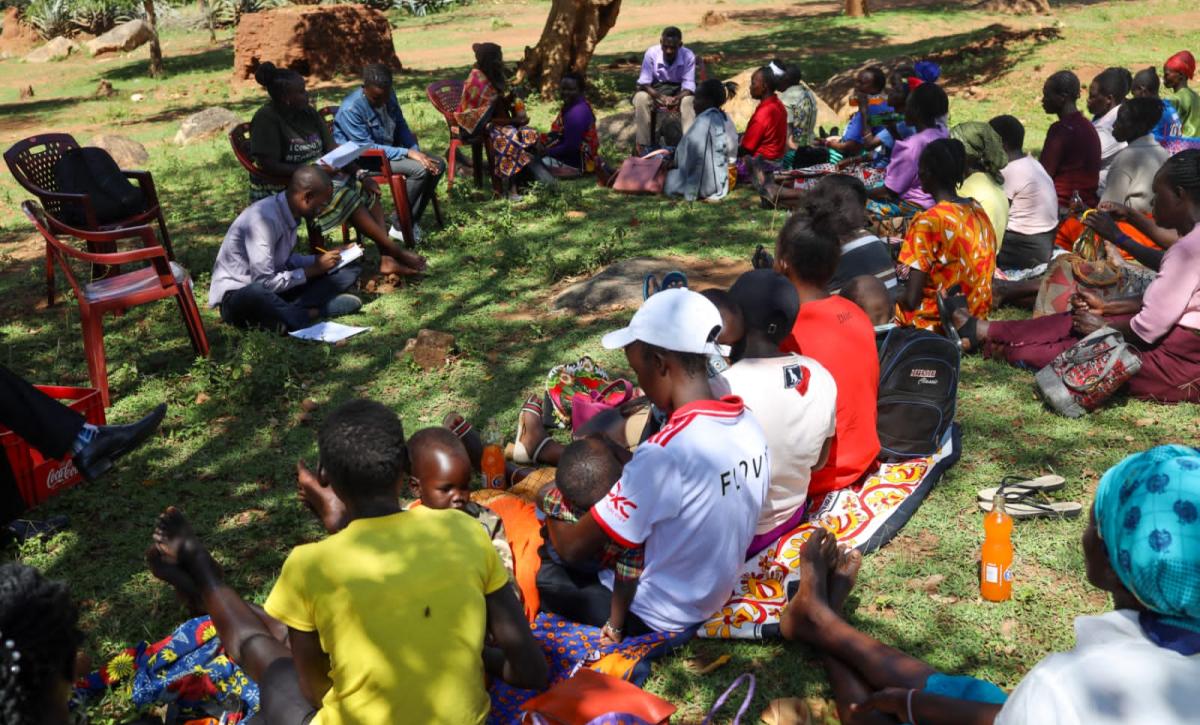
"The project eventually ends. Your organisation does not." That idea has stayed with me throughout my career in monitoring, evaluation, accountability and learning (MEAL).
Across my work in food security, agriculture, enterprise development, governance and humanitarian response, I have seen national organizations navigate the demands of multiple donor-funded programs, often at the same time. Each new project can bring its own evidence requirements: a new measurement framework, dashboard, reporting format and sets of indicators. Initially, this appears to strengthen accountability, but after years of building and restructuring MEAL systems, I have begun asking myself: Who are we actually measuring progress for?
Powon Long'ironyang of I_Rep Foundation Kenya
When Reporting Replaces Learning
There is good reason why donor-funded projects come with demanding measurement frameworks. Standardized indicators have made results easier to compare, strengthened transparency and accountability, and pushed organizations to look beyond activities to outcomes. These are important achievements. But over time, I have seen these systems create a different problem: reporting can begin to take the place of learning.
Many national organizations have become highly effective at demonstrating project results to donors while having a much less complete picture of their own institutional progress. Too often, when a project ends, its indicators disappear, dashboards are archived, and databases become inactive. At that point, institutional memory leaves with the funding. Then a new donor arrives, and the process starts again. Over time, organizational learning becomes fragmented across projects rather than building from one project to the next.
Implementing Partners, Not Extensions of Donors
One thing has become increasingly clear to me: as implementing partners, we are not extensions of donor organizations. We are independent institutions with our own missions, boards, strategic plans, and long-term visions. Donor funding helps us pursue that vision, but it should not come to define it.
Yet donor measurement systems can gradually become the organization’s own, to the point where board meetings focus more on project output than on institutional effectiveness. Annual reports can begin to mirror donor logframes more closely than organization’s own strategy. Success can become synonymous with meeting project targets rather than advancing the organization's own mission. The result is an uncomfortable imbalance: we become increasingly accountable upward, and less accountable inward.
The Turning Point
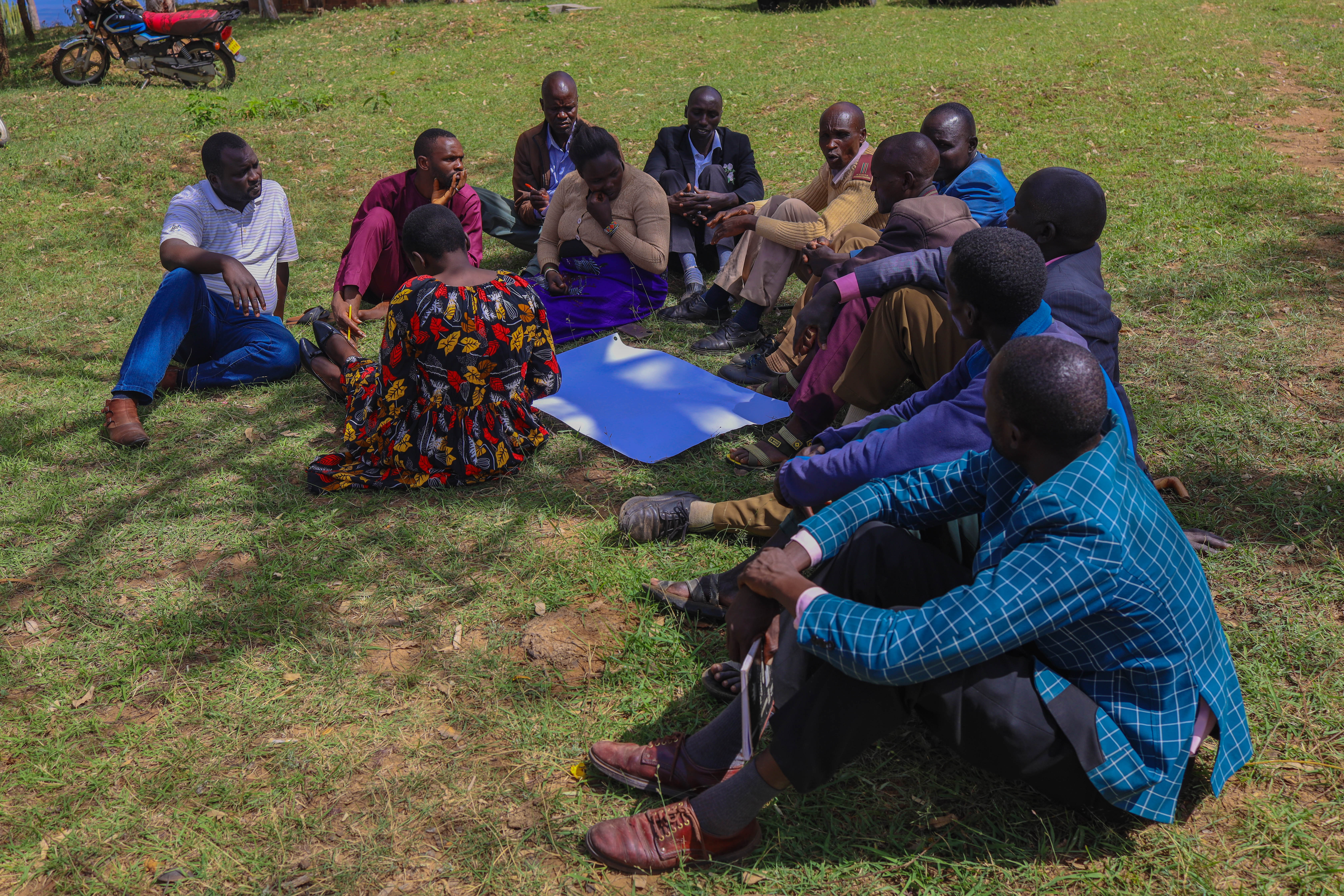
This question became particularly important while I was restructuring the MERL system for an agricultural resilience programme. The project had excellent indicators and comprehensive reporting templates, yet I found myself wondering what evidence would remain useful for the organization once the project ended, when most, if not all, of those indicators existed because the donor required them.
None of those indicators had been deliberately linked to the organization's own strategic objectives or long-term evidence needs. That brought me back to something Theo Sowa emphasized to colleagues during her time as interim Chief Executive Officer (CEO) at the Graça Machel Trust: “We are not our donors; we are not defined by the grants we implement but the founding vision that leads us”
That experience changed how I think about institutional evidence systems. They need to outlast individual projects, with donor reporting requirements connecting to them rather than replacing them.. Donor accountability remains essential, but external reporting frameworks should not become an organization’s only evidence system. A strong institutional system should continue to generate useful evidence across projects, funding cycles, and changes in donor requirements long after individual grants have ended.
Building an Evidence System That Lasts:
A useful starting point is an institutional indicator bank derived from the organization’s mission, strategy and theory of change. For organisations working in agriculture and food security, this might cover areas such as household resilience, farmer productivity, women's economic participation, local institutional capacity, climate adaptation, sustainability of interventions, and community trust. A core set can provide continuity across projects, allowing new donor indicators to be mapped onto an existing organizational framework rather than requiring a new measurement system for every grant.
One simple approach that has worked for me is to maintain a basic activity log alongside an outcome log. Where possible, these can feed into a shared evidence base that serves more than one purpose. The same evidence can support donor accountability, board oversight, organizational learning, strategic decision-making, proposal development, community feedback, and policy engagement. Boards should also ask what the evidence says about organizational effectiveness over time, not only about project performance. Without institutional indicators, organizations may know whether projects are meeting their targets but will struggle to see whether the organization itself is becoming stronger.
Two books have particularly influenced how I think about these questions: Bagele Chilisa's Indigenous Research Methodologies and Michael Quinn Patton's Principles-Focused Evaluation: The GUIDE. Chilisa’s work has influenced me to think more critically about whose knowledge, context and priorities shape an evidence system while Patton’s work has reinforced my thinking about making evidence purposeful and useful for decision-making, rather than treating evaluation as a reporting exercise. This is why, for me, an institutional evidence system is more than an indicator bank. It is an institutional mechanism for deciding what matters, whose knowledge counts, what the organization learns, and how that learning is used..
For me, decolonizing impact measurement is not about rejecting donor frameworks. It is about ensuring local organizations retain ownership of their evidence systems. Localisation becomes more meaningful when evidence strengthens institutions and continues to inform decisions after donor funding ends.
One final thought from Theo Sowa has stayed with me: “Until we truly internalise and implement evaluation and learning that reflect our true, core constituencies, we will continue to be less effective and more easily co-opted into other people's agendas.”
That is the real test of an evidence system: whether it simply reports what a project achieved, or helps an organization understand where it is going.