
Reflections from the Circular Food Systems for Rwanda (CIRF) Annual Event in Kigali, October 21–23, 2025
The Circular Food Systems for Rwanda (CIRF) project convened its annual learning event in Kigali, bringing together partners and participating enterprises to reflect on progress and consider the project’s final phase before its planned conclusion in December 2026.
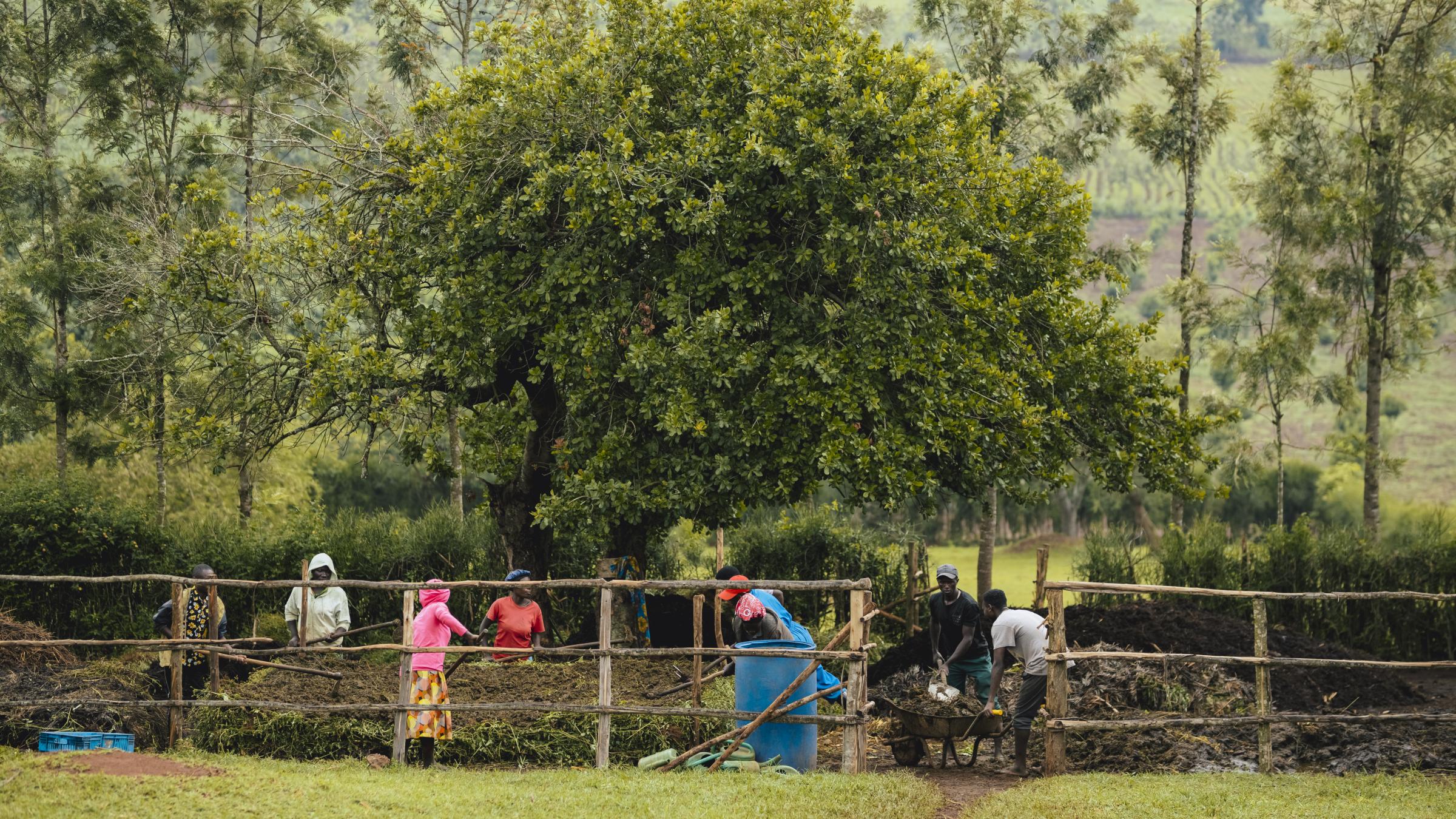
The Circular Food Systems for Rwanda (CIRF) project convened its annual learning event in Kigali, bringing together partners and participating enterprises to reflect on progress and consider the project’s final phase before its planned conclusion in December 2026. During the event, CIRF partners and small and medium enterprises (SMEs) highlighted key achievements from the initiative. These included increased revenues and new jobs created through the development of circular products. Beyond enterprise-level outcomes, CIRF’s multi-stakeholder policy platform has also helped influence Rwanda’s emerging circular food systems agenda. This influence is already visible in several developments, including the country’s adoption of two International Organization for Standardization (ISO) standards on circularity and the integration of circular economy principles in three key government strategic documents, among them the Fifth Strategic Plan for Agriculture Transformation (PSTA5).

©BIG-SOUNDS AV Solutions Ltd/WRI
The World Resources Institute (WRI) and its partners are now preparing to scale CIRF’s impact beyond Rwanda through a new initiative , Accelerating the Circular Economy for Food (ACE4Food). What began as a pilot focused on supporting individual enterprises is evolving into a multi-country effort that will engage government institutions and influence policies, markets, and value chains across the region. As the initiative moves from pilot to scale, the focus will shift from supporting individual businesses to enabling broader systems change. This makes systems-level measurement increasingly important—not only to understand whether transformation is actually taking place, but also to identify unintended trade-offs and reinforce positive change across value chain actors.
Against this backdrop, a central question surfaced repeatedly during the event: how can we measure and effectively capture the systemic impact of projects such as ACE4Food? Put simply, how do we know if food systems are truly becoming more circular?
It is a question many organizations are now grappling with, and there is no simple answer. The Circular Food Systems for Rwanda Project currently tracks impact largely at the level of individual businesses, generating valuable insights but offering only a partial view of change. What remains harder to capture are the broader system-level effects of circularity, such as reductions in food waste and emissions, shifts in policy, improvements in nutrition, and more resilient communities.
Inside our Monitoring, Evaluation and Learning (MEL) Impact Session
To explore these measurement challenges more deeply, the project partners convened peers and funders during the learning event for a dedicated discussion on monitoring, evaluation, and learning (MEL) in circular food systems.
Experts from the IKEA Foundation, Resonance, World Resources Institute (WRI), International Institute of Tropical Agriculture (IITA), African Circular Economy Network (ACEN), African Circular Economy Alliance (ACEA), Rwanda Cleaner Production and Climate Innovation Centre (CPCIC), and Netherlands Development Organisation (SNV) reflected on the practical difficulties of measuring systemic change. The practical difficulties include the high resource demands of data collection, the reporting burden placed on SMEs and farmers, and the persistent challenge of attribution. Participants also discussed the tension between measuring results at the level of individual enterprises and capturing broader systems change. While policy shifts are increasingly tracked, many organizations still lack shared frameworks and practical tools to measure circularity at scale. Proposed responses emerged from such discussion, including strengthening self-monitoring among SMEs, using multi-stakeholder platforms to align policy efforts, and adopting contribution-based approaches such as outcome harvesting.
From Talk to Tools: Measuring Systems Change
Despite these challenges, several practical emerged from the discussion as promising ways to capture systems-level transformation:
Outcomes Harvesting
This method is particularly useful in unpredictable and rapidly evolving contexts. It begins by collecting and verifying stories of change from stakeholders, documenting shifts at both individual and system levels. These include changes in knowledge, behavior, skills, business performance, relationships, rules, and broader system dynamics. The process then examines how specific interventions may have contributed to those changes.
Contribution Analysis
Contribution analysis takes a similar approach but is anchored in a theory of change. It examines whether an intervention followed the expected pathway and plausibly contributed to the observed outcomes. When applied to systems-level change, contribution pathways tend to be more complex. This often requires documenting behavioral or relational shifts while considering alternative explanations, such as political transitions or other external forces.
Market Systems Framework
A market systems framework helps explain how markets function by examining the broader relationships, incentives, and formal and informal rules that shape a value chain. Rather than focusing only on short-term outputs, it looks at how actors interact, what motivates them, and how power, information, and resources circulate within the system. When combined with tools such as outcome harvesting and social network analysis, this approach can help track changes and influence over time.
Recognizing Early Signals of Systems Change
These approaches lead to a simple but important question: If a food system is truly becoming more circular, what kinds of changes would we expect to see?
During the discussion, participants reflected on several early signals suggesting that circularity is beginning to take root. These signs often appear well before major policy shifts or large market transformations become visible:
- Changing behaviors and norms: Systemic changes often begin with people rather than policies. Early signs may include growing consumer interest in circular products, farmers becoming more familiar with circular practices, or knowledge-sharing spreading informally through farmer networks or local communities. These shifts tend to appear first in attitudes, conversations, and relationships before they show up in formal indicators.
- Environmental practices becoming routine: Environmental change rarely happens all at once. Instead, it often starts with small adjustments in day-to-day practices: farmers experimenting with waste-to-value solutions, improvements in water use and recycling, or greater interest in regenerative inputs. Over time, these shifts signal that circularity is moving beyond experimentation and becoming part of how the system normally operates.
- Market evolution: Markets can also reveal early signals of change. For example, circular products may begin to reach new customers, new financing models may emerge, or financial institutions may start to recognize the business potential of circular practices. These signals don’t require massive industry overhauls; more often, they begin as subtle but telling adjustments in incentive investment patterns.
- Governance and policy alignment: The strongest signals of systems change can also emerge within the enabling environment. Circular economy concepts may begin to appear in policy discussions, participation in multi-stakeholder platforms may expand, or early policy proposals may start aligning with circular food systems objectives. These developments are often incremental and difficult to measure before formal policies are enacted.
- Multidimensionality: Finally, meaningful systems change requires coherence across social, environmental, and economic dimensions. A system may show progress rather than spikes in one area and not in others. Looking across these dimensions helps ensure that circularity is advancing in a balanced way and that unintended trade-offs do not go unnoticed.
No single indicator can confirm that systems transformation is underway. But if combined, they can help practitioners see whether circularity is starting to take hold and where further action may be needed.
**
| As more initiatives across the region work toward similar goals, there is a growing opportunity to learn collectively about what works and what does not. If you would like to continue the conversation, please comment or reach out to Eric Ruzigamanzi (Eric.Ruzigamanzi@wri.org) or Shayna Krasnoff (skrasnoff@resonanceglobal.com) to talk more about our vision for systems-level circular transformation with ACE4Food. |