
First published here
The United Nations Development Programme (UNDP) in collaboration with the Gates Foundation is seeking to catalyze Monitoring, Learning, and Evaluation (MLE) practices for systems change initiatives. To achieve this, the Systems MLE project was established to facilitate knowledge exchange through research, foster learning via communities of practice, and conduct pilots and experimentation. New guidance will outline a series of actionable steps for development practitioners and organizations seeking to implement systemic approaches to MLE.
This article relates the work and learning from one of the Systems MLE pilots. This article highlights the systems mapping pilot in Indonesia, the process and tools applied, key reflections on the experience and its broader implications.
“Work to promote change requires nuanced local knowledge. It takes time, commitment and courage and local actors have the legitimacy, relationships and staying power required” (Derbyshire et al., 2018).
In Indonesia, the Systems MLE initiative partnered with the Sustainable Landscape Programme Indonesia (SLPI) to strengthen the systems thinking and working capacities of local development partners. In particular, the initiative worked in Sumatra with the Lingkar Temu Kabupaten Lestari (LTKL) and Daemeter.
With a focus on Siak, a regency (kabupaten) in the Riau province (see Figure 1 below), the Systems MLE team helped LTKL to build the necessary skills to facilitate systems mapping workshops and generate a map of the key factors and systems dynamics affecting environmental landscape governance in Siak.
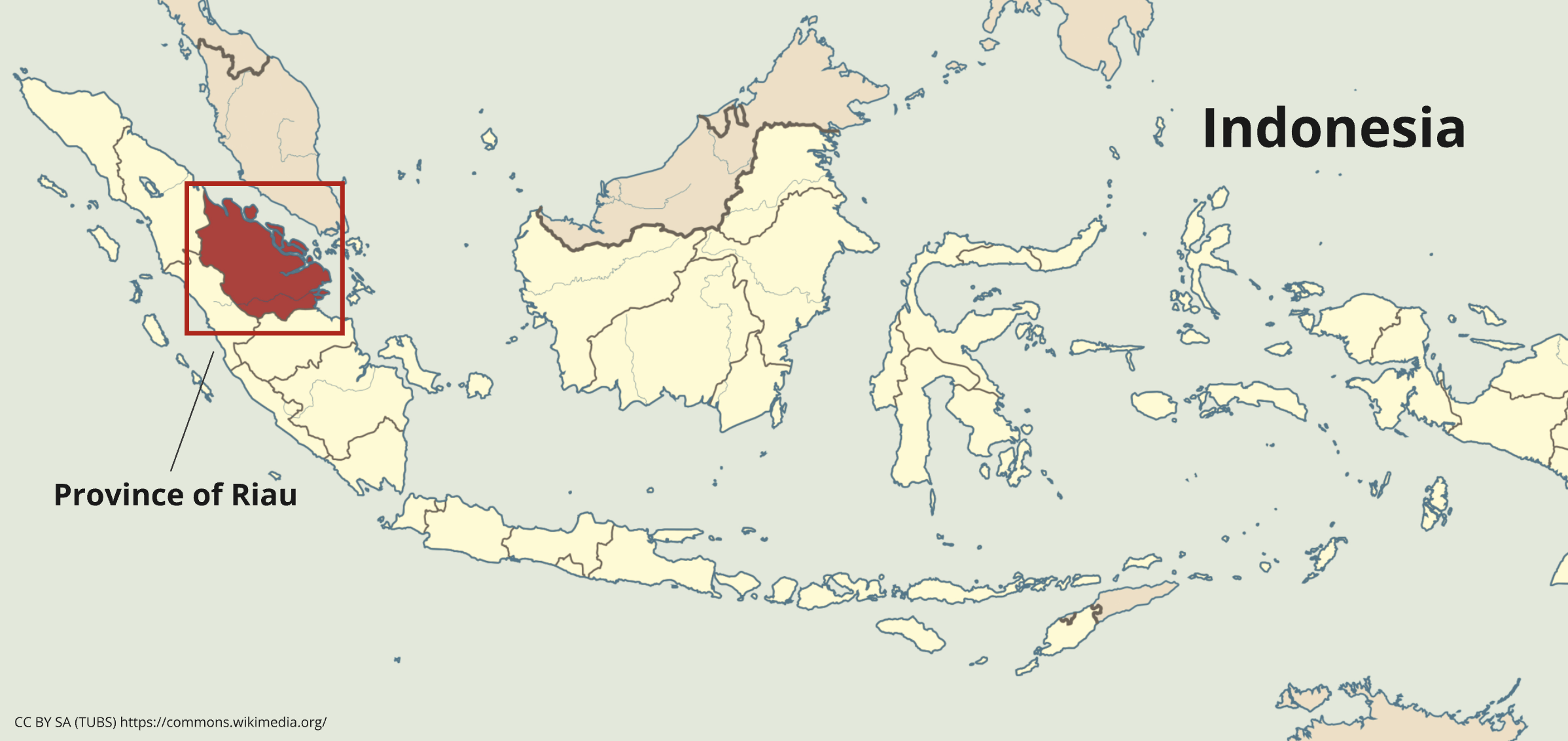
Figure 1: Map highlighting the location of the Riau province in the Indonesian archipelago. Siak is one of the ten regencies (and two cities) in the province.
The Systems MLE team also provided guidance on how to use the map to inform policy and programme design and adaptations.
The final (designed) product is available at this link.
In this case study, we present and reflect on how we approached this task and our key takeaways. In section one, we present what we did. In section two, we present and discuss the perceived value of our work for our partners, while in section three we present our key learnings and takeaways. Finally, in section four we draw some general conclusions aimed at informing Systems MLE practice more broadly.
Before we dive in, Figure 2 provides an overview of the Systems MLE Enabling Conditions diagnostic assessment conducted for LTKL and Daemeter. The assessment allowed the Systems MLE team to tailor the recommended approaches and practices to the partner context.
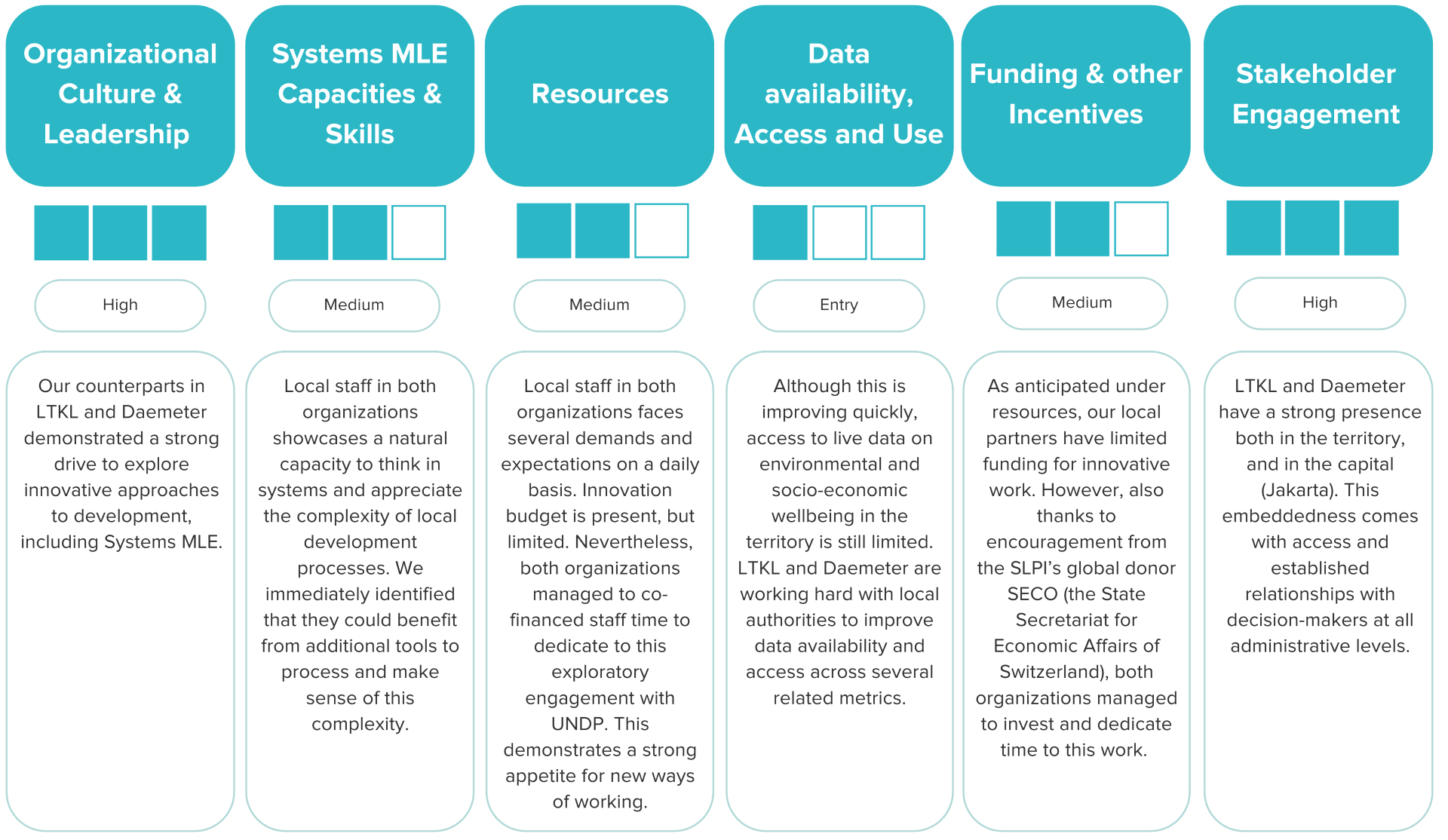
Figure 2: Systems MLE Enabling Conditions assessment conducted for LTKL and Daemeter.
1. What we did
This pilot emerged in response to an expression of interest from Daemeter—one of the two leading organizations of the SLPI-supported Siak Pelalawan Landscape Programme (SPLP) —to experiment with Systems MLE methods that could help local stakeholders to make sense of complex landscape dynamics and inform local programming and policymaking efforts.
During a field mission in Siak, systems mapping was identified as the most suitable methodology to document the several key factors and dynamics playing out in the landscape. With a proliferation of initiatives addressing apparently disconnected issues, systems mapping allows practitioners to broaden their focus and take in a more holistic picture of what is happening in the landscape. This allows to identify, manage and monitor gaps, synergies and risks from a systems perspective.
At UNDP, we developed the Causality Assessment for Landscape Interventions (CALI), a methodology that leverages systems mapping and helps landscape practitioners to do just that. In this occasion, instead of driving the process from UNDP, we decided to invest in building the capacities of local partners to apply the methodology independently.
This was through 2 main phases:
- A comprehensive onboarding training
- Hands-on experience applying the methodology
A comprehensive onboarding training
A comprehensive training program was designed and delivered with support from the System Mapping Academy.
Participants were selected from staff members of the Secretariat of LTKL, an association of regency governments who made commitments to protect the environment and improve the welfare of their communities. The decision to invest in LTKL was due to (i) their local convening power in Siak, and (ii) their potential to replicate the process in other landscapes in Indonesia. Representatives from SLPI, Daemeter and other SLPI-supported coalitions were also invited to join the introductory part of the training.
The training covered essential aspects of systems thinking and advanced systems mapping and analysis methods. It started off with an introduction to systems thinking and on the value of participatory systems mapping. And then provided participants with foundational guidance and hands-on materials and practice exercises to familiarize themselves with facilitating a participatory systems mapping process.
Hands-on experience applying the methodology
Then, the trainees were accompanied by the Systems MLE team and the Systems Mapping Academy along their journey to facilitate an actual systems mapping process with representatives of key stakeholders in Siak. The objective was to map the principal factors and dynamics to be considered for environmental landscape governance in Siak.
Engaging diverse stakeholders, with different backgrounds and areas of expertise, is essential to develop a solid systems map that considers diverse perspectives and lived experiences. LTKL leveraged the Siak Hijau multi-stakeholder forum to engage representatives from local government, private sector and civil society organizations (CSO) coalitions. Daemeter also participated in the process as technical experts.
The Systems MLE team and the Systems Mapping Academy helped LTKL to prepare their (online) mapping sessions, organize all inputs received and iterate as needed. They also supported the development of two final communication products:
- A designed version of the systems map that came out of this process (also shown in Figure 3 below)
- A presentation with a description of the main areas of the map, and recommendations on how to use it to inform programming and policymaking.
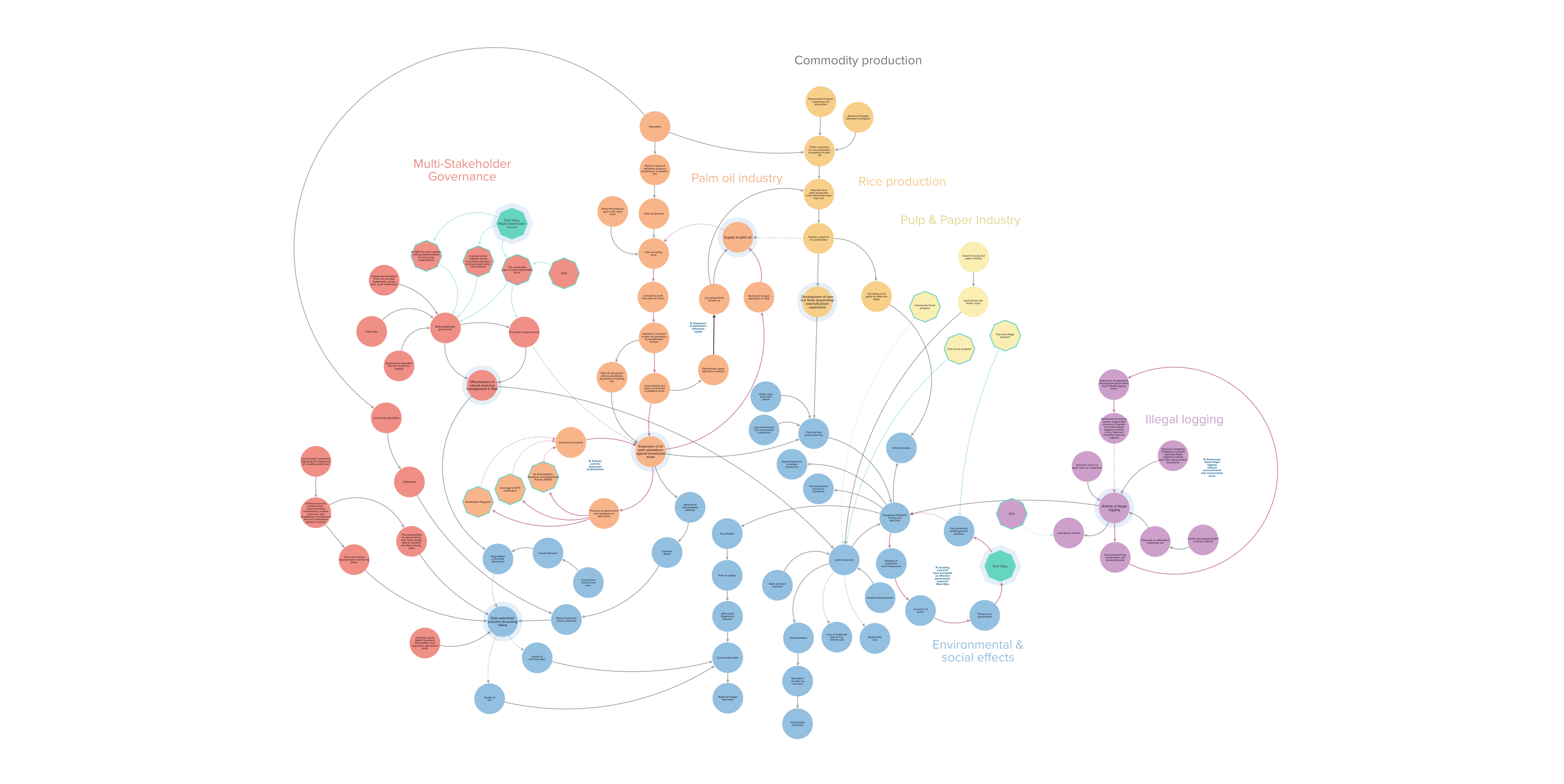
Figure 3: A systemic perspective on environmental landscape governance in Siak.
2. Perceived Value
“We really enjoyed the systems mapping training provided by UNDP and the Systems Mapping Academy. It provided us with a powerful methodology to understand development challenges with a systems lens. At LTKL, we already applied the methodology to assess opportunities for interventions in several of the regencies that we support, and it has proven extremely insightful”
– Ristika Putri Istanti, Head of the LTKL Secretariat
Both our key local partners were highly pleased with their experience with the CALI process. Although timing and resources did not allow to immediately use the systems map to inform a policymaking process, the LTKL Secretariat already made use of the map to inform their engagement strategies in Siak. They also used the methodology to inform their programming in other landscapes.
Jimmy Wilopo, who manages the work of Daemeter in Siak, also described the process as “insightful”, as “it encouraged us to think holistically, reflect on the key system elements and their connections, and finally led us to a shared understanding of the key dynamics in the landscape”.
3. Key lessons and takeaways
Working on this pilot generated several reflections on how to make the most of participatory systems mapping. Here are some of our key takeaways.
Core systems mapping skills can be learned quickly, with good training — after our training, it didn’t take long for LTKL to feel confident with using our templates and facilitating a participatory systems mapping process. They even went on and replicated the process in other regencies!
Full mastery takes time and practice — while our partners demonstrated proficiency quickly with the new method, providing ad hoc support and advice proved useful to sort out some doubts and questions. We noted that recognizing and naming feedback loops may take longer to master than identifying variables and causal links.
Systems thinking foundations are essential — as per any research method, being clear on principles, objectives and underlying assumptions and limitations is at least as important as the tools themselves. It paid off to dedicate a good amount of training time to cover the foundations of systems thinking and its value for development processes, before diving into the technical mapping content.
Fancy visuals are a plus, but they are not strictly necessary — we developed a designed version of the map to support its dissemination and use for communication purposes. However, the rough version developed using our templates was already sufficient to derive insights that can inform decision-making processes.
Remote facilitation is possible, if resources are scarce — online collaboration platforms provide all needed functionalities to engage representatives of key stakeholders with digital access and a stable internet connection. Of course, if access is an issue (i.e. there are challenges to engage some of the key stakeholders through digital tools), an in-person workshop is recommended, and it would offer all additional benefits of face-to-face engagements. The UNDP CALI toolkit is flexible and can be adapted to both virtual and physical settings.
We observed immediate spillovers from the training, as LTKL went on and applied the process (internally) immediately in other landscapes. This is more likely to happen in a small organization such as the LTKL Secretariat, compared to larger or more bureaucratic organizations. But our experience with LTKL suggests that systems mapping can be quickly scaled and applied flexibly, sometimes in a multi-stakeholder context, and others in an internal strategy process.
4. Conclusions
This pilot has demonstrated that with proper training and support, local development actors can quickly internalize and apply systems MLE practices in meaningful ways. The experience of LTKL and Daemeter in Siak shows that systems mapping is an insightful approach that enables organizations to make sense of complexity, foster collaboration, and better align programming with a systemic understanding of local realities.
As global development challenges become increasingly interconnected and complex, there is a growing recognition of the need for approaches that go beyond linear planning and isolated interventions. This pilot suggests that tools like CALI can play a valuable role in building systems MLE capacities at the local level and support more coherent, adaptive, and contextually grounded development efforts.
If you would like to know more about how UNDP can support with participatory systems mapping, please do not hesitate to reach out to James Leslie, Global Programme Manager for Food Systems, at james.leslie@undp.org.