


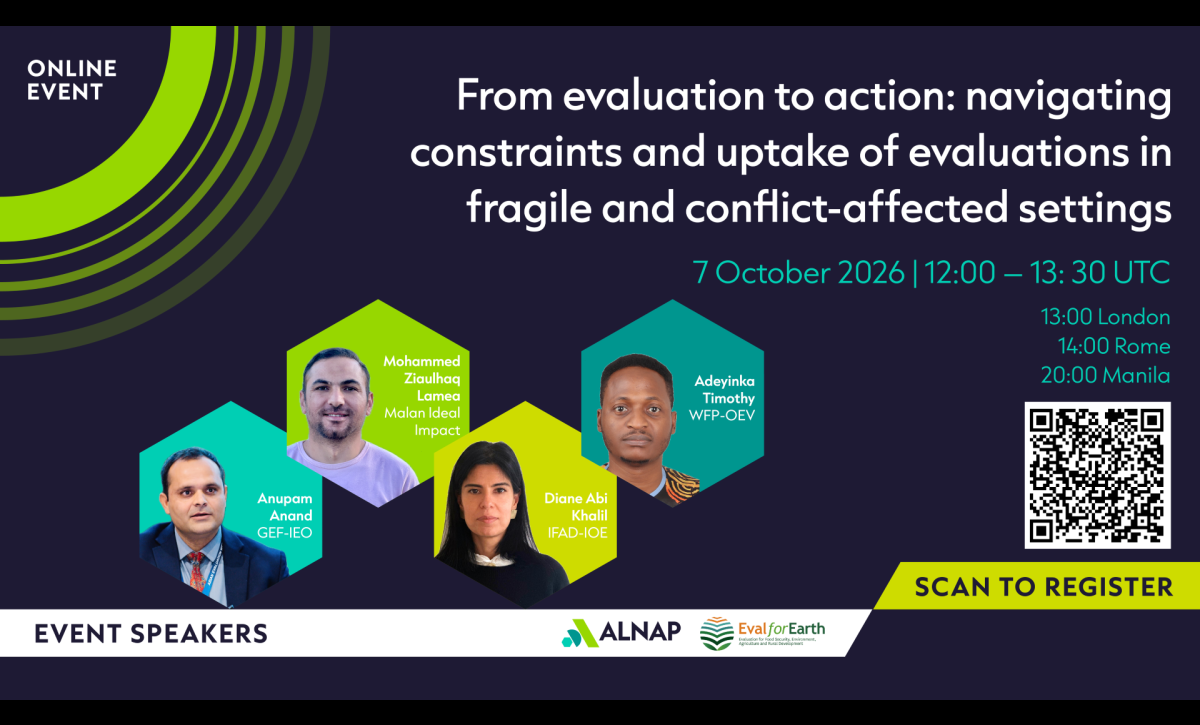
As humanitarian needs intensify amid increasingly complex crises and shrinking resources, the demand for credible, timely, and useful evidence has never been greater. Yet conducting evaluations in resource-constrained, fragile and conflict-affected settings presents distinct operational, ethical, and methodological challenges.
Evaluators and commissioners grapple with limited access and security risks, data scarcity, political sensitivities, and constrained budgets. Through a facilitated discussion, speakers will reflect on key challenges they have encountered and the strategies they have employed to address them. These may include approaches to designing evaluations under severe resource and time limitations; adapting methodologies to contexts with restricted access or unreliable data; managing risks related to staff safety and ethical considerations; and navigating power dynamics between international and local actors. Particular attention will be given to how organizations ensure that evaluations remain useful and actionable despite these constraints.
By the end of the webinar, participants will gain a clearer understanding of practical strategies for commissioning and conducting evaluations in constrained environments, as well as a deeper appreciation of the contextual factors that influence evaluation quality and use. They will have the opportunity to reflect on their own experiences as well as learn and exchange ideas on what works, what doesn’t, and why.
SPEAKERS
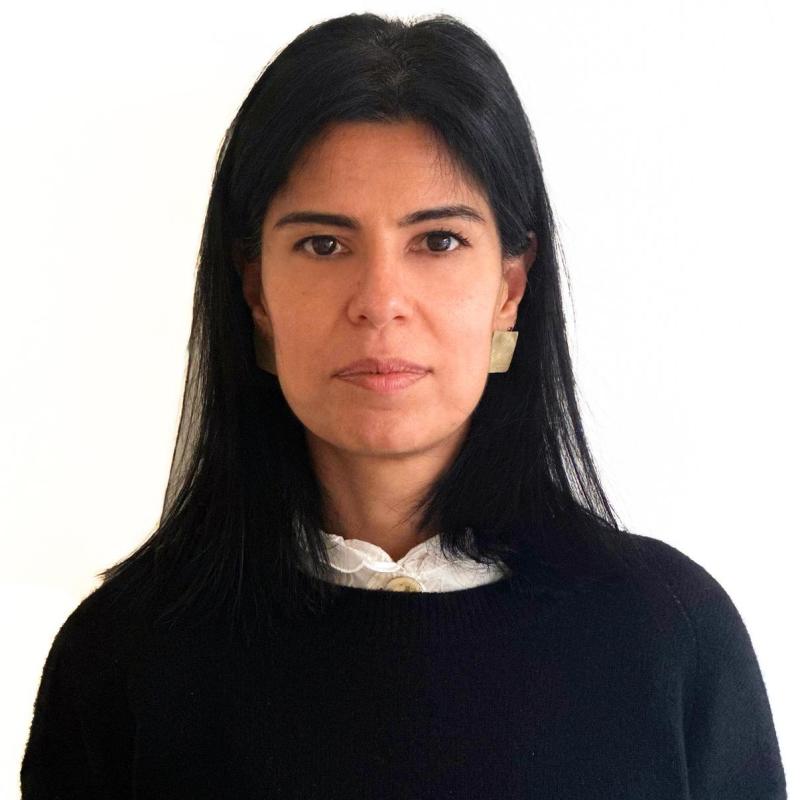
Diane ABI KHALIL | Senior Evaluation Officer, Independent Office of Evaluation - IFAD: Senior Evaluation Officer at IOE, responsible for conducting Country Strategy and Programme Evaluations. Previously, she worked at FAO's Office of Evaluation as an Evaluation Specialist where she led evaluations of the emergency and resilience portfolio. Prior to this she worked as an evaluation consultant. Diane has also worked with the International Committee of the Red Cross in different contexts.
Anupam Anand | Program Manager - Biodiversity & Methods, Independent Evaluation Office - Global Environment Facility (GEF): Senior Evaluation Officer at the Global Environment Facility (GEF) Independent Evaluation Office. He has nearly two decades of experience evaluating environmental and climate interventions across diverse country contexts, including fragile and conflict-affected settings, and has led the GEF evaluation of support in such contexts. His work combines geospatial analysis, AI-assisted methods, quasi-experimental designs, and field-based approaches to generate evidence for policy and practice. He publishes widely on evaluation methods and environmental governance and teaches regularly at IPDET.
Adeyinka Timothy | M&E Officer/Evaluation Manager, World Food Programme (WFP): An Agric Economist and monitoring, evaluation, research, and assessment professional with over 10 years of experience in food security, impact evaluation, agricultural economics, market systems development, and humanitarian programming. He currently serves as Deputy Head of Research, Assessment, Monitoring and Evaluation (RAM) and Evaluation Manager with the United Nations World Food Programme (WFP) in Nigeria, where he provides strategic leadership on evidence generation, monitoring systems, evaluations, and data-driven decision-making. Adeyinka has led and managed decentralized and joint evaluations, Country Strategic Plan reviews, and large-scale monitoring systems, while providing technical support to governments, donors, and development partners. He previously covered for 3 months as WFP Regional Monitoring Advisor for West and Central Africa, supporting 19 country offices on monitoring, evaluation, and quality assurance. He holds an MSc in Agricultural Economics, is pursuing a PhD in the field, and is passionate about strengthening evidence-based decision-making, accountability, and learning.
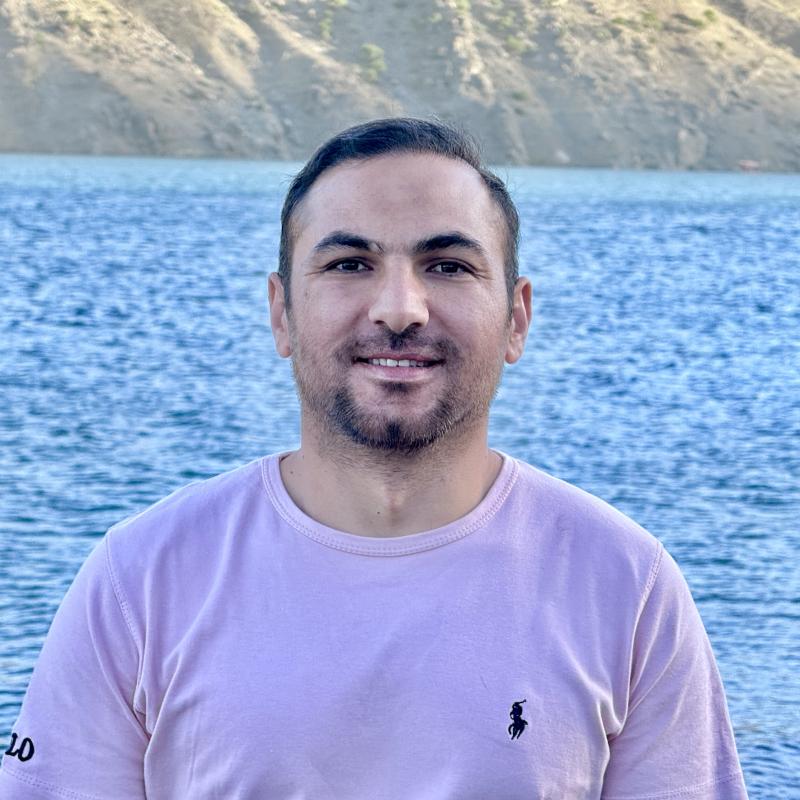
Mohammed Ziaulhaq Lamea | CEO, Malan Ideal Impact: MEAL and research specialist with more than 13 years of experience in the humanitarian and development sectors. He has been an organizational leader and has managed large-scale assignments for multilateral and bilateral organizations, as well as their implementing partners, including the former USAID, FCDO, and the United Nations, among others. He is the Co-Founder and Chief Executive Officer of Malan Ideal Impact, an evaluation and research consulting firm based in Kabul, Afghanistan, that provides services to humanitarian and development organizations.