
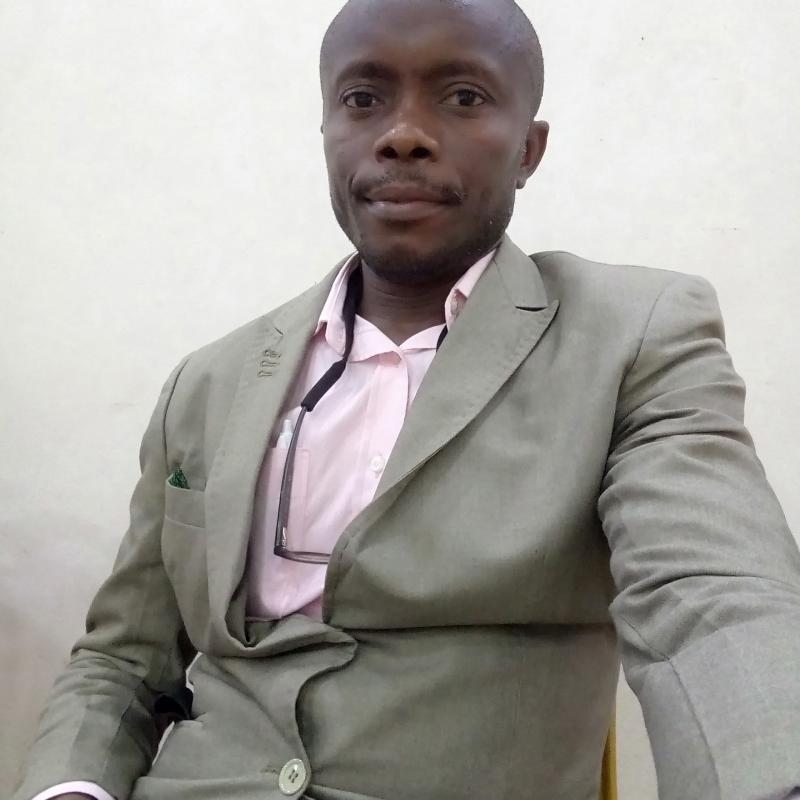
Egwuatu U. ONYEJELEM in Brief
Born in Obibii, Nguru Mbaise of in Imo State, Egwuatu U. ONYEJELEM had rural primary and secondary education in his hometown, Obibii. Currently a PhD candidate in Nigeria, Egwuatu holds an MA in Peace and Conflict Studies, from the University of Ibadan, Nigeria, a Certificate in Independent Approaches to Sustainable Development Practice-IASDP from The Earth Institute, Columbia University, a Proficiency Certificate in Management from the Nigerian Institute of Management (Chartered), a BSc (Hons) Economics/Education from the University of Nigeria Nsukka, and the Nigerian Certificate in Education (NCE) in Economics/Social Studies from the Alvan Ikoku (Federal) College of Education, Owerri.
In June 2011, Egwuatu was privileged to be the only graduate student-participant of the Institute of African Studies of the University of Ibadan at the Centre for Sustainable Development (CESDEV), University of Ibadan’s first ever Leadership and Governance Programme, ‘Mentoring & Succession Planning in Tertiary & Research Institutions.’ He is a core Development Worker. Egwuatu has worked and volunteered in the educational and health sectors, as well as CSOs both in Nigeria and overseas.
Mr. Onyejelem, who chaired the first review of Peace and Conflict Studies Students Association (PACSSA) University of Ibadan 2002 Constitution in 2010, is a member of the Partners for Peace (P4P) in the Nigerian Niger Delta Region, Peace and Collaborative development Network (PCDN) and the Global Alliance for Ministries and Infrastructures for Peace (GAMIP). He is also an Associate Member of the Society for Peace Studies and Practice (SPSP) and a foundation Fellow of the French Institute for Research in Africa (IFRA-Nigeria), where he coordinated the New Projects Group for two years. He also belongs to the Nigerian Institute of Management (Chartered). In addition, he is a freelancer with Africa News. His MA thesis in Peace & Conflict Studies at the University of Ibadan titled, Peace-Building and the Socio-Economic Transformation of Guinea as supervised by Dr. Rasheed Olaniyi of the Faculty of Arts of the University was inspired by Dr. Anthonia Okoosi-Simbine’s coursework on Problems of Peace-Making and Peace-Keeping.
Mr. Onyejelem is currently a Senior Research Officer (Monitoring and Evaluation) at the National Institute for Legislative and Democratic Studies (NILDS), Abuja. In 2014, he joined the Capacity Building Project the National Institute for Legislative and Democratic Studies (NILS-CAP). It was an African Capacity Building Foundation (ACBF)-funded Parliamentary Capacity Development Project for West Africa. He was the foremost Project Administrative Officer, where he co-administered the implementation of parliamentary capacity development programmes for West African parliamentarians and parliamentary staff and was retained by the Institute at the completion of the project. Previously, he coordinated the Peace & Security Projects Unit of the Centre for Peace Across Borders (CePAB) domiciled in Owerri, the capital of Imo State. His responsibilities include: Leading peace and conflict research missions to communities, Conflict Assessment, Emergency Assessment, Report Writing, Editing and Documentation, Monitoring & Evaluation, Workshop Facilitation, Inter-organisational Networking/ Liaison, Chasing calls for Proposals and assisting in Project Proposals Development, General Unit Administration. PIND Foundation is currently consulting with Egwuatu through CePAB in its Conflict Assessment Project in the Niger Delta Region (Abia and Akwa Ibom States).
Egwuatu, as a promoter of Social Capital Development, participated in the International Development Design Summit (IDDS) Zambia 2013 from 1st-31st July, 2013 where his inspiration of a Zambian innovator to speak out through a PowerPoint presentation during the summit shortly after earned the innovator a project development funding. He has also participated in varied capacity building trainings/workshops and conferences. He is fluent in both English and Igbo languages and proficient in French.
Mr. Onyejelem has special interests in Public Policy, Conflict Resolution, Peace-Building, Security and Development, Research, Counselling, Fundraising and Community processes. His hobbies include Reading & Writing, Volunteering, Travelling & Exploration, Photography, Making & Keeping Good Friends, Cooking, Gardening, Walking, Cycling, Racket Games and Swimming.
Nigeria
Egwuatu U. ONYEJELEM
Principal Researcher & Security Analyst: Conflict, Peace and Security
Legislative Centre for Security Analysis (LeCeSA), National Institute for Legislative and Democratic Studies (NILDS)
Posté le 15/02/2022
Je suis tout à fait d'accord avec votre point de vue, car si le processus de collecte des données est compromis, des données erronées seront collectées, ce qui affectera certainement leur interprétation et, par extension, la rédaction du rapport. Les processus de collecte, d'interprétation et de communication des données doivent suivre une séquence logique comme la chaîne des résultats - l'un doit informer le suivant.
Nigeria
Egwuatu U. ONYEJELEM
Principal Researcher & Security Analyst: Conflict, Peace and Security
Legislative Centre for Security Analysis (LeCeSA), National Institute for Legislative and Democratic Studies (NILDS)
Posté le 03/11/2025
En premier lieu, l’évaluation elle-même doit être correcte. Ainsi, l’évaluation sur laquelle porte la communication doit concerner l’activité ou le projet approprié. De même, les données collectées doivent se rapporter entièrement à l’activité ou au projet tel que mandaté.
De plus, la communication ne doit pas être unidimensionnelle. Elle doit utiliser différents canaux : supports imprimés, médias électroniques, y compris les médias sociaux. Cela souligne la nécessité de diffuser le message par divers moyens afin d’en renforcer l’efficacité.
Il est important de noter que si la capacité du personnel impliqué dans l’exercice d’évaluation est faible, le rapport le sera également, et la communication risque d’être erronée. De même, il serait inapproprié de confier la communication à une personne non qualifiée. Le communicateur chargé du rapport d’évaluation doit être bien informé sur le projet et ses résultats tels que présentés. Il peut donc être nécessaire d’associer des experts du projet pour exécuter certaines tâches spécifiques.
Dans la mesure du possible, l’implication des acteurs locaux à travers les OSC ou les OCB peut accélérer l’effet de communication, car les différents canaux d’information et de communication locaux faciliteraient la diffusion. Cela peut également constituer une approche rentable à explorer.
En outre, l’utilisation de langues locales et simples peut renforcer l’impact auprès des communautés bénéficiaires du projet, car la compréhension ne poserait pas de difficulté.
Chaque communication sur une évaluation de projet doit être réalisée selon les meilleures pratiques et présenter une pertinence locale.