
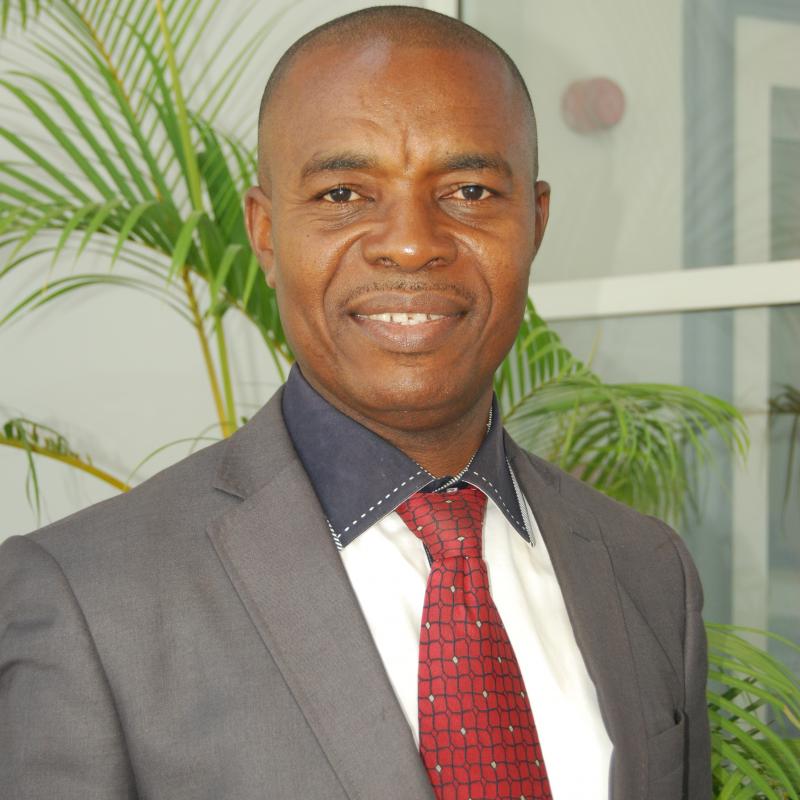
My name is Dr. Uzodinma Adirieje, independent monitoring and evaluation consultant. I am a Fellow and the National President of the Nigerian Association of Evaluators (NAE). With his over 15 years of experience in implementing large-scale and complex monitoring and evaluations (M&E), projects/programs reviews, and surveys to collect individual, household, community, and facility-level data; I am/have been involved in the monitoring and evaluation of the research projects, programs and policies with a particular interest in representation from potential trial participants, those at high risk of severe diseases/infections (HIV/AIDS, TB, Malaria, COVID-19), survivors, community members and healthcare professionals in Africa and the global south. I am a Fellow and the National President of the Nigerian Association of Evaluators (NAE), an Associate Consultant on Monitoring and Evaluation (M&E) to the British Council, and Lead/Managing Consultant at Health Systems and Projects Consultants Ltd. I am a professional evaluator and manager and have served as a consultant to the Federal Ministry of Health (FMOH), UNICEF Nigeria, and Nigeria’s Country Coordination Mechanism [CCM] of the Global Fund for AIDS, Tuberculosis, and Malaria (GFATM). I was an evaluation/oversight consultant to the GAVI/National Primary Health Care Development Agency (NPHCDA) on routine immunization, as well as consultant to the National Agency for the Control of AIDS (NACA)/World Bank, European Union Support to the Federal Government (SUFEGOR). Dr. Adirieje has been the lead facilitator/curriculum supervisor in the Monitoring and Evaluation (M&E) training/certificate course provided by the Health Systems and Projects consultants Ltd; just as he has provided M&E capacity building/training to staffers of the Federal Ministry of Finance, Budget and National Planning (MFBNP), staff of the Federation of International Women Lawyers (FIDA) and hundreds of M&E practitioners. He has also provided these services in almost all the states in Nigeria.
I was the consultant to the Federal Ministry of Finance, Budget and National Planning and UNICEF, for the development of the Monitoring and Evaluation Policy for Nigeria (2020). I previously served as to the Federal Ministry of Health (FMOH) and Unicef, for the Joint Annual Review for the Evaluation of Nigeria’s National Strategic Health Sector Development Plan in Akwa Ibom State in 2012. In 2012-14, I served as Technical Consultant to Nigeria’s Country Coordination Mechanism on evaluation/oversight visitations to Global Fund for AIDS, TB and Malaria (GFATM) project sites in Kebbi, Akwa Ibom, Anambra, and Rivers States. I was the GAVI consultant that provided monthly routine immunization (RI) monitoring and evaluation (M&E), data reviews, supportive supervision, capacity building, and reports in 250 (two hundred and fifty) health centers in Imo State during 2012-2014. I was also the consultant of the World Bank and NACA that developed Imo State Multi-sectoral HIV & AIDS Monitoring and Evaluation Plan in 2012; and served as the sole consultant for the ‘Development of GFATM Comprehensive Manual of Procedures’ for Nigeria, 2012. In 2014, I undertook data quality self-assessment (DQS) of RI in Njaba and Owerri West LGAs of Imo State on behalf of the National Primary Health Care Development Agencies (NPHCDA).
I was a Trainer/Resource Person and Supervisor for the training of 125 persons from the 36 States and FCT on Monitoring and Evaluation (M&E), and supervised the M&E of the Home-Based Care component of the Global Fund Round 9 in the 36 States and FCT under the Civil Society for HIV/AIDS in Nigeria [CiSHAN] during 2010-2011.
I possess a strong capacity and experience in planning and organizing surveys, fieldwork/logistics in Nigeria; and have a good network of experienced enumerators, supervisors, and data entry clerks and the ability to mobilize and retain them all over Nigeria. I have proven experience with data quality assurance mechanisms (fieldwork management, data entry programming, etc.) on Global Fund grants/projects; and have presided over the procurement of necessary equipment, including laptops under the Global Fund grant/projects. I am familiar and experienced with both field and central-based data entry methods as may be desired. I am very fluent in written and spoken English and Igbo languages, with a fair understanding speaking of Hausa and Yoruba also. I am very much at home with the health sector in Nigeria have worked with three ministers of health and several commissioners for health in Nigeria in the last 10 (ten) years. I have more than 15 (fifteen) years of experience leading/managing large-scale and complex surveys to collect individual, household, and/or provider/firm-level data. I serve as a consultant to the Federal Ministry of Health and National Primary Health Care Development Agency (NPHCDA) among other notable institutions in the country with demonstrated capacity and experience in leading/managing survey fieldwork and logistics.
I am a Measure Evaluation/USAID-trained monitoring and evaluation (M&E) practitioner and have also received training in Sexual and Reproductive Health and Rights (SRHR) and Health Economist from the World Bank, with involvements in M&E as an implementer, supervisor, and trainer since 2010. My areas of focus are SRHR including HIV and AIDS, Primary Health Care (PHC), Vaccines/Immunizations, Energy/Environment, Nutrition/Food Security, and Good Governance/Human Rights. I also hold a doctoral degree in Optometry from the College of Medicines and Health Sciences of Imo (now Abia) State University in 1988. I am currently a freelance consultant on health systems strengthening with M&E evidence-generation, capacity building and training, as my core competencies.
I have received the following additional M&E/evidence-generation related trainings from the USAID/Measure Evaluation/MSH: Optimizing your M&E team's performance: Improving internal communication and dealing with conflict; Overcoming the challenge of building and leading effective M&E teams for the public sector, NGO, and civil society organizations; The Virtual Leadership Development Programme (a Diploma course); Country Ownership & Organizational Capacity Building; and Creating an Enabling Environment for M&E Community of Practice [CoP]. I have also received training in Statistical Package for Social Sciences (SPSS) and Data Management; the use and application of QuickBooks software; and Peer Participatory Rapid Health Assessment for Action (PPRHAA).
Nigeria
Uzodinma Adirieje
National President
Nigerian Association of Evaluators (NAE) and Afrihealth Optonet Association
Posted on 05/11/2025
BEYOND THE FINAL REPORT: WHAT DOES IT TAKE TO COMMUNICATE EVALUATION WELL?
by Dr. Uzodinma Adirieje
former National President, Nigerian Association of Evaluators (NAE)
Effective communication of evaluation goes far beyond producing a final report. It requires strategic, inclusive, and continuous engagement with diverse stakeholders before, during, and after the evaluation process. Communicating evaluation well means ensuring that evidence is not only generated but also understood, trusted, and used to inform decisions, improve performance, and drive change.
1. Clarity of purpose and audience: Evaluators must identify who needs the information—policy makers, implementers, funders, or communities—and tailor communication to their needs, literacy levels, and contexts. A technical report alone rarely moves decision-makers; instead, a blend of policy briefs, infographics, dashboards, community dialogues, and social media summaries ensures accessibility and resonance.
2. Timeliness and relevance: Waiting until the end of an evaluation to share findings limits influence. Continuous feedback loops, participatory sense-making sessions, and interim briefs help keep stakeholders engaged and build ownership of results. Communication should be iterative—helping users interpret data, understand implications, and act on insights as they emerge.
3. Storytelling and visualization: These transform data into compelling narratives that connect with human experiences. Visual tools such as graphs, maps, and success stories breathe life into statistics and demonstrate real-world impacts. Evaluators must also be culturally sensitive communicators, respecting local languages, norms, and values to ensure messages are accepted and understood.
4. Building relationships and trust: Communicating Evaluation involves transparency, integrity, and responsiveness—turning evaluation from a bureaucratic exercise into a learning journey. When communication bridges evidence and action, evaluation becomes a catalyst for accountability, transformation, and sustainable development.
Beyond the final report therefore, effective evaluation communication demands empathy, creativity, and collaboration—anchored in the purpose of learning and improving lives.
Nigeria
Uzodinma Adirieje
National President
Nigerian Association of Evaluators (NAE) and Afrihealth Optonet Association
Posted on 07/12/2025
Bridging evidence and action: What are the most effective ways for the UN and partners to strengthen the link between impact evaluation and real-time decision-making?
Bridging evidence and action is essential for ensuring that civil society interventions deliver measurable results and remain responsive to community needs. To strengthen the link between impact evaluation and real-time decision-making, the UN and partners must prioritize institutionalizing timely data use through integrated monitoring, evaluation, and learning (MEL) systems. Embedding rapid feedback loops—such as adaptive dashboards, mobile-based reporting, and community scorecards—allows frontline workers and decision-makers to track progress, identify gaps, and adjust tactics quickly.
Co-creation of evidence with civil society organizations (CSOs) and affected populations ensures that evaluations reflect local realities. When communities participate directly in defining indicators, generating data, and interpreting findings, the resulting evidence becomes more relevant, trusted, and actionable.
It imperative that the UN should invest in civil society capacity strengthening, enabling CSOs to conduct rigorous yet agile evaluations, apply digital tools, and communicate insights clearly. This includes training on qualitative and quantitative methods, data visualization, and scenario-based planning.
Finally, fostering collaborative learning platforms—such as UN-CSO evidence hubs and South-South knowledge exchanges—helps transform evaluation results into shared action. When evidence is democratized and accessible, decision-making becomes faster, more inclusive, and more accountable, ultimately enhancing development impact.
Dr. Uzodinma Adirieje, DDP, CMC, CMTF, FAHOA, FIMC, FIMS, FNAE, FASI, FSEE, FICSA
Nigeria
Uzodinma Adirieje
National President
Nigerian Association of Evaluators (NAE) and Afrihealth Optonet Association
Posted on 07/12/2025
Localizing evidence is fundamental for ensuring that impact evaluations truly inform development outcomes and empower civil society. To achieve this, evaluations must begin with local priority-setting, where communities, traditional institutions, women’s groups, youth networks, and vulnerable populations jointly define what success means and which outcomes matter most. This grounds evaluations in lived realities rather than externally imposed frameworks.
Consequently. evaluations should be designed around local capacities, blending scientific rigor with context-appropriate methods—such as participatory action research, community scorecards, sentinel monitoring, and rapid feedback mechanisms. Simplified data tools, mobile technologies, and culturally appropriate communication channels help reduce barriers to participation.
Strengthening civil society’s technical capacity is crucial. Training CSOs in MEL principles, data literacy, and adaptive learning equips them to generate, interpret, and use evidence effectively. Partnerships with universities and research institutes further enhance credibility.
Eventually, the evaluation findings must be translated into actionable, locally relevant insights, using storytelling, visual dashboards, and feedback forums that resonate with community stakeholders. When evidence reflects local voices, respects cultural contexts, and supports practical problem-solving, it becomes a powerful driver of inclusive, accountable, and sustainable development.
Dr. Uzodinma Adirieje, DDP, CMC, CMTF, FAHOA, FIMC, FIMS, FNAE, FASI, FSEE, FICSA
Nigeria
Uzodinma Adirieje
National President
Nigerian Association of Evaluators (NAE) and Afrihealth Optonet Association
Posted on 07/12/2025
Supporting UN Reform – Global Impact Evaluation Forum 2025 (Civil Society Perspective)
Supporting the ongoing UN reform agenda—especially its focus on coordination, efficiency, and country-level impact—is essential for improving the lives of rural and poor urban populations in Africa and other resource-poor regions. The impact evaluation community can play a transformative role by strengthening coherence, accountability, and value for money across the UN system.
First, evaluators must champion harmonized measurement frameworks that reduce duplication and align UN agencies, governments, and civil society around shared indicators. Common frameworks improve comparability, promote joint planning, and ensure that results reflect community priorities rather than institutional silos.
Second, the community should support country-led, context-sensitive evaluations that amplify local voices. By embedding participatory approaches, engaging community-based organizations, and acknowledging traditional knowledge systems, evaluations become more relevant and actionable for marginalized populations.
Third, evaluators can foster cost-effective programming by generating evidence on what works, what does not, and why. This requires strengthening real-time monitoring, adaptive learning, and the use of digital tools (including AI) to track performance and inform timely course corrections. Clear communication of findings—through policy briefs, dashboards, and community dialogues—helps optimize resource allocation.
Fourth, the community should reinforce collaboration across UN agencies, promoting joint evaluations, shared data platforms, and cross-sector learning. These reduce transaction costs and enhance integrated delivery of health, climate, livelihood, and social protection services.
Ultimately, by advancing evidence-driven reforms, the impact evaluation community can help the UN deliver more coherent, inclusive, and cost-effective solutions—ensuring that rural and poor urban populations receive equitable attention and lasting development gains.
Dr. Uzodinma Adirieje, DDP, CMC, CMTF, FAHOA, FIMC, FIMS, FNAE, FASI, FSEE, FICSA