
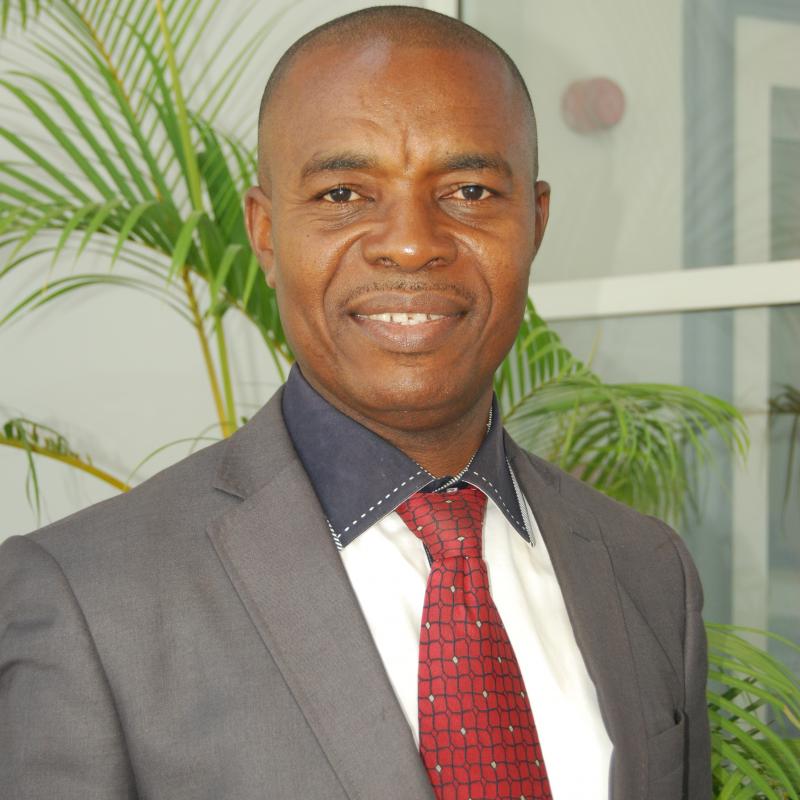
My name is Dr. Uzodinma Adirieje, independent monitoring and evaluation consultant. I am a Fellow and the National President of the Nigerian Association of Evaluators (NAE). With his over 15 years of experience in implementing large-scale and complex monitoring and evaluations (M&E), projects/programs reviews, and surveys to collect individual, household, community, and facility-level data; I am/have been involved in the monitoring and evaluation of the research projects, programs and policies with a particular interest in representation from potential trial participants, those at high risk of severe diseases/infections (HIV/AIDS, TB, Malaria, COVID-19), survivors, community members and healthcare professionals in Africa and the global south. I am a Fellow and the National President of the Nigerian Association of Evaluators (NAE), an Associate Consultant on Monitoring and Evaluation (M&E) to the British Council, and Lead/Managing Consultant at Health Systems and Projects Consultants Ltd. I am a professional evaluator and manager and have served as a consultant to the Federal Ministry of Health (FMOH), UNICEF Nigeria, and Nigeria’s Country Coordination Mechanism [CCM] of the Global Fund for AIDS, Tuberculosis, and Malaria (GFATM). I was an evaluation/oversight consultant to the GAVI/National Primary Health Care Development Agency (NPHCDA) on routine immunization, as well as consultant to the National Agency for the Control of AIDS (NACA)/World Bank, European Union Support to the Federal Government (SUFEGOR). Dr. Adirieje has been the lead facilitator/curriculum supervisor in the Monitoring and Evaluation (M&E) training/certificate course provided by the Health Systems and Projects consultants Ltd; just as he has provided M&E capacity building/training to staffers of the Federal Ministry of Finance, Budget and National Planning (MFBNP), staff of the Federation of International Women Lawyers (FIDA) and hundreds of M&E practitioners. He has also provided these services in almost all the states in Nigeria.
I was the consultant to the Federal Ministry of Finance, Budget and National Planning and UNICEF, for the development of the Monitoring and Evaluation Policy for Nigeria (2020). I previously served as to the Federal Ministry of Health (FMOH) and Unicef, for the Joint Annual Review for the Evaluation of Nigeria’s National Strategic Health Sector Development Plan in Akwa Ibom State in 2012. In 2012-14, I served as Technical Consultant to Nigeria’s Country Coordination Mechanism on evaluation/oversight visitations to Global Fund for AIDS, TB and Malaria (GFATM) project sites in Kebbi, Akwa Ibom, Anambra, and Rivers States. I was the GAVI consultant that provided monthly routine immunization (RI) monitoring and evaluation (M&E), data reviews, supportive supervision, capacity building, and reports in 250 (two hundred and fifty) health centers in Imo State during 2012-2014. I was also the consultant of the World Bank and NACA that developed Imo State Multi-sectoral HIV & AIDS Monitoring and Evaluation Plan in 2012; and served as the sole consultant for the ‘Development of GFATM Comprehensive Manual of Procedures’ for Nigeria, 2012. In 2014, I undertook data quality self-assessment (DQS) of RI in Njaba and Owerri West LGAs of Imo State on behalf of the National Primary Health Care Development Agencies (NPHCDA).
I was a Trainer/Resource Person and Supervisor for the training of 125 persons from the 36 States and FCT on Monitoring and Evaluation (M&E), and supervised the M&E of the Home-Based Care component of the Global Fund Round 9 in the 36 States and FCT under the Civil Society for HIV/AIDS in Nigeria [CiSHAN] during 2010-2011.
I possess a strong capacity and experience in planning and organizing surveys, fieldwork/logistics in Nigeria; and have a good network of experienced enumerators, supervisors, and data entry clerks and the ability to mobilize and retain them all over Nigeria. I have proven experience with data quality assurance mechanisms (fieldwork management, data entry programming, etc.) on Global Fund grants/projects; and have presided over the procurement of necessary equipment, including laptops under the Global Fund grant/projects. I am familiar and experienced with both field and central-based data entry methods as may be desired. I am very fluent in written and spoken English and Igbo languages, with a fair understanding speaking of Hausa and Yoruba also. I am very much at home with the health sector in Nigeria have worked with three ministers of health and several commissioners for health in Nigeria in the last 10 (ten) years. I have more than 15 (fifteen) years of experience leading/managing large-scale and complex surveys to collect individual, household, and/or provider/firm-level data. I serve as a consultant to the Federal Ministry of Health and National Primary Health Care Development Agency (NPHCDA) among other notable institutions in the country with demonstrated capacity and experience in leading/managing survey fieldwork and logistics.
I am a Measure Evaluation/USAID-trained monitoring and evaluation (M&E) practitioner and have also received training in Sexual and Reproductive Health and Rights (SRHR) and Health Economist from the World Bank, with involvements in M&E as an implementer, supervisor, and trainer since 2010. My areas of focus are SRHR including HIV and AIDS, Primary Health Care (PHC), Vaccines/Immunizations, Energy/Environment, Nutrition/Food Security, and Good Governance/Human Rights. I also hold a doctoral degree in Optometry from the College of Medicines and Health Sciences of Imo (now Abia) State University in 1988. I am currently a freelance consultant on health systems strengthening with M&E evidence-generation, capacity building and training, as my core competencies.
I have received the following additional M&E/evidence-generation related trainings from the USAID/Measure Evaluation/MSH: Optimizing your M&E team's performance: Improving internal communication and dealing with conflict; Overcoming the challenge of building and leading effective M&E teams for the public sector, NGO, and civil society organizations; The Virtual Leadership Development Programme (a Diploma course); Country Ownership & Organizational Capacity Building; and Creating an Enabling Environment for M&E Community of Practice [CoP]. I have also received training in Statistical Package for Social Sciences (SPSS) and Data Management; the use and application of QuickBooks software; and Peer Participatory Rapid Health Assessment for Action (PPRHAA).
Nigeria
Uzodinma Adirieje
National President
Nigerian Association of Evaluators (NAE) and Afrihealth Optonet Association
Publicado el 05/11/2025
MÁS ALLÁ DEL INFORME FINAL: ¿QUÉ SE NECESITA PARA COMUNICAR BIEN UNA EVALUACIÓN?
por el Dr. Uzodinma Adirieje
Expresidente nacional, Asociación Nigeriana de Evaluadores (NAE)
La comunicación eficaz de una evaluación va mucho más allá de la elaboración de un informe final. Requiere un compromiso estratégico, inclusivo y continuo con diversos actores antes, durante y después del proceso de evaluación. Comunicar bien una evaluación significa asegurar que la evidencia no solo se genere, sino que también se comprenda, se considere confiable y se utilice para orientar decisiones, mejorar el desempeño y promover el cambio.
- Claridad de propósito y público: Los evaluadores deben identificar quién necesita la información — responsables de políticas, implementadores, donantes o comunidades — y adaptar la comunicación a sus necesidades, niveles de comprensión y contextos. Un informe técnico por sí solo rara vez influye en los responsables de decisiones. La combinación de notas de política, infografías, tableros de control, diálogos comunitarios y resúmenes en redes sociales mejora la accesibilidad y el alcance.
- Oportunidad y relevancia: Esperar hasta el final de una evaluación para compartir los resultados limita su influencia. Los mecanismos de retroalimentación continua, las sesiones participativas de interpretación y los informes intermedios mantienen el interés de las partes y fomentan la apropiación de los resultados. La comunicación debe ser iterativa, ayudando a los usuarios a interpretar los datos, comprender las implicaciones y actuar sobre los hallazgos a medida que surgen.
- Narración y visualización: Estas herramientas transforman los datos en relatos significativos que conectan con experiencias humanas. Los gráficos, mapas e historias de éxito dan vida a las estadísticas y muestran impactos concretos. Los evaluadores también deben ser comunicadores sensibles a la cultura, respetando los idiomas, normas y valores locales para asegurar que los mensajes sean comprendidos y aceptados.
- Construcción de relaciones y confianza: Comunicar la evaluación implica transparencia, integridad y capacidad de respuesta. Esto convierte la evaluación de un trámite administrativo en un proceso de aprendizaje. Cuando la comunicación vincula la evidencia con la acción, la evaluación se convierte en un motor de rendición de cuentas, transformación y desarrollo sostenible.
Más allá del informe final, la comunicación eficaz en evaluación requiere empatía, creatividad y colaboración, centradas en el aprendizaje y la mejora de las condiciones de vida.
Nigeria
Uzodinma Adirieje
National President
Nigerian Association of Evaluators (NAE) and Afrihealth Optonet Association
Publicado el 07/12/2025
Vincular la evidencia con la acción es fundamental para garantizar que las intervenciones de la sociedad civil generen resultados medibles y permanezcan alineadas con las necesidades de las comunidades. Para fortalecer la relación entre la evaluación de impacto y la toma de decisiones en tiempo real, las Naciones Unidas y sus socios deben priorizar la institucionalización del uso oportuno de datos mediante sistemas integrados de seguimiento, evaluación y aprendizaje. La incorporación de mecanismos de retroalimentación rápida, como paneles adaptativos, informes basados en dispositivos móviles y fichas de evaluación comunitaria, permite al personal de primera línea y a los responsables de la toma de decisiones seguir el progreso, identificar brechas y ajustar estrategias con rapidez.
La co-creación de evidencia con organizaciones de la sociedad civil y con las poblaciones afectadas asegura que las evaluaciones reflejen las realidades locales. Cuando las comunidades participan directamente en la definición de indicadores, la generación de datos y la interpretación de los resultados, la evidencia se vuelve más pertinente, más confiable y más fácil de utilizar.
Es imprescindible que las Naciones Unidas inviertan en el fortalecimiento de capacidades de las organizaciones de la sociedad civil, de modo que puedan realizar evaluaciones rigurosas pero ágiles, aplicar herramientas digitales y comunicar claramente los resultados. Esto incluye formación en métodos cualitativos y cuantitativos, visualización de datos y planificación basada en escenarios.
Finalmente, promover plataformas de aprendizaje colaborativo, como centros de evidencia ONU-OSC y espacios de intercambio de conocimientos Sur-Sur, ayuda a transformar los resultados de las evaluaciones en acciones compartidas. Cuando la evidencia es accesible y está democratizada, la toma de decisiones se vuelve más rápida, más inclusiva y más responsable, lo que mejora el impacto del desarrollo.
Dr Uzodinma Adirieje, DDP, CMC, CMTF, FAHOA, FIMC, FIMS, FNAE, FASI, FSEE, FICSA
Nigeria
Uzodinma Adirieje
National President
Nigerian Association of Evaluators (NAE) and Afrihealth Optonet Association
Publicado el 07/12/2025
La localización de la evidencia es fundamental para garantizar que las evaluaciones de impacto realmente informen los resultados del desarrollo y fortalezcan a la sociedad civil. Para lograrlo, las evaluaciones deben comenzar con la definición de prioridades a nivel local, donde las comunidades, las instituciones tradicionales, los grupos de mujeres, las redes juveniles y las poblaciones vulnerables definan conjuntamente qué significa el éxito y cuáles son los resultados que más importan. Esto permite que las evaluaciones se basen en realidades vividas y no en marcos externos impuestos.
En consecuencia, las evaluaciones deben diseñarse de acuerdo con las capacidades locales, combinando el rigor científico con métodos apropiados al contexto, como la investigación acción participativa, las fichas de evaluación comunitaria, el monitoreo centinela y los mecanismos de retroalimentación rápida. El uso de herramientas de datos simplificadas, tecnologías móviles y canales de comunicación culturalmente apropiados ayuda a reducir las barreras de participación.
El fortalecimiento de la capacidad técnica de la sociedad civil es esencial. La formación de las organizaciones de la sociedad civil en principios de seguimiento, evaluación y aprendizaje, alfabetización de datos y aprendizaje adaptativo les permite generar, interpretar y utilizar la evidencia de manera efectiva. Las alianzas con universidades e institutos de investigación aportan mayor credibilidad.
Finalmente, los resultados de la evaluación deben traducirse en conclusiones prácticas y relevantes a nivel local, utilizando narrativas, paneles visuales y foros de retroalimentación que conecten con los actores comunitarios. Cuando la evidencia refleja las voces locales, respeta los contextos culturales y apoya la resolución práctica de problemas, se convierte en un motor poderoso de un desarrollo inclusivo, responsable y sostenible.
Dr Uzodinma Adirieje, DDP, CMC, CMTF, FAHOA, FIMC, FIMS, FNAE, FASI, FSEE, FICSA
Nigeria
Uzodinma Adirieje
National President
Nigerian Association of Evaluators (NAE) and Afrihealth Optonet Association
Publicado el 07/12/2025
Supporting UN Reform – Global Impact Evaluation Forum 2025 (Civil Society Perspective)
Supporting the ongoing UN reform agenda—especially its focus on coordination, efficiency, and country-level impact—is essential for improving the lives of rural and poor urban populations in Africa and other resource-poor regions. The impact evaluation community can play a transformative role by strengthening coherence, accountability, and value for money across the UN system.
First, evaluators must champion harmonized measurement frameworks that reduce duplication and align UN agencies, governments, and civil society around shared indicators. Common frameworks improve comparability, promote joint planning, and ensure that results reflect community priorities rather than institutional silos.
Second, the community should support country-led, context-sensitive evaluations that amplify local voices. By embedding participatory approaches, engaging community-based organizations, and acknowledging traditional knowledge systems, evaluations become more relevant and actionable for marginalized populations.
Third, evaluators can foster cost-effective programming by generating evidence on what works, what does not, and why. This requires strengthening real-time monitoring, adaptive learning, and the use of digital tools (including AI) to track performance and inform timely course corrections. Clear communication of findings—through policy briefs, dashboards, and community dialogues—helps optimize resource allocation.
Fourth, the community should reinforce collaboration across UN agencies, promoting joint evaluations, shared data platforms, and cross-sector learning. These reduce transaction costs and enhance integrated delivery of health, climate, livelihood, and social protection services.
Ultimately, by advancing evidence-driven reforms, the impact evaluation community can help the UN deliver more coherent, inclusive, and cost-effective solutions—ensuring that rural and poor urban populations receive equitable attention and lasting development gains.
Dr. Uzodinma Adirieje, DDP, CMC, CMTF, FAHOA, FIMC, FIMS, FNAE, FASI, FSEE, FICSA