
- Capacity Development
- Evaluation methods
- Evaluation process
- Evaluation results
- Monitoring & Evaluation
- Participatory approaches
In 2024, I was a member of the evaluation team of the CGIAR Science Groups-Genetic Innovation (GI), Resilient Agrifood Systems (RAFS), and Systems Transformation (ST), conducted by the Independent Advisory and Evaluation Service (IAES).
In 2024, I was a member of the evaluation team of the CGIAR Science Groups-Genetic Innovation (GI), Resilient Agrifood Systems (RAFS), and Systems Transformation (ST), conducted by the Independent Advisory and Evaluation Service (IAES). These evaluations were global in scope, with Africa in a central role. It was not simply ‘one region among many’ where evidence was collected. Rather, Africa was the main site of learning and understanding where partnerships, knowledge co-production, and innovation pathways could be assessed and observed in practice.
This approach aligns with the Made-in-Africa Evaluation (MAE) philosophy, which emphasises grounding evaluation in African contexts, values, and institutional realities. MAE reminds us that evaluation on the continent should not simply measure the effectiveness of interventions, but also examine how knowledge is produced, who shapes research agendas, how power flows within collaborations, and how learning is shared across institutions.
Looking back across the Science Groups evaluation process, engagements in Kenya, Ghana, and across the wider region help to clarify not only how CGIAR research interacts with national systems, but also how evaluation itself can be conducted in ways that respect lived experience, acknowledge institutional memory, and value co-creation over extraction. The journey unfolds in three major phases, each contributing something distinct to the evaluation’s understanding of Africa’s role in global agricultural research.
Phase 1: Listening Before Judging-Scoping Mission in Kenya
The evaluation began in Kenya with a scoping mission focused on understanding how CGIAR centres based in Nairobi operate within national and regional agricultural innovation systems. Participants included the International Livestock Research Institute, World Agroforestry, International Maize and Wheat Improvement Centre, and other CGIAR centres.
What is important to clarify is that this stage did not generate evaluative findings. It was instead a phase of orientation and grounding. It allowed the evaluation team to:
- Understand how responsibilities were distributed across CGIAR centers operating in Kenya.
- Identify the points where collaboration between CGIAR and national systems was strong-and where coordination requires clarity.
- Learn how researchers themselves understood research delivery, scaling strategies, and institutional constraints.
- Observe how agricultural knowledge moved between laboratories, trial fields, county-level extension structures, and farming communities.
This approach resonates strongly with the MAE principle of “context before judgment.” Evaluation did not begin with indicators, metrics, or checklists, and instead began with listening.
This approach also reflects MAE’s emphasis on institutional respect. Instead of treating CGIAR and national systems as abstract structures to be analyzed, the evaluation acknowledges them as communities of practice shaped by history, culture, and local realities. What emerges is not data but orientation that shapes every subsequent step.
Phase 2: Observing Partnership in Motion-Kenya Field Mission
Once the evaluation team understood the landscape, the largest field mission in Kenya was conducted. At this phase, together with an online survey, evidence was gathered to inform the Kenya Country Brief. The scope widened into a regional hub and county agricultural offices, seed companies, early-generation seed multipliers, and farmer cooperative networks.
This phase gave an understanding, through interviews, how research moved from being a scientific concept to a practical application. For example:
- Testing climate-smart seed varieties with county extension officers.
- Data systems supporting food security planning in policy dialogues.
- Private sector actors expressing readiness to scale improved seeds - but also needing clearer licensing frameworks to do so sustainably.
Relationships and realities here are multi-layered. Researchers spoke about collaboration, but also about funding delays. Private sector actors admired innovation but sought clarity on intellectual property and market rights. Cooperative leaders emphasized that innovation must account for labor roles within households, gendered access to tools, and local economics.
From my perspective, this phase showed emerging alignment:
Table 1: My perspective of how the evaluation approach of IAES reflects key MAE principles in the Kenya case
| MAE principle | Alignment in Kenya field mission | Notes |
|---|---|---|
| Contextual grounding | Strong | Research priorities aligned with national strategies. |
| Relational collaboration | Moderate | Collaboration was present but still expert-led in places. |
| Co-ownership in agenda-setting | Partial | National systems were implemented but did not always shape research direction. |
| Community voice | Emerging | Farmers were represented through cooperatives, but participation could deepen. |
The Kenya mission reveals a system that is collaborative and ambitious, but still evolving toward deeper forms of shared decision-making.
Phase 3: Co-Creation in Action-Ghana Field Mission
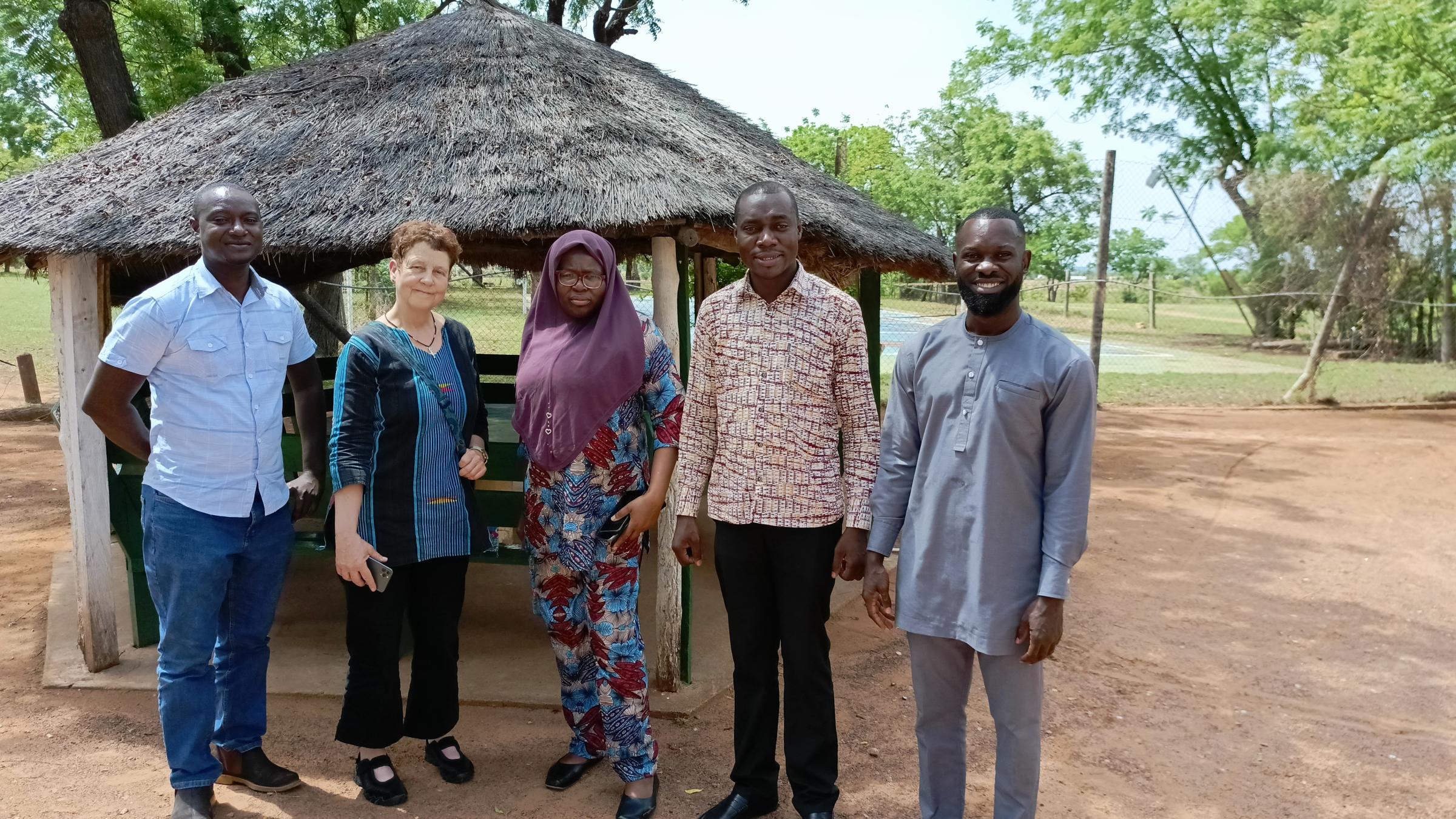
The Ghana field mission presented a different dynamic, centered on co-creation and shared scientific leadership. In engagements with the Council for Scientific and Industrial Research (CSIR) and the Savannah Agricultural Research Institute (SARI), it became clear that CGIAR-NARES partnerships matured into collaborative research ecosystems. Key observations include the following:
- Joint breeding programs aligned with Ghana’s agroecological priorities.
- Shared research infrastructure and laboratory resources.
- Training and mentorship models cultivated long-term scientific leadership.
- Bundled innovations adapted to local farming realities, including labour patterns, gender dynamics, and climate risks.
In my perspective, this phase strongly reflects the core ethos of MAE:
Table 2: My perspective of how the evaluation approach of IAES reflects key MAE principles in the Ghana case
| MAE principle | Alignment in Ghana field mission | Notes |
| Co-creation of knowledge | Strong | Research questions and methods were shaped collaboratively. |
| Recognition of African institutional leadership | Strong | SARI and CSIR scientists acted as decision-makers, not just implementers. |
| Cultural and social relevance | Strong | Innovations adapted to community practice and were not imposed. |
| System strengthening | Emerging | Institutional capacity growing, though funding stability, remains critical. |
In my Ghanaian view, evaluation felt relational, grounded, and generative. The learning was not about how well CGIAR was performing, but about how collaboration drives meaningful scientific progress
Phase 4: Holding the Continent Together-Africa Brief
To avoid reducing Africa to isolated case examples, the three evaluation teams synthesised cross-country insights from other parts of Africa, where engagement was remote, into the Africa Brief, which identifies shared lessons across the continent. The brief highlights that:
- African NARES are not only research implementers, but are research leaders.
- Capacity strengthening is real, but sustainability requires institutional, not just individual, capacity support.
- Private sector partnerships can scale impact, but only when benefit-sharing models are fair and transparent.
- Gender inclusion has progressed. Youth inclusion needs an intentional strategy.
- Africa is a driver of global climate resilience innovation, not a recipient.
This is perhaps the clearest reflection of MAE: Africa is positioned as a producer of knowledge, not a beneficiary of it.