
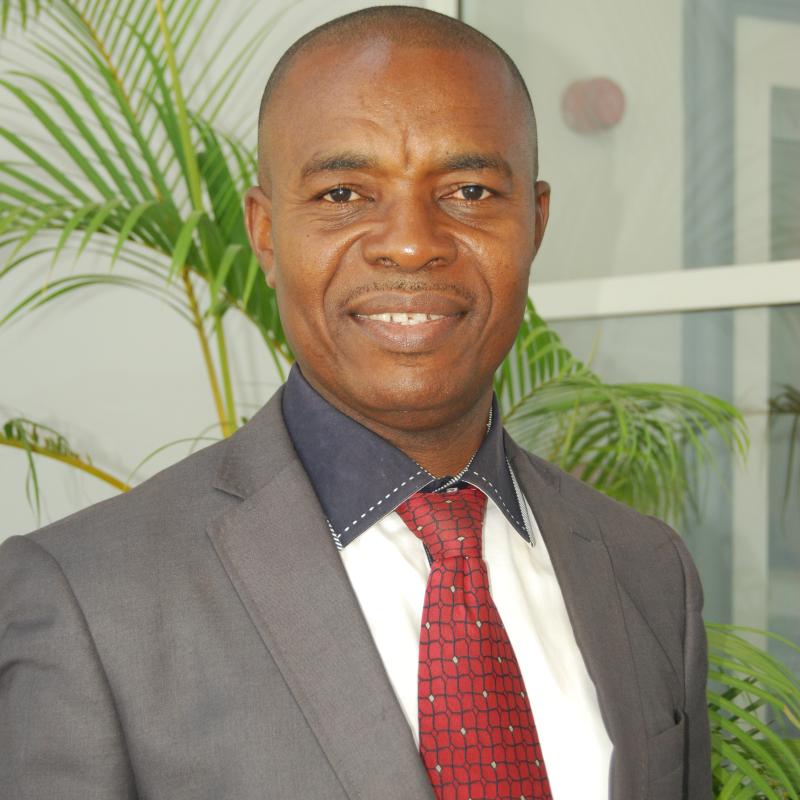
DETAILS OF THE FIELDS OF EXPERTISE AND WORK EXPERIENCE OF
DR. UZODINMA ADIRIEJE OF AFRIHEALTH OPTONET ASSOCIATION
FIELDS OF EXPERTISE
1. Health Systems, Public Health and Health Economics
a. Health Economist with World Bank training and deep experience in health systems strengthening, financing, and policy analysis.
b. Focus areas include Universal Health Coverage (UHC), Primary Health Care (PHC), maternal and child health, HIV/AIDS, TB, malaria, nutrition, and other infectious diseases.
c. Applies evidence-based approaches to health promotion, behavior change communication, and participatory learning in community health.
2. Monitoring and Evaluation (M&E) Specialist
a. Recognized as an M&E expert, including drafting the national Monitoring and Evaluation Policy of Nigeria.
b. Pioneer Fellow and former President of the Nigeria Association of Evaluators (NAE).
c. Deep experience in designing/implementing evaluation systems, program reviews, surveys, and quality assessments in health and development sectors.
3. Development, Sustainable Development and SDG Policy
a. Expertise in policy analysis, development strategy, and SDG implementation, including participation in national SDG evaluations.
b. National Chairman of the Civil Society Organizations Strategy Group on SDGs in Nigeria.
4. Advocacy, Communication and Social Mobilization
a. Strong track record in advocacy and community mobilization across health, governance, gender equity, climate, and human rights.
b. Works with government ministries, legislative committees, UN agencies, NGOs, and development partners to influence policy and resource allocation.
5. Climate, Environment and Energy
a. Advocate for climate action, biodiversity, renewable energy, and sustainable environmental policies.
b. As President of the Society for Conservation and Sustainability of Energy and Environment in Nigeria, he connects environmental issues with public health and development.
6. Project/Program Management and Leadership Training
a. Certified in Project/Programme Management, Facilitation, Leadership, Capacity Building, and Organizational Management.
b. Facilitates workshops, trainings, and mentorship in areas like M&E, leadership, proposal writing, advocacy, and gender mainstreaming.
7. Research, Writing and Knowledge Sharing
a. Active researcher and writer (blogs, journals, e-forums, newspapers) on topics ranging from health to development and social change.
b. Authored works on topics such as female circumcision/FGM and community health approaches.
WORK EXPERIENCE AND ROLES
1. Current and former Key Leadership Roles
a. CEO and Permanent Representative to the United Nations, Afrihealth Optonet Association (AHOA) — a global civil society network and think tank linking CSOs in health, climate, and development.
b. President, Society for Conservation and Sustainability of Energy and Environment in Nigeria (SOCSEEN).
c. Chairperson, Global Civil Society Consortium on Climate Change (GCSCCC).
d. National Chairman, Civil Society Organizations Strategy Group on SDGs, Nigeria.
e. National Coordinator roles in civil society coalitions focusing on vaccines, UHC, and SDGs.
2. International and Government Engagement
a. Consultant and advisor to UN agencies (e.g., UNICEF, UNDP, ILO, UNAIDS, UNICEF) and multi-lateral partners such as the Global Fund.
b. Worked with Federal and State Ministries of Health and legislative committees on health policy insight and health systems interventions.
c. Member of national technical working groups on M&E and Voluntary National Review (VNR) processes in Nigeria.
d. Member of the Presidential National Steering Committee on Alternate School Programme (ASP)
e. Chair/Moderator of the 2020 national Civil Society VNR Conference
PROGRAMME, PROJECT LEADERSHIP
1. Directed major civil society projects including sustainable citizen participation in the Niger Delta (UNDEF-funded).
2. Led national World Malaria Day committees and other high-impact health campaigns/events.
3. Organized and managed local and international conferences, workshops, and development events.
4. Served as the Technical Consultant to the Nigeria’s Ag Minister of Foreign Affairs, and as Conference Coordinator of the Global Women Network Africa conference in Abuja, Nigeria
5. National Team Supervisor for the Nigeria Malaria Matchbox Project (Global Fund / NMEP) in conflict‑affected States in Northeast Nigeria (2020–21),
PROFESSIONAL RECOGNITION
1. Awardee of international recognition for contributions to evaluation from the International Organization for Cooperation in Evaluation.
2. Received the Lifetime Achievement Award, CSR Reporters Nonprofit Excellence (2023)
3. Led initiatives that earned Afrihealth Optonet Association awards for SDG impact (e.g., SDG 3 Champion).
4. International Organisation for Cooperation in Evaluation (IOCE) Recognition Award (2022) for M&E contributions
SUMMARY
Dr. Uzodinma Adirieje is a multidisciplinary development leader with decades of experience across public health systems, monitoring and evaluation, policy and SDG frameworks, climate and environmental advocacy, program management, and civil society mobilization. His leadership at Afrihealth Optonet Association links global advocacy with community-centred health and sustainable development solutions, while his work with governments and international organizations reflects deep technical expertise and strategic influence.
Nigeria
Dr. Uzodinma Akujekwe Adirieje
CEO
Afrihealth Optonet Association (AHOA) - CSOs Network
Posted on 01/04/2026
In African and low-resource health systems, evaluation too often serves as a post-hoc accountability exercise rather than a tool for systemic transformation. From decades of practice in health systems strengthening, the first and most critical shift must occur in mindset - how we perceive the purpose and ownership of evidence. Evaluators and decision-makers frequently operate with a compliance mindset, producing reports that satisfy external donors but fail to capture the nuanced realities on the ground. Recently, in Lagos State, Nigeria, routine monitoring in the maternal health program had focused narrowly on facility births. But, by adopting a learning-oriented approach - examining quality of care, patient experience, and referral patterns, it was uncovered that 42% of women bypassed local clinics due to perceived low-quality services. Targeted staff training and resource reallocation subsequently increased facility-based deliveries by 17% within a year.
Similarly, Community-Led Monitoring in another Nigerian district revealed a 40% barrier from hidden transport costs, despite reports showing 95% patient “satisfaction.” These insights highlight those methods and criteria, however technically sound, that follow effectively only after the mindset evolves to prioritize adaptive, locally-informed learning over extractive reporting.
Evidence from the recent Q1/2026 ‘Life & Health’ dialogues of Afrihealth Optonet Association (AHOA) shows districts using integrated digital platforms and participatory evaluation achieved a 15% rise in immunization coverage - proof that embedding evaluation in real-time problem-solving, not just retrospective reporting, produces tangible health impact.
Sustainability and long-term development hinge on this alignment. Transformative evaluation is not about better spreadsheets or fancier dashboards; it is about decolonizing intent, ensuring data serves local solutions, and fostering a culture of critical inquiry. In constrained African health systems, the mindset shift is the fulcrum upon which all methods, criteria, and institutional reforms pivot toward lasting, systemic change.
Nigeria
Dr. Uzodinma Akujekwe Adirieje
CEO
Afrihealth Optonet Association (AHOA) - CSOs Network
Posted on 30/03/2026
FROM HINDSIGHT TO FORESIGHT: EXPERIENCE AT AFRIHEALTH OPTONET ASSOCIATION
by Dr. Uzodinma Adirieje
From hindsight to foresight, our experience at Afrihealth Optonet Association (AHOA) demonstrates that evaluation is most valuable when it moves beyond retrospective accountability to actively shaping future decisions under uncertainty. Three practical insights stand out.
Embed adaptive learning loops into programme design:
In Afrihealth’s health systems and climate-linked interventions, periodic reviews were not treated as endline exercises but as real-time checkpoints. Evaluators facilitated rapid feedback cycles - combining routine data, beneficiary insights, and contextual signals (e.g., policy shifts, climate events like COP29 Baku) - to inform mid-course corrections. This approach ensures programmes remain relevant even as conditions change.
Integrate mixed-methods evidence for anticipatory analysis:
Quantitative indicators alone often lag behind emerging realities. Afrihealth’s evaluations paired service delivery data with qualitative intelligence from communities and frontline workers. For example, shifts in health-seeking behaviour during economic stress were detected early through interviews and focus groups, enabling proactive adjustments in outreach and resource allocation.
Align evaluation questions with decision horizons:
Rather than asking only “what worked,” Afrihealth reframed inquiries toward “what is likely to work next, for whom, and under what conditions.” Scenario-building and contribution analysis were used to explore plausible futures, particularly in programmes intersecting with climate variability and public health risks. This made findings directly usable for strategic planning, not just reporting.
Stakeholder co-creation:
By engaging policymakers, implementers, and communities in defining evaluation priorities, Afrihealth ensured that findings addressed real decision needs. This strengthened ownership and increased the likelihood that recommendations were acted upon.
Similarly, optional readings in developmental evaluation and adaptive management further reinforce these practices, emphasising flexibility, systems thinking, and learning-oriented accountability.
This way, evaluators can enhance relevance in uncertain contexts by institutionalising real-time learning, triangulating diverse evidence, and orienting evaluations toward future-facing decisions.
Dr. Uzodinma Adirieje is a former National President of the Nigerian Association of Evaluators (NAE). He is a seasoned evaluator, health economist, and civil society leader who was the co-consultant to drafting Nigeria’s National M&E Policy. He led SDG3 evaluation synthesis, participated in national SDG 3 and SDG 4 evaluations, and provided M&E training and mentorship, advancing evidence-based, forward-looking development practice.