
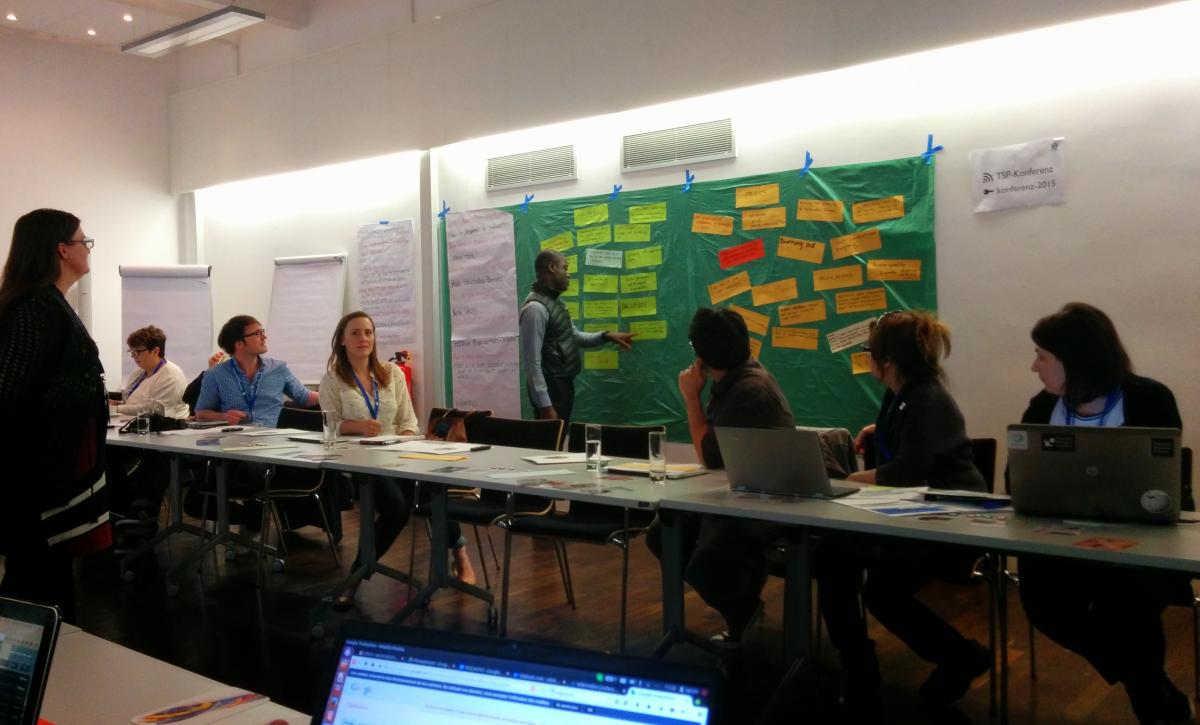
Across the international humanitarian, development, and peacebuilding sectors, organizations are facing increasing financial pressure due to shifting donor priorities, competing domestic priorities, and rising operational costs. Many are expected to maintain or expand programme delivery and associated accountability and learning activities despite declining or uncertain resources. These pressures are also affecting evaluation functions at international, national, and local levels. As resources become more constrained, evaluators face growing expectations to generate timely and useful evidence while safeguarding evaluation quality, independence, and credibility. This raises important questions about how evaluation systems, approaches, and methods can adapt to changing institutional priorities and operational realities.
Rationale for the discussion
While funding constraints affect organizations across sectors, their implications for evaluation vary depending on institutional mandates, operational contexts, and the populations served. Drawing on the complementary focus areas of EvalforEarth and ALNAP, this discussion will examine these implications across climate action, food security, resilience, humanitarian emergencies, and peacebuilding, with particular attention to the challenges of sustaining credible evidence and accountability in resource-constrained settings.
The discussion will also consider the risks associated with reducing investment in evaluation or failing to incorporate evaluative evidence into strategic and operational decisions, particularly where resources are limited and the consequences of ineffective interventions may be significant.
Purpose of the discussion
The discussion seeks to draw on the experiences of EvalforEarth and ALNAP members to identify practical lessons and recommendations for sustaining effective evaluation systems under financial and operational constraints.
Specifically, it aims to:
- Examine how financial uncertainty is affecting evaluation practice, accountability, organizational learning, and evidence use across different sectors and institutional contexts.
- Identify practical adaptations, innovations, and approaches that can help maintain evaluation quality, independence, and usefulness with limited resources.
- Explore how evaluators and organizations can better demonstrate the value of evaluative evidence and strengthen its use in strategic and operational decision-making.
Guiding discussion questions
Week 1: Implications of funding constraints: How have funding or resource constraints affected evaluation, learning, and accountability processes in your organization or context?
Week 2: Adaptations and practical solutions: How have you or your organization adapted evaluation and learning practices to respond to these constraints?
Week 3: Risks of limited evidence use: What are the risks of excluding evaluative evidence from strategic and operational decision-making, particularly in resource-constrained environments?
Week 4: Looking ahead: What needs to change to sustain credible, independent, and useful evaluation in increasingly resource-constrained environments?
The online discussion will remain open for contributions until 10 November 2026.
Log in to post a commentNot yet a member? Register here
United States of America
Richard Tinsley
Professor Emeritus
Colorado State University
Posted on 01/11/2026
I have been very concerned about how the evaluation effort has failed the smallholder communities and what can be done about it. I have also reviewed a massive text on evaluations and took the opportunity to respond to the text coordinator. I thought you might be interest in my response and references from the Smallholder Agriculture website I manage. This follows.
Thank you
Dick Tinsley
My response and references follow:
-----------------------------------
I have been going through your massive text on evaluations. It is quite an undertaking and takes some time to fully review. Please allow me to comment on some concerns I have about evaluations as they apply to smallholder farming communities. I think they have massively failed smallholder communities on two counts. They continue to endorse the use of producer organizations that the smallholders have 90% avoid, squandering billions of dollars annually on projects rejected by the intended beneficiaries. And, failed to identify that smallholder communities have very limited labor, and that labor is severely under nourished to undertake agronomic field work expected of them, limiting the “operational feasibility” of innovations developed and promoted for their benefit resulting in minimal acceptance of recommendations. This can be clearly visible by casual observations of the 8-week spread in crop management activities. Or how intensive the field activity is in the morning but limited in the afternoon even with massive work need and family food security at risk. How can evaluation identify this and get it addressed so smallholder development can advance?
My overview thoughts are that Evaluations are only of value to the extent they guide future projects to better serve the beneficiaries. Yes, they may be a legal requirement and document presumed accomplishment, but this is history, and ultimate value is how they guides future projects. Also, if you look closely at the 2+ year with million+ US$ invested between conception and implementation, the limited role the beneficiaries have in the process, the rigidity of the final contracts and committed staffing, projects are mostly imposed on the smallholder communities. This forces any post implementation participatory input to be leveraged to what the contract already agreed and staffed accordingly. Also, it is the implementors that prepare the periodic progress reports with limited input for the beneficiaries and pragmatic mandate to appease the donors by proclaiming the overall success of the project. With these restrictions in upfront beneficiary participation and periodic reporting the evaluations become the “ultimate voice of the beneficiaries” and opportunity to indicate their satisfactory or avoidance of the effort.
With these brief comment my I request you glace through the following webpages with possible links to other pages and tell me what you think and how these concerns can be included in future evaluation of smallholder communities so we can move past the reliance on producer organizations and address the operational feasibility of innovation including those concentrated on sustainability and resilience.
Thank you for your indulgence,
Dick Tinsley, Professor Emeritus
Soil & Crop Sciences Department
Colorado State University
Linked Webpages:
https://labs.agsci.colostate.edu/tinsley/research/development-process/#monitoring
https://labs.agsci.colostate.edu/tinsley/research/supporting-value-chains/#taxpayers-expectations
https://labs.agsci.colostate.edu/tinsley/research/development-process/#operational-feasibility
https://labs.agsci.colostate.edu/tinsley/research/dietary-energy-deficit/#caloric-energy-balance
Nigeria
QueenMakarie Constance Jerome
CEO
Zion Kingdom Humanity Foundation
Posted on 01/11/2026
In my view, funding and resource constraints affect evaluation, learning, and accountability because these processes require adequate finances, skilled personnel, time, and reliable data systems. When resources are limited, field monitoring may be reduced, evaluations may be delayed, and staff may lack opportunities to learn from project experiences. Furthermore, accountability can be weakened when organizations cannot adequately verify results or report their activities to stakeholders.
“However, organizations can manage these challenges by prioritizing key evaluation activities, adopting cost-effective data collection methods, strengthening staff capacity, and involving beneficiaries in monitoring and feedback. I believe that evaluation, learning, and accountability should not be viewed as optional activities but as essential investments that help organizations improve performance, demonstrate results, and use limited resources more effectively.”
Key message: Limited funding may restrict what an organization can evaluate, but effective planning, learning, prioritization, and transparency can help ensure that available resources still produce meaningful results.
Cameroon
Juliana Adjem Anchang
Lead Consultant
Group for Research, Monitoring and Evaluation Consulting
Posted on 28/10/2026
My engagements with development and humanitarian organizations, and especially local civil society organizations, suggest that as financial resources decline, there is a growing risk that M&E will be deprioritized, particularly where its value for organizational learning and strategic decision-making has not been sufficiently institutionalized. Several evaluations are donor requirements, but when not donor-driven, efforts in evidence generation for decision-making are often centered on project achievements and success stories rather than systematically generated evidence. While this does not necessarily imply that evaluations are not conducted, it raises concerns about how evidence is documented, retained, and used. In resource-constrained environments, excluding such evidence risks repeating ineffective approaches, misallocating scarce resources, weakening accountability to communities, and missing opportunities for program adaptation and improvement.
Kenya
Eddah Kanini (Board member: IDEAS, AGDEN & MEPAK. Former Board member AfrEA 2021-2026
Monitoring, Evaluation and Gender Consultant/Trainer
Posted on 27/10/2026
Thank you to EvalforEarth and ALNAP. This is a timely and very relevant discussion.
The shrinking of finances is affecting organization including humanitarian, development and Civil societies hence the fundamental questions about the sustainability of evaluation systems, particularly in low and middle-income countries.
From my experience working across health systems, climate change, gender equality, education, humanitarian programs and institutional capacity strengthening in Africa, I believe the challenge is not simply how to conduct evaluations with fewer resources, but how to sustain the value, credibility and use of evaluation when resources are shrinking.
A few highlights come to mind.
Evaluation aspects should not always be the first casualty of funding cuts.
Depending on different leadership, where resources are perceived to have declined, evaluation, and learning activities are often the first to be reduced or completely eliminated. Yet these are the moments when organizations need credible evidence to determine the interventions that could affect life, those that deliver results, areas where resources are being wasted, areas that need interventions to be adapted and areas that can wait for a Phase in process and programmes to be sustained.
Funding constraints should not compromise ethics, quality and independence
In resource-constrained environments, there may be pressure to reduce sample sizes, shorten data collection periods, rely on virtual data collection or limit engagement and FPIC with communities. This could improve efficiency, but will weaken the credibility and inclusiveness of evaluation findings. And especially on vulnerable populations, marginalized communities and hard-to-reach areas, where meaningful participation requires additional time and resources.
Local evaluators and organizations should not be overlooked
Declining evaluation budgets usually leads to the transfer of financial and operational risks to national evaluators, local consultancy firms and community-based organizations. They may be expected to deliver complex evaluations within compressed timelines and reduced budgets, while still meeting international quality standards. This raises the questions of fairness, equitable partnerships and localization.
Demonstrate that evaluation is an investment in better decisions, not merely a compliance requirement
As our forefathers said, never waste a crisis; seize it as an opportunity. The funding pressures could be used to strengthen the connection between evaluation evidence and strategic decision-making. Evaluators need to communicate not only on what is achieved, but also how the findings influence resource allocation, adaptation, institutional learning and accountability to affected populations.
Kenya
JACKLINE MUSUYA
Monitoring and Evaluation Lead
Hewatele Limited
Posted on 27/10/2026
In resource-constrained environments, excluding evaluative evidence from strategic and operational decisions creates more than an information gap. It increases the risk that already limited resources will be directed towards interventions that are ineffective, poorly targeted or unresponsive to changing needs.
One major risk is the continuation of activities based on assumptions rather than demonstrated results. Without evidence on implementation challenges, unintended outcomes and community experiences, organisations may continue investing in approaches that appear successful in activity reports but produce limited meaningful change.
A second risk is that the needs of less visible groups may be overlooked. Routine administrative data often capture what is easiest to count, while evaluations can reveal differences in access, participation and outcomes across locations and population groups. When evaluative evidence is excluded, decisions may favour well-documented needs while marginalising communities whose experiences are poorly represented in existing information systems.
Limited evidence use also weakens organisational learning. Teams may repeat implementation problems, lose valuable lessons when programmes close and struggle to explain why particular results were achieved. Under financial pressure, such mistakes become more costly because organisations have less capacity to absorb ineffective spending.
Finally, excluding evaluation findings can weaken accountability. Communities may provide feedback without seeing how their contributions influence programme decisions, while management responses and follow-up actions remain undocumented.
The solution is not necessarily to conduct more evaluations. It is to protect the use of essential evidence by integrating evaluation findings into planning meetings, resource-allocation decisions, risk reviews and management-response processes. When resources are scarce, evidence should become more influential, not less.
Philippines
Mae Albiento
Research Officer
ALNAP
Posted on 26/10/2026
Week 2 summary and introduction to Week 3: What are the risks of excluding evaluative evidence from strategic and operational decision-making, particularly in resource-constrained environments?
Many thanks to all who contributed on our second week of the discussion: Wilbert Marimira, MUKUNZI Olivier, Dr. Uzodinma Akujekwe Adirieje, Eriasafu Lubowa, Abdoul Aziz Bonkoungou, Ayuk James Ebot, Diene Ndiaye, Stephanie Jill Hodge, LEANDRE KOUOTOU NGOUCHEME, Rhode Early Charles, and Atta B. Jacob KOBENAN (PhD).
Overall, Week 2 contributions show that organisations are finding ways to adapt to the funding constraints: being more selective about what they evaluate, asking more focused evaluation questions, making better use of existing data, using digital tools and remote data collection, drawing on local expertise and knowledge, embedding evaluation in programme management, and finding practical ways to make findings more accessible and actionable.
Here, we highlight three key messages:
But doing evaluation with fewer resources shouldn't mean losing sight of what makes it valuable. Even with fewer resources, organisations need evidence they can trust, learning that leads to action, and approaches that take seriously the knowledge and experiences of local actors and affected communities.
The discussion therefore raises an important question for organisations and donors alike: when evaluation budgets shrink, how can we protect the core functions of evaluation—credible evidence, accountability to affected people, independent scrutiny and organisational learning—while changing the way we deliver them?
And so, for our Week 3 discussion, we focus our attention on the risks of limited evidence use.
Our guiding question for this week is:
What are the risks of excluding evaluative evidence from strategic and operational decision-making, particularly in resource-constrained environments?
I encourage everyone to build on the contributions from Weeks 1 & 2 and continue to engage directly with one another. We look forward to reading your insights and experiences. The discussion will be open until 10 November 2026.
Kenya
Eddah Kanini (Board member: IDEAS, AGDEN & MEPAK. Former Board member AfrEA 2021-2026
Monitoring, Evaluation and Gender Consultant/Trainer
Posted on 27/10/2026
I have reflected on this question for a while, and I kept thinking, “In times of financial constraints, can we afford not to use evaluative evidence?”
First, we risk making expensive mistakes with scarce resources. Without evaluative evidence, organizations may not realise it’s not business as usual and may continue funding interventions that are not delivering results and ignore those that could make meaningful contributions. This could lead to institutionalising failure rather than learning from it.
Secondly, I imagine an area where women have to walk long distances to fetch water for households and animals. With no evaluation evidence, there is a possibility of building an airport in the area instead of supporting the community by installing pipes or sinking boreholes. This will only increase inequalities and leave the already marginalised populations behind. The airport may be an important investment in its own right, but is it the most pressing priority, when resources are scarce? Evaluation evidence helps us prioritise interventions and understand what works, for whom, and under what circumstances.
Zimbabwe
Wilbert Marimira
MEAL Expert
Tsorodzo dzeAfrika Advisory
Posted on 23/10/2026
How are organisations adapting evaluation and learning practices amid funding constraints?
Cutting MEAL field visits to save money was the single biggest mistake we made.
When funding ran tight across our climate resilience projects in Bikita, Chiredzi, and Mutare, we initially tried replacing field visits with phone surveys. The data came back thin, and communities felt abandoned because nobody was sitting down to talk with them.
We realised that the real challenge was not merely reducing the cost of evaluation; it was enhancing its value for decision-making and organizational learning.
To fix this, we shifted monitoring directly into the hands of local women and youth; we trained them on offline KoBoToolbox etc and participatory community scorecards using basic Android phones. We instituted a robust feedback uptake mechanism; we realised that instead of waiting for an endline, community monitors shared scorecard data during quarterly reflection sessions right in the wards.
That single move cut routine M&E costs by nearly 30% while transforming data into immediate action. In Chiredzi, for instance, paper reports showed great seed distribution numbers, but community scorecards revealed farmers were losing livestock to dry spells and lacked feed preservation knowledge. Because our feedback loop forced a direct link between field evidence and project adjustments, we immediately pivoted activities toward traditional grain multiplication and fodder preservation.
To keep data objective, our MEAL team combined internal spot-checks with peer evaluation reviews across ward teams, catching errors early while building local ownership.
If I had to do it again, I’d build community-led monitoring and active feedback uptake loops into project design from day one, not wait for a budget squeeze to force the shift.
Lesson learned: Data is only as valuable as the decisions it drives, and it is only as trusted as the people collecting, analysing and reporting it
Rwanda
MUKUNZI Olivier
Data analyst
Private company
Posted on 22/10/2026
From an economic and analytical perspective, the convergence of declining fiscal resources and rising demand for accountability creates a structural paradox that requires substituting legacy, capital-intensive field evaluations with lean, digital data pipelines and econometric modeling. By transitioning from expensive manual tracking to open-source geospatial modeling for climate action, real-time mobile price tracking for food security, and econometric simulations for resilience testing, organizations can compress data-collection loops and drive marginal monitoring costs toward zero. Similarly, deploying transaction metadata audits in humanitarian emergencies and algorithmic sentiment mapping in volatile peacebuilding zones eliminates high logistical and security overheads. This strategic integration of automated data systems optimizes resource allocation, directly enhancing donor attraction and protecting evaluation independence by turning raw operational metrics into transparent, credible, and highly rigorous proof of social impact within tight financial constraints.
Zimbabwe
Wilbert Marimira
MEAL Expert
Tsorodzo dzeAfrika Advisory
Posted on 23/10/2026
This is a great reflection regarding the balancing act we all face; funding is shrinking, but the demand for clear proof of results is higher than ever. We simply have to move past heavy, expensive field setups if M&E is going to remain practical.
This reminds me of one action we did in the field; this exact squeeze is what forced us to rethink our approach and replace costly top-down visits with leaner digital workflows. By training local women youth to use offline KoBoToolbox surveys and community scorecards on basic Android phones, we sped up our data collection and cut our routine M&E costs by nearly 30%.
The real magic of using tech like mobile surveys, geospatial mapping, or real-time tracking is not just saving money on paper; it's how fast you can feed those insights back into everyday operations. For example, when digitized scorecard data reached us in real time, we immediately saw that farmers in Chiredzi were losing livestock to dry spells despite good seed distribution numbers. Because the data came in so quickly, we were able to pivot our activities straight toward traditional grain multiplication and fodder preservation before the season was lost.
Smart tech and automated systems are fantastic tools, but they only truly work when anchored in human trust. When you pair digital efficiency with community ownership, you do more than just lower evaluation costs, you turn raw numbers into real-time action!
Nigeria
Dr. Uzodinma Akujekwe Adirieje
CEO
Afrihealth Optonet Association (AHOA) - CSOs Network
Posted on 22/10/2026
ADAPTING EVALUATION UNDER FUNDING PRESSURE: ‘AHOA’s EXPERIENCE/PERSPECTIVE
Under funding pressure, AHOA treats evaluation as a routine management function, building accountability into delivery rather than adding it afterwards. Two projects led by Dr. Adirieje show how.
WHAT HAS WORKED
In the UNDEF-funded Sustainable Citizen Participation (SCP) Project (2017-18), AHOA worked across nine Niger Delta states and 81 LGAs, delivering through local sub-implementing partners such as ACERD in Delta State. Citizens and CSO leaders were trained to generate and use local evidence, and advocacy visits reached state governors. Press coverage recorded government engagement, including Delta State's partnership with AHOA and Abia State's pledge of support for the training. This created a public accountability record at almost no extra cost.
In the Global Fund-supported Nigeria Malaria Matchbox assessment (2020), Dr. Adirieje served as a national consultant, with AHOA network members supporting fieldwork in Adamawa, Gombe, Taraba and Yobe. Locally recruited interviewers working in local languages reached 809 respondents, over 60% women, in four weeks. Findings were validated at a stakeholder workshop before action planning.
WHAT HAS NOT WORKED
Time and resources prevented transcribing every focus group, and KoboCollect handled extended qualitative data poorly, so teams returned to recordings and notes. Participation also suffered where respondents expected compensation was not provided within the Project architecture
BALANCING TRADE-OFFS
Cost was contained through local capacity, not by dropping rigour: consent, triangulation and validation were retained. It is my considered view to keep routine learning cheap and internal, reserve independent evaluation for high-stakes questions, and report limitations openly.
Uganda
Eriasafu Lubowa
Monitoring, Evaluation, Accountability, and Learning (MEAL) and Reporting Expert
Posted on 21/10/2026
I have two opinions to share regarding the adaptation of evaluation and learning practices in light of the current financial uncertainty. Thanks to the members for their views on the Week 1 topic.
First, promoting peer evaluation within the organization’s network. Over the years, I have learned that development and humanitarian organizations often hire experienced full-time M&E staff. However, they spend additional money on expensively contracted external evaluators. Sometimes these are even global consultants because the contracting organization wants independent and trusted feedback. But this comes at a high cost, even as high as $100,000 USD. Moreover, if the feedback uptake mechanism and culture are weak, the evaluation findings, lessons, and recommendations will not be used to their fullest extent. I think that evaluation practice, in its true sense, requires more than just investing money in evaluation expertise. I have advocated for the organization to develop a network of evaluators comprising key internal M&E staff, researchers, and other M&E staff, and have suggested establishing an ad hoc, standby evaluation team. Relevant people who can always team up when needed to conduct an evaluation. To avoid potential biases and conflicts of interest, the organization conducting the evaluation would invest more in strengthening its evaluation process management, facilitation, and quality assurance. It would leverage its internal M&E expertise rather than fully contracting evaluators. Although this adaptation is still far-fetched, for me, the peer approach in evaluation will not only reduce the substantial costs of externally contracted evaluations but also enhance peer learning within the network while maintaining accountability.
Second, mixing short- and long-term, cost-effective evaluation recommendations. I always ensure that the evaluations I lead generate actionable feedback, with at least more than 50% of the evaluation recommendations feasible for immediate, cost-effective management response. This is different from when all the recommendations (which usually require more time) call for large amounts of money to accomplish. No wonder: from personal experience, not many organizations put as much effort into the Management Response Plan after an evaluation as they do into the evaluation itself. Integrating short- and long-term, cost-effective evaluation recommendations will give the organization room to spend smaller amounts, first on cost-effective actions.
Burkina Faso
Abdoul Aziz Bonkoungou
Consultant
ImaniBa-Consult
Posted on 21/10/2026
Thank you for sharing this particularly relevant insight. I agree that, in a context of financial uncertainty, the challenge is not merely to reduce the costs of evaluation, but above all to enhance its value for decision-making and organisational learning.
Peer evaluation is, in my view, an interesting avenue for humanitarian and development organisations. It would help to make the most of in-house expertise, strengthen the sharing of experiences and encourage greater ownership of the results. However, its effectiveness will depend on certain conditions, notably the independence of the evaluators, the prevention of conflicts of interest and the existence of a rigorous quality assurance framework. External expertise therefore remains necessary in certain situations, particularly where issues of impartiality, methodological complexity or accountability so require.
I also agree with your proposal to combine short-term and long-term recommendations. In practice, an evaluation should not be limited to producing findings and recommendations, but should result in a realistic, prioritised and budgeted action plan. Measures that can be implemented immediately can bring about rapid improvements, whilst structural recommendations require planning and the gradual mobilisation of resources.
In the Burkinabe context, where organisations must cope with funding that is sometimes unpredictable and with growing humanitarian and social needs, these two approaches seem to me to be particularly relevant. They could help to strengthen national evaluation capacities, pool expertise across organisations and make better use of available resources.
One question, however, strikes me as essential: how can we ensure that the savings achieved through peer review are actually reinvested in organisational learning and the implementation of recommendations?
Uganda
Eriasafu Lubowa
Monitoring, Evaluation, Accountability, and Learning (MEAL) and Reporting Expert
Posted on 22/10/2026
I agree with you that peer evaluation should not compromise independent evaluations. Indeed, external expertise remains key in evaluation.
Peer evaluation would hardly work in institutions that have already defined how they do it. For example, in UN Agencies and other institutions that, by their internal policies, have already specified how they evaluate.
Peer evaluation of programs/projects can be a topic for debate among Local Implementing Partners. They are increasingly running short of funds, yet the pressure/need to properly evaluate their funded projects is rising. I like your point that the concept can help to improve national evaluation capacities.
You paused a very interesting question “how can we ensure that the savings achieved through peer review are actually reinvested in organisational learning and the implementation of recommendations?”
Organizations out there could have interesting views on it alongside those from this platform.
Thanks!
Cameroon
Ayuk James Ebot
Independent National Consultant
Independant Consultant
Posted on 22/10/2026
Good contribution thanks Sir.
For my opinion : A Two- Pronfed Response to Funding contraints : Epistemic Pluralisme and Behavior Intervention ;
In the central Africa sub- region, the collision of severe Funding contraints with rising Humanitarian and developmental crises demains a departure from resource-heavy,traditional evaluation paradigmes. As an independent Researcher specialising in Epistemic Deversity, strategic foresight and Social and Behovior Change SBCC communication my contribution focuses on how we can adapt evaluation and learning practices to meet OECD-DAC standards-specifically, Relevance,Effectiveness, and Efficiency without sacrificing rigor or community Accountability
METHODOLOGICAL ADAPTATION :
Democratizing Evidence via epistemic diversity
Traditional external data collection machanisms are often the first to be cut during budget crunches, leading to compromised date quality or outright blind spots.
To uphold the DAC criteria of Effectiveness and Relevance,we must shift from costly," Parachuted" Expert evaluations to pluralistic, localized knowledge ecosystem
(1) De-Centering the "Expert": In central Africa,we have pivoted toward epistemic diversity by integrating indigenous knowledge systems and Local community voices directly into evaluation framework
(2) Low-Cost oral and visual matrices ; instead of expensive,tabula electronic surveys that require intensive field logistics we leverage community - held focus group discussion and localized storytelling matrics.This allows us to track reel-time qualitative outcomes in a way that respects local languages and Communication structures.Maintaining evidentiary validity at a fraction of the cost.
Decentralized peer-to-peer learning : We establish local community learning hubs where beneficiaries monitor their own progress. This structural adaptation preserves Accountability to the affected population,treating them as co-owners of evidence rather than passive data points
- Strategic Adaptation ; Applying SBCC and foresight to evaluation infrastructure to adress the DAC criteria of Efficiency we must optimize existing systems and employ Behavior insights to lower operational overhead
- STRATEGIC LENS: Social and Behovior Change SBCC ;
Practical Adaptation in central Africa micro feedback channels : we embed evaluation metrics into ongoing SBCC campaigns infructure( such as local community radio listener groupes or existing interactive SMS lines) Monitoring data doubles as evaluation evidence,elimiinating the need for standalone post-project field missions
- DAC Alignement|Efficiency : maximizes existing programme touch point to harvest rich, longitudinal data without added cost
- Strategic Foresight : Scenario-embedded M&E; Rather than static,retrospective end- line evaluations we build continuous horizon- Scanning and interative feedback loops into project design.Evaluators track "weak signals" of behavioural drifts or systemic failure early on
- Sustainability and Relevance : catches design flaws or changing environnental dynamics early preventing wastes before budgets run completely dry.
The Bottom line for week2 : Accountability should never be viewed as an optional administrative line item to be trimmed when Funding drops. In central Africa sub- region,adapting to financial pressure means recognizing that Efficiency is maximized when evaluation is localized. By relying on epistemic diversity and merging evaluation infrastructure with existing SBCC communication channels,we ensure that evidence based learning remains robust, culturally rooted, and highly compliant with international Standards even under severe duress
Zimbabwe
Wilbert Marimira
MEAL Expert
Tsorodzo dzeAfrika Advisory
Posted on 23/10/2026
Thanks for sharing; I couldn’t agree more! Your two points hit the exact heart of what MEAL should be; cost-effective, collaborative, and built for real-world impact.
Your first point on leveraging internal peer networks over expensive external consultants is spot-on. When organizations drop six figures on global evaluators, those heavy reports often end up gathering dust on a shelf. In our case, instead of flying in expensive external consultants to evaluate our resilience projects, we paired M&E officers from our Buhera district office with program staff from Masvingo to lead peer reviews. Because they already understood the local context, the review cost a fraction of the budget, and the cross-pollination sparked practical ideas that our team immediately applied to our community garden setups.
By building an internal standby network with clear safeguards, like cross-project reviews to eliminate bias, you slash massive costs, protect professional integrity, and build deep local ownership.
Your second point on actionable recommendations is equally crucial. If an evaluation only pitches heavy, long-term changes requiring massive funding, management response plans usually stall. Balancing those with immediate, low-cost "quick wins" gives teams the breathing room to act on evidence right away rather than waiting for a distant endline.
Great insights; evaluations are only as valuable as the decisions and actions they drive!
Senegal
Diene Ndiaye
Consultant
Expert
Posted on 21/10/2026
I would like to thank EvalforEarth and ALNAP for initiating this discussion, in which I would like to share three lessons learnt from over twenty-five years’ experience. This issue directly affects the public administrations of partner countries, which commission or receive evaluations whilst their resources are dwindling.
1. Evaluate less, but better. Budgetary constraints mean choices have to be made. An evaluation that answers three questions relevant to decision-making is better than one that ticks all the DAC’s boxes without sufficient resources. Questions must be chosen in consultation with decision-makers right from the design stage, rather than added at the end of the project.
2. Make the most of existing data. Government departments produce a great deal of routine data, but this is often under-utilised. An evaluation based on these systems costs less. It also strengthens existing systems rather than creating parallel data collection efforts that disappear once the project ends.
3. Safeguard the integrity of the evaluation. When funding becomes scarce, there is a temptation to publish only positive results. This would be a serious mistake. Documented failures are often what prove most useful for subsequent projects. Donors have a role to play: they must demonstrate that a well-analysed assessment of failure will not automatically result in the loss of funding.
Finally, learning should not stop with the report. A brief and targeted presentation to technical departments and professional organisations costs little and is far more useful than voluminous reports that nobody reads.
Diène NDIAYE, Fisheries Engineer, Senegal
United States of America
Stephanie Jill Hodge
Posted on 21/10/2026
The Week 1 discussion resonates with my experience, particularly the tension between compliance and learning. For me, power runs through both. Who defines the questions? Who controls access to evidence? Whose explanation carries weight? And who has the authority to act on the findings?
My strongest practical lesson is to invest heavily in understanding the actual situation at the outset. Inception is substantive evaluative work. If the underlying institutional story is still unclear, negotiate more time before fixing the questions and methods. Under funding constraints, we have even less room to spend scarce resources answering the wrong questions.
In one multi-donor fund evaluation, the arrangements involved a governing body, a technical secretariat, a UN-hosted fund management function, implementing organisations and national counterparts. Delivery operated through grants and intermediaries. Leadership, control over resources, delivery responsibilities and formal accountability sat in different places.
Reading the organisational chart was insufficient. The important questions concerned how those arrangements worked in practice: who could approve or delay a decision, who was answerable for delivery, and how much influence national counterparts could exercise through intermediary organisations.
From inception onwards, I made governance, partnerships and ownership explicit areas of inquiry. Documentary review and stakeholder accounts helped me examine the tensions between fiduciary assurance and operational flexibility, and between formal national ownership and the practical organisation of delivery. During analysis, I distinguished these structural issues from implementation weaknesses. Otherwise, the findings could easily have settled on “coordination problems” without explaining what needed to change.
That distinction carried through to the final report. I brought the findings into the assessment of governance, partnerships and sustainability, including future responsibilities. I also distinguished evidence of activities and outputs from evidence of longer-term benefits. Institutional strengthening and investment readiness mattered, but they did not automatically demonstrate resilience outcomes.
The lesson is to understand the underlying story well enough to test it. Inception should produce a grounded explanation and a credible inquiry, while leaving room for subsequent evidence to overturn our initial understanding. It should not become an indefinite search for certainty.
A different example comes from designing monitoring arrangements for a national environmental partnership involving government agencies, financing bodies and technical partners, with delivery envisaged through agency-led projects. Here, I distinguished programme-level results from agency and project-level monitoring and connected the framework to existing systems. This provides a practical basis for reducing duplication and clarifying who should collect what.
But “use existing evidence” needs qualification. Administrative systems capture what institutions are required and equipped to report. They may tell us much less about customary landowners’ priorities, women’s influence over decisions, or communities’ experience of change. Reusing evidence can save money while reproducing gaps in whose experience counts.
For Week 2, I would therefore suggest:
What does not work is retaining an expansive scope while quietly reducing the evidence needed to support it. Nor should we assume that an evaluator can resolve institutional power imbalances simply by documenting them.
Our own power also deserves scrutiny. We choose sources, interpret disagreement and decide what reaches the final report. That responsibility begins at inception. A rushed understanding can shape the entire evaluation, however polished the final product. Spending enough time to understand the situation is one of the most practical ways I know to protect both the usefulness and the credibility of evaluation under pressure.
Cameroon
LEANDRE KOUOTOU NGOUCHEME
Président exécutif
Association HI-LIFE
Posted on 21/10/2026
This discussion on ‘Evaluation under pressure’ raises a fundamental challenge: the need to continue producing relevant, useful and timely data despite declining and uncertain resources. To address directly the question of ‘adaptations and practical solutions’ for coping with these funding constraints, I would like to highlight the strategic role of the digitalisation of evaluation practices.
In a context of budgetary constraints, the shift to digital evaluations makes it possible to drastically reduce logistical costs (travel, paper-based surveys) whilst expanding the geographical coverage of data collection.
A concrete and inspiring example is that of Cameroon’s Ministry of Youth and Civic Education. To overcome the challenges posed by limited resources, we have adopted online monitoring and evaluation practices to capture real-time data from our services, which extend across the country’s 360 districts.
This digital approach has had a twofold impact:
- continuous updating of indicators: The data collected online is used to reliably and rapidly update the performance indicators for the Ministry’s various programmes;
- operational adjustment: Operational services in the field rely on this feedback to adjust their actions and take concrete steps towards achieving the objectives linked to these programmes.
Beyond mere economic efficiency, this digital transition is profoundly transforming the dynamics of learning and accountability inherent in monitoring and evaluation. On the one hand, the traceability and near-instantaneous accessibility of data enhance transparency and accountability towards stakeholders, making it possible to demonstrate quickly how resources (even limited ones) generate impact. On the other hand, it catalyses continuous organisational learning: thanks to much shorter feedback loops, decision-makers and teams on the ground no longer have to wait until the end of a project cycle to draw lessons. They can identify structural challenges and readjust their intervention strategies in real time.
In conclusion, digitalisation does not replace methodological rigour, but it represents a practical innovation for maintaining the value of evaluation and strengthening its integration into strategic decision-making, thereby ensuring that evaluation remains a dynamic management tool rather than a mere a posteriori compliance exercise, even when budgets are under severe pressure.
Canada
Rhode Early Charles
Posted on 20/10/2026
Monitoring: The Overlooked Foundation of Cost-Efficient Evaluation
Many useful suggestions have already been shared on EvalforEarth and other platforms on adapting evaluation to funding constraints. In my previous contributions, I have emphasized making evaluation reports useful beyond donor accountability, including for business development, government planning, and national data needs, while applying lean data principles. To this, I would add a point I believe is often overlooked: monitoring is too often treated as the poor relation of MEAL, minimized or separated from evaluation, when both should belong to the same evidence system.
A well-designed monitoring system combines quantitative indicators with participants' perspectives. Numbers help us understand whether progress is occurring, while people's experiences help us interpret what that progress means. Why wait for a midterm or final evaluation to identify problems that could have been addressed earlier? Evaluation should not be the first time an organization learns whether its intervention is succeeding. It should build on monitoring evidence, independently test emerging findings, and investigate underlying explanations that routine monitoring cannot capture.
There is also a strong cost-efficiency argument. Projects already invest heavily in developing monitoring systems and conducting data quality assessments. Where monitoring data are reliable and suitable for the evaluation questions, establishing parallel data-collection systems is an unnecessary duplication of scarce resources. Instead, reliable and regularly updated participant records can serve as sampling frames. Existing databases, data-collection tools, feedback mechanisms, and logistical arrangements can all support evaluation activities. This reduces duplication and allows limited resources to be directed toward questions requiring deeper investigation.
Of course, this approach is not appropriate for every evaluation. Some methodologies require completely independent data collection, specialized sampling, or additional safeguards to protect evaluation independence and minimize bias. Reusing monitoring infrastructure does not necessarily mean relying on programme staff to collect evaluation data. However, in my experience, many project evaluations do not involve particularly complex survey designs, and opportunities to make better use of existing monitoring systems remain vastly underexplored.
The persistent disconnect between monitoring and evaluation represents a missed opportunity and an unnecessary use of scarce resources. Under financial pressure, the answer is not necessarily to collect more data or conduct fewer evaluations. It is to design monitoring systems from the outset to support the entire evaluation cycle, helping identify emerging evaluation questions, inform the choice and timing of evaluations, strengthen evaluability, and make better use of evidence already available. Perhaps we should spend less time asking how to make evaluations cheaper and more time asking whether our monitoring systems are designed to make evaluations more efficient, credible, and useful.
Kenya
JACKLINE MUSUYA
Monitoring and Evaluation Lead
Hewatele Limited
Posted on 21/10/2026
Thank you, Rhode. This is an important reminder that cost-efficient evaluation begins with strong monitoring. Reliable routine data, participant feedback and usable information systems can reduce duplication and allow evaluations to focus on deeper questions, independent validation and learning.
Côte d'Ivoire
Atta B. Jacob KOBENAN (PhD)
Anthropologue, Chargé de programme
Catalyste+
Posted on 19/10/2026
Evaluation under pressure: maintaining the quality of evidence and strengthening its use in decision-making
In my experience of managing development projects, particularly within the Canadian organisation where I currently work, monitoring and evaluation plays a key role in assessing results, ensuring accountability to partners and guiding decision-making. Working with monitoring forms, data collection questionnaires and outcome measurement tools has shown me that the availability of data does not necessarily guarantee its effective use.
Budgetary constraints can limit field visits, interviews with beneficiaries and post-intervention follow-up. They sometimes lead organisations to prioritise the production of reports within the set deadlines at the expense of an in-depth analysis of the changes observed.
In the face of these constraints, we can adapt our practices by simplifying data collection tools without sacrificing key indicators, standardising forms and making use of data that is already available. The use of remote interviews is also an option where the context (a good internet connection) allows it. However, my experience of data processing reminds me of the importance of checking data consistency and taking into account the limitations of the methods used. In capacity-building initiatives, for example, the immediate results of a training course are not sufficient to demonstrate that the skills acquired are actually being applied. A follow-up at a later stage – within the next 6 to 9 months – enables us to better assess how well the skills have been taken on board and their contribution to the expected changes.
In my view, budgetary constraints require, above all, better prioritisation of information needs and the integration of lessons learnt into day-to-day project management. We must also preserve the independence of evaluation and share lessons learnt with stakeholders. Even under budgetary pressure, evaluation must be regarded as a strategic investment that helps to improve interventions, rather than as a secondary expense.
Democratic Republic of the Congo
Jean-Marie Kavali Zihalirwa
Programme Manager
Grenier pour le Développement Intégré
Posted on 22/10/2026
Sous contraintes budgétaires, la conduite d’une évaluation, son étendue et la qualité des résultats peuvent être affectées.
Toutefois, notre expérience montre que le recours aux technologies numériques et aux applications mobiles de collecte de données, associé à la formation d’une petite équipe locale, permet d’optimiser les ressources disponibles tout en garantissant une collecte de données fiables et en temps réel.
Un autre défi majeur réside dans l’utilisation effective des résultats et des recommandations de l’évaluation lorsque les financements nécessaires à leur mise en œuvre manquent.
Pour sortir de ce cercle vicieux, il est essentiel de renforcer l’efficience des processus évaluatifs, en privilégiant des approches adaptées aux ressources disponibles et en favorisant l’utilisation concrète des données pour éclairer la prise de décision et mobiliser de futurs financements.
Zimbabwe
Chamisa Innocent
EvalforEarth CoP Facilitator/Coordinator
EvalforEarth CoP
Posted on 19/10/2026
Week 1 summary and introduction to Week 2: Adaptations and practical solutions
Thank you to everyone who has contributed to our joint EvalforEarth and ALNAP discussion on Evaluation under pressure: Strengthening evidence use, accountability and learning amidst funding constraints.
As we conclude Week 1, several key messages have emerged from the discussion.
First, funding constraints are affecting not only the scope and frequency of evaluations but also institutional capacities, opportunities for learning and accountability to affected communities. As Janet Awopole Yepakeh Tiah observed, “Less data does not mean fewer problems. It means problems we cannot see, and progress we cannot prove.”
Second, several contributors emphasised the need to rethink evaluation approaches rather than simply reduce activities. Wilbert Marimira, Jean Eudes Nguessan Beugre and Dr. Uzodinma Akujekwe Adirieje shared perspectives on prioritising essential evidence, strengthening local capacities and maintaining community participation.
Third, Anoop Sharma and Ayuk James Ebot highlighted opportunities to use existing evidence and responsible AI applications to improve efficiency, while safeguarding evaluation quality and credibility. As Ayuk put it, “doing more with less” must mean doing things differently, not doing the same things poorly.
Jackline Musuya raised concerns about the growing emphasis on compliance at the expense of learning, while Ian Goldman drew attention to the need to rethink the broader evaluation ecosystem. Mae Albiento reminded us of the importance of keeping local actors and affected communities at the centre of evaluation.
The emerging message is clear: reducing evaluation costs should not mean compromising evidence quality, independence, learning or accountability.
Week 2: Adaptations and practical solutions
We now turn from identifying the challenges to examining what organisations and evaluators are doing in response.
Our guiding question for Week 2 is: How have you or your organisation adapted evaluation and learning practices to respond to funding and resource constraints?
We particularly welcome practical examples of approaches that have worked, lessons from those that have not, and reflections on how organisations are balancing cost, quality, independence and accountability.
Thanks to Mae Albiento, Jackline Musuya, Janet Awopole Yepakeh Tiah, Wilbert Marimira, Dr. Uzodinma Akujekwe Adirieje, Jean Eudes Nguessan Beugre, Anoop Sharma, Ayuk James Ebot and Ian Goldman for sharing their experiences and perspectives.
I encourage colleagues to build on these contributions, engage directly with one another and bring in experiences from other institutional and country contexts.
The discussion remains open until 10 November 2026. We welcome your contributions.
Cameroon
Ayuk James Ebot
Independent National Consultant
Independant Consultant
Posted on 16/10/2026
FROM COMPILANCE TO ADAPTATION : Rebalancing learning and Accountability Under pressure ;
The current climate of shrinking budgets introduces a dangerous double burden :
Organizations face greater operational hurdles while scaling back the very monitoring, evaluation, and learning ( MEL) systems required to navigate them. When resources contract Institutional survival often defaults to rigid compliiance over reflective learning.However," doing more with less" must mean doing things differently,not doing the same things poorly.
This Funding crises is a critical juncture to shift toward learner,adaptive evidence systems
Leverage existing knowledge : When primary data collection budgets are cut the value of existing data sky-rockets. Organizations should prioritize cross-portfolio meta-evaluations and use human-guided AI tools to synthesize historical data. This uncovers deep existing community insights without the high cost of new heavy fieldwork
- Democratize with lean localized methods : Accountability should not be treated as disposable overhead. By designing highly targeted evaluations- focusing strictly on the absolute minimum evidence decision-makes need-and swapping expensive workshops for community hosted dialogues,we preserve local Accountability on a minimal budget
- Evidence the cost of inaction : Evaluation is a protective investment not a bureaucratic cost. Operating blindly in volatile sectors like climate resilience or food Security carries immense risk. Cutting MEL entirely wastes years of systemic capacity - building and locks implementers into repeating hidden programmatic failures.
We must protect evaluation loops to insure that the scarce Funding remaining,is funneled exclusively into proven, adaptive interventions
Nigeria
Dr. Uzodinma Akujekwe Adirieje
CEO
Afrihealth Optonet Association (AHOA) - CSOs Network
Posted on 16/10/2026
WEEK 1 CONTRIBUTION: THE IMPACT OF FUNDING CONSTRAINTS ON EVALUATION, LEARNING AND ACCOUNTABILITY IN WEST AFRICA
Funding and resource constraints have significantly affected the scope, frequency, depth and inclusiveness of monitoring, evaluation, research and learning (MERL) across West Africa. In Nigeria, where many civil society organizations depend on project-based donor funding, uncertainty in funding often translates into reduced evaluation budgets, fewer field visits, limited staffing, inadequate data management, and diminished opportunities for communities to participate meaningfully in assessing interventions intended to benefit them.
From the perspective of Afrihealth Optonet Association (AHOA), these challenges are particularly important in health systems strengthening, universal health coverage (UHC), climate action, humanitarian response, and community-led development. Evaluation is sometimes treated as a secondary project cost rather than an essential management and accountability function. Consequently, organizations may prioritize immediate service delivery while reducing investment in determining whether interventions are effective, equitable, sustainable and responsive to beneficiaries’ needs.
A practical example is AHOA’s experience in citizen monitoring of development projects under a UN Democracy Fund-supported initiative in the Niger Delta. The project engaged more than 1,600 monitors across 81 local government areas in nine Niger Delta states. Such extensive geographical coverage demonstrates the value of community-based evidence in identifying implementation gaps, strengthening citizen participation and promoting public accountability. However, sustaining this approach requires resources for training, transportation, data collection, verification, communication and feedback to communities. When resources are inadequate, monitoring coverage, verification quality and the timeliness of reporting can suffer.
Similar challenges arise in malaria programming and vulnerability assessments involving internally displaced persons and refugees in northeastern Nigeria. In fragile and humanitarian settings, insecurity, difficult terrain, population mobility and the vulnerability of affected communities make reliable evidence particularly costly to generate. Reducing monitoring resources in these contexts risks excluding precisely those populations whose needs are least visible in routine administrative data.
Funding constraints also affect learning. Organizations may collect information to satisfy donor reporting requirements without having sufficient resources or time to convene reflection sessions, document lessons, share findings or translate recommendations into programme improvements. Accountability can consequently become predominantly upward-facing, focused on funders rather than equally responsive to communities and local institutions.
My central observation is that resource constraints do not simply reduce the quantity of evaluation; they can fundamentally change whose experiences count, which questions are investigated and how evidence informs decisions.
AHOA’s experience reinforces the need to protect essential evaluation functions, prioritize high-value questions, strengthen community-generated evidence and integrate monitoring and learning into programme implementation. Even where comprehensive evaluations are unaffordable, organizations must preserve minimum standards of independence, methodological credibility, inclusion, transparency and feedback.
The ultimate test is not how much an organization spends on evaluation, but whether the evidence it generates helps improve outcomes, use resources responsibly and demonstrate accountability to the people it serves.
South Africa
Ian Goldman
President
International Evaluation Academy
Posted on 14/10/2026
I would like to draw colleagues’ attention to a recent article, “Rewiring the Evaluation Marketplace for a Changing World,” by Nancy MacPherson, Thomas Kelly and A.K. Shiva Kumar, published in the Journal of MultiDisciplinary Evaluation, Volume 22, Issue 53 (2026).
The article examines the changing global evaluation landscape, including funding pressures, shifting institutional priorities and the need to rethink traditional evaluation models. It calls for a more innovative, inclusive and responsive evaluation ecosystem, with stronger collaboration and greater engagement of local and regional actors.
These reflections are particularly relevant to our ongoing discussion on how evaluation can remain credible, independent and useful amid growing resource constraints.
I encourage colleagues to read the article and share their perspectives.
Read the article: https://jmde.com/index.php/jmde_1/article/view/1382
Nigeria
Dr. Uzodinma Akujekwe Adirieje
CEO
Afrihealth Optonet Association (AHOA) - CSOs Network
Posted on 25/10/2026
AHOA Response to "Rewiring the Evaluation Marketplace for a Changing World" (MacPherson, Kelly & Kumar, JMDE 22(53), 2026)
-by Dr. Uzodinma Akujekwe Adirieje;
CEO/Programmes Director, Afrihealth Optonet Association (AHOA)
📞 🟢 +234 803 472 5905 | ✉️ afrepton@gmail.com| 🌐 https://www.afrihealthcsos.org
AHOA welcomes this timely and candid article. It argues that evaluation is shaped as much by market incentives as by methods and theory, and that a field built on accountability-driven demand will struggle to stay relevant as aid gives way to investment-led models. This matches what we see from the Global Majority side. AHOA has worked since 1995 as a civil society network, now spanning 100+ countries, with UN ECOSOC consultative status. We have received evaluation demands set elsewhere, and we have also produced evidence for decisions on our own terms. We offer our reflections from that vantage point.
Where AHOA agrees
Accountability-driven demand narrows learning. Our experience supports this. Much of the evaluation done in our contexts, including Global Fund-financed HIV and TB work, serves donor reporting first. AHOA's own oversight work in Nigeria, such as monitoring Global Fund projects for the CCM, showed us how little of that evidence returns to communities or local decision-makers in usable form.
Tied aid and concentrated buyers constrain local capacity. Small and mid-sized Global South evaluation providers face the reputational catch-22 the authors describe: no major-donor experience, so no contracts, so no experience. We agree that procurement and accreditation reform is the most practical lever.
Intermediaries must change roles. Proposition 6 resonates with how AHOA positions itself. We act as a convener and network, and also as a direct implementer. Our strategy rests on partnerships, advocacy, research, capacity development, outreach, and monitoring and evaluation (PARCOM). Evaluation is built into the programme cycle and is not an external audit bolted on at the end.
What AHOA would add
1. Civil society is a market actor and an evidence producer, not only a client.
The article names philanthropy, social enterprise and impact investors as the innovators outside the mainstream. It says little about civil society networks and community organisations, which generate much of the real-time, context-rich evidence in low-resource settings. Our Sustainable Citizen Participation work in the Niger Delta, the Nigeria Malaria Matchbox projects and the Life & Health Dialogue Series all produce community-grounded evidence and communiqués with specific resolutions. These are rarely counted as part of the "evaluation market" because they sit outside formal commissioning.
2. Speed and voice can be organised collectively.
The authors ask why evaluators could not respond within days to the USAID disbanding. Networks can. AHOA's African Civil Society Statement and Clarion Call to COP31, issued in August 2026 from our 31st Life & Health Dialogue Session, gathered 373 endorsements from 29 countries within weeks. It is not a formal evaluation. It shows that a distributed network can convert shared evidence into a unified, politically aware position quickly, which is exactly the capability Proposition 1 calls for.
3. Politically astute evaluation needs structured pathways, not individual heroics.
We support the call to train evaluators to read power and advocate for evidence. In practice this needs institutional mechanisms: observer and accredited status in UN processes (UNEA, the plastics INC, the chemicals and wastes OEWG, UNOG), delegation to COP-type forums, and standing technical working groups. A civil society evaluator who can brief negotiators directly has influence that a report on a shelf does not.
4. Localisation must include evaluation ownership, not only programme delivery.
Proposition 4 is right that Global Majority evaluation markets are underdeveloped. We would go further. Governments and funders should commission locally led evaluation by default, with domestic public-sector budgets for evaluation, and not only subcontract local firms under international prime contractors. Nigeria's health, malaria and HIV systems already generate large demand for M&E, for example national M&E plans and costing work. That demand should be met by qualified Nigerian and African professionals, with international partners in supporting roles.
5. Evaluating in fragile and displaced-population contexts.
The article focuses on the "polycrisis" in general terms. Refugees and displaced persons are among its most acute expressions, and standard OECD-DAC framing and short contract cycles fit them poorly. Through the African Refugee Council (ARC) and AHOA’s Pan-African Refugee and Displaced Persons Integration and Support Programme (PRISP), we see the need for participatory, rights-based and rapid-feedback evaluation approaches that include displaced people as evidence holders, not only as subjects.
6. AI and indigenous knowledge belong in the rewiring.
The authors mention AI and foresight only briefly, as capabilities the field lacks. AHOA's position is that artificial intelligence must serve equity, justice and sustainable development, not replace human dignity. For the evaluation market this means three things:
Response to the six propositions
Proposition
AHOA response
1. Politically astute presence
Strongly support. Build advocacy and political-analysis skills into evaluator training, and use accredited civil society platforms to carry evidence into decision forums.
2. Integrated, diverse market
Support. Include civil society networks and community-based evidence producers alongside private sector, social enterprise and impact investors.
3. New geographic alliances
Support. Alliances with African, Asian and Gulf actors should be built on partnership terms agreed up front, so Global Majority evaluators are co-designers and not only data collectors.
4. Regional and local markets
Strongly support. Priorities are procurement reform, domestic evaluation budgets, and support for small and mid-sized African firms and CSOs.
5. Mergers, coalitions, new combinations
Support. Coalitions of evaluators, civil society networks, and health and climate specialists would respond more flexibly than any single firm. Management consultancies should be engaged as partners without being allowed to dominate regional markets.
6. Reconfigured intermediaries
Strongly support. Funders should set clear transition plans for Global North intermediaries, including direct funding windows for Global Majority networks.
Respectful critique
Closing call
The question the authors pose, whether evaluation can change fast enough, is one the Global Majority is already answering through networks, coalitions and locally led evidence work. AHOA invites the authors, the evaluation associations and funders to treat African civil society networks as partners in rewiring the marketplace. Concretely, we propose:
Zimbabwe
Wilbert Marimira
MEAL Specialist
CARE International
Posted on 13/10/2026
Adapting, Navigating, and Owning - Safeguarding Evaluation Integrity, Accountability, and Learning in Lean Times
“If you want to go fast, go alone. If you want to go far, go together.” — African Proverb
In times of financial crisis, shrinking aid budgets and sudden donor cuts often tempt organizations to "go fast and alone" relying on top-down, rapid internal assessments and cutting local participation to save time and money. However, if evaluation is to remain relevant, ethical, and sustainable amid growing funding constraints, we must choose to "go far together." Reduced resources do not have to mean compromised quality or silenced local voices; rather, they present a vital opportunity to strip away bloated, extractive evaluation practices and return to what truly matters: actionable learning, technical integrity, and genuine, community-led accountability.
Building directly on this principle, operational experience across Southern Africa, specifically in the, Education, Social Protection, Climate Resilience, and Livelihoods sectors, teaches a clear lesson: funding shocks do not have to destroy evaluation quality, but they do demand that we adapt. Managing emergency MEAL systems in drought-prone districts such as Gokwe North, Mutare Rural, Bikita, and Chiredzi showed how field realities, practical missteps, and localised adaptations serve as our best teachers for protecting evaluation integrity under pressure.
I also noted that in resource-constrained settings, traditional, expensive evaluation models, such as heavy, stand-alone quantitative surveys at the end of every project cycle, are financially unsustainable. To maintain evidence, use without compromising technical rigor, here are some key practical experiences we employed:
Also, demonstrating true professional integrity means owning operational missteps, reflecting on the friction between ideal textbook methodologies and field realities, and adapting to serve communities better. Here are two practical mistakes from my journey in Zimbabwe and beyond, the core lessons they taught me:
Mistake 1: "Data Hoarding" in Emergency Livelihoods & Food Security
The Experience: During an emergency response project in drought-affected wards, I was determined to capture everything. I designed a statistically exhaustive sampling frame with a 45-page questionnaire covering detailed household demographics, livelihood assets, and granular food consumption scores across multiple districts. The data collection somewhat drained our transport budget, exhausted our small field team, and generated a massive backlog of raw data. The Lesson: Collect only what you will use. Integrity is not about generating the largest dataset; it is about delivering timely, actionable evidence when decision-makers and communities actually need it. High-pressure evaluation requires radical prioritization around "Must-Know" vs. "Nice-to-Know" metrics. Using targeted cluster sampling, lean digital survey platforms (such as KoBoToolbox or ODK), and concise indicators protects both project resources and community time.
The Experience: Faced with a sudden 15% budget cut midway through a Longitudinal education and social protection project, our team worked to absorb costs by trimming internal staffing without compromising quality, travel stipends, and administrative overhead. However, seeking further savings to preserve the core quantitative survey for the donor, we initially canceled formal, hotel-based validation workshops. Recognizing that target communities, school heads, and local leaders were at risk of being left in the dark, we quickly pivoted to ensure local stakeholders remained our top priority.
The Human Reality: In earlier project phases, failing to return findings promptly had led community leaders to express deep frustration at feeling treated as mere data sources rather than equal partners. Learning from that initial friction, we realised that maintaining trust/accountability required putting local leaders, school heads, and community members first, even when formal budgets were depleted.
The Lesson: Accountability is not an optional overhead line to be trimmed; it is the core of project ethics. When funding is tight, prioritizing communities, school heads, and local leaders means localising accountability rather than abandoning it. Instead of expensive hotel venues, hosting low-cost ward dialogues under a tree using indigenous language summaries ensured that local stakeholders were prioritized as true co-owners of evaluation findings without financial strain.
Practical Questions & Adaptive Approaches for Lean Evaluation
To maintain evaluation usefulness, rigor, and ethical standards when budgets are tight, grounding evaluation design in strategic questions and adaptive methods is essential:
Core Guiding Questions to Ask Early:
Here are some practical approaches that worked for us:
Funding constraints force us to strip away unnecessary complexity and focus on what truly matters: actionable learning, community agency, and genuine accountability. When we ground our evaluation approaches in local realities, whether in Southern Africa or elsewhere across the globe, we ensure that evidence remains a vital tool for positive change, regardless of budget size.
I look forward to hearing how other colleagues across the Eval4Earth community are adapting their systems to stay effective and resilient!
https://www.linkedin.com/in/wilbert-marimira-b7321b80
Ghana
Janet Awopole Yepakeh Tiah
Project Coordinator
University of Ghana
Posted on 13/10/2026
Aid Cuts and the Deprioritization of M&E: Lost Evidence, Lost Learning, Wasted Capacity, and Looming Implementation Errors
Aid is being cut. At the same time, monitoring and evaluation is being pushed down the priority list. The result is a multiple burden: fewer resources to deliver interventions, less ability to know what those resources achieved, wasted M&E capacity, and a looming cycle of costly mistakes because we lack the knowledge to streamline future projects.
Part of the problem is that donors are no longer demanding M&E as part of reporting on the limited funds that remain. When M&E is not a reporting requirement, it is the first thing implementers drop to protect service delivery. Without that demand, there is little incentive to keep systems running or to show results.
Our Loses:
What we can do:
Zimbabwe
Wilbert Marimira
MEAL Specialist
CARE International
Posted on 13/10/2026
Thank you, Janet, for sharing such a critical and timely piece!
Cutting M&E during a funding crisis to save money is like throwing the ship’s radar overboard during a severe storm to lighten the load. You might keep afloat a few miles further today, but you guarantee steering straight into the rocks tomorrow.
I completely agree with your analysis, dropping M&E requirements when aid contracts creates a dangerous false economy. When evidence systems are dismantled, we don't just lose project indicators; we lose years of invested local capacity, community trust networks, and contextual intelligence. Without data, we are left counting immediate inputs while remaining blind to long-term impact, practically guaranteeing that costly implementation mistakes will be repeated in future cycles.
To break this cycle, we must advocate for radical prioritization rather than total abandonment. Donors must recognize that ring-fencing even 2% to 3% of reduced grant budgets for M&E is not administrative bloat, it is essential risk insurance to ensure scarce funds are not squandered. At the same time, implementers can transition to lean, localized mechanisms, such as Community-Led Monitoring, routine administrative data synthesis, and a strict core set of non-negotiable indicators. As you powerfully stated, limited funds make evidence more important, not less; we cannot afford to navigate these lean times completely blind.
Kenya
JACKLINE MUSUYA
Monitoring and Evaluation Lead
Hewatele Limited
Posted on 21/10/2026
Thank you, Janet. You have captured the risk clearly: when M&E is deprioritised, organisations lose evidence, learning, and capacity at the same time. Maintaining core indicators and documenting lessons before programme closure can help prevent scarce resources from being spent without understanding what worked.
Italy
Anoop sharma
Corporate Evaluation, AI and Data Specialist
IFAD
Posted on 13/10/2026
Shrinking humanitarian and development funding is putting increasing pressure on evaluation offices, which are expected to deliver more with fewer resources. But I also see an opportunity here: to rethink how we conduct evaluations and make better use of the evidence we already have.
In our joint blog, Doing More with Less: AI for Humanitarian, Environmental & Development Evaluation, we explored how AI could help evaluation offices respond to these pressures. For example, AI can support the synthesis of large volumes of documents, help identify evidence gaps, analyse evaluation portfolios and facilitate translation. Used responsibly, it could reduce time spent on some analytical tasks and allow evaluators to focus more on interpreting findings, understanding context and exercising professional judgement.
There is also an opportunity to look beyond efficiency gains in individual evaluations. Better use of existing evidence could help evaluation offices identify where new evaluations are most needed and avoid duplicating work where sufficient evidence already exists.
Of course, doing more with less cannot come at the expense of evaluation quality, independence or inclusiveness. AI-generated outputs need to be validated, and appropriate safeguards must be in place. Ultimately, the question is not simply whether we can produce evaluations faster or at lower cost, but whether we can use our resources more strategically to generate credible evidence that informs decisions and strengthens accountability and learning.
Zimbabwe
Wilbert Marimira
MEAL Specialist
CARE International
Posted on 13/10/2026
Thank you for sharing these crucial insights!
Your blog post highlights a vital turning point for our field: when financial pressure mounts, our greatest asset isn’t just working faster, but thinking and synthesizing smarter. Embracing AI as an analytical partner is like having a tireless research assistant, one that can sift through mountains of past reports in seconds, but still relies entirely on human wisdom, field empathy, and contextual judgment to make sense of the big picture. You identified that responsible AI adoption isn't about replacing the evaluator’s voice or cutting corners on quality; it’s about freeing our time and mental energy from repetitive data sorting so we can engage more deeply in what truly matters: listening to communities, interpreting nuance, and exercising professional oversight.
To add another layer to this momentum, leveraging AI to synthesize existing evidence offers an unprecedented opportunity to democratise localised learning while firmly maintaining a Human-in-the-Loop approach. AI can identify patterns, but it cannot feel field realities or understand cultural nuances; human judgment remains the irreplaceable bridge between raw data outputs and ethical, context-driven decision-making. In many field contexts, years of rich community feedback and local monitoring reports remain trapped in buried PDFs because small MEAL teams lack the hours to analyze them manually. By applying human-guided AI workflows to harvest and map these qualitative insights, with rigorous human validation at every step, we can prevent evaluation fatigue in vulnerable communities, honor past local contributions, and safeguard evaluation rigour when resources are tightest.
Kenya
JACKLINE MUSUYA
Monitoring and Evaluation Lead
Hewatele Limited
Posted on 21/10/2026
I agree that AI’s greatest value may be not only faster analysis, but also helping evaluation offices synthesise existing evidence, identify gaps and prioritise where new evaluations are most necessary.
However, efficiency must be matched by institutional readiness, human validation and contextual judgement. The real test is whether AI-supported evidence improves decisions and learning without weakening quality, inclusion or accountability.
South Africa
Sibongile Sithole
Evaluation Consultant
Posted on 26/10/2026
Indeed, the real value of AI isn’t just doing the same work faster, but freeing up evaluators’ time for context, interpretation and judgement. Whilst this may be ideal, AI remains exclusive in many cases. Most grassroots and development communities, where donor-funded programmes are usually situated, lack access to AI, yet they are often the same people most affected by funding cuts. It is therefore important to consider how we can avoid their marginalisation, because the very same AI that can be useful could further widen the divide. If AI-supported evaluations draw mostly on documents and datasets produced by donors and implementing agencies, community voices risk being even further removed from the evidence base.
Côte d'Ivoire
JEAN EUDES NGUESSAN BEUGRE
Consultant
Posted on 13/10/2026
Funding constraints now pose a major challenge for humanitarian and development organisations, particularly in contexts where people’s needs continue to grow.
On the ground, reduced resources can lead to less frequent assessments, less in-depth data collection and difficulties in ensuring regular monitoring of beneficiaries and the outcomes of interventions. However, in the fields of food security, climate resilience, agroecology and disaster management, reliable data is essential for guiding decisions and ensuring that available resources genuinely meet the needs of communities.
In my view, the solution does not lie in eliminating or weakening evaluation functions, but in promoting approaches that are more strategic, participatory and tailored to the resources available. This involves, in particular, strengthening local capacities, using accessible digital tools for data collection and analysis, pooling resources between organisations, and integrating monitoring, evaluation and learning right from the project design stage.
It is also essential to prioritise relevant indicators, to value communities’ knowledge, and to ensure that evaluation findings are actually used to improve interventions.
Ultimately, evaluation should not be viewed as an additional cost, but as a strategic investment that improves programme effectiveness, accountability to communities and the sustainable impact of actions, even in times of financial constraints.
Philippines
Mae Albiento
Research Officer
ALNAP
Posted on 14/10/2026
Thanks for sharing your reflection, Jean. You are right! With limited resources, organisations need to be even more strategic and thoughtful about what they evaluate and what information is most needed to make better decisions. And I guess the bigger challenge here is making sure that, even if we are trying to do more with less, we don't lose sight of the people and communities the programmes are meant to serve. As you said, their knowledge and perspectives should shape what we evaluate and also the decisions we make after.
I am curious to know how organisations have continued to center local actors, especially people and communities affected by crisis, in their evaluations in these challenging times. Please share your experiences, challenges and lessons.
Kenya
JACKLINE MUSUYA
Monitoring and Evaluation Lead
Hewatele Limited
Posted on 21/10/2026
In my context, organisations increasingly use community feedback forums, participatory monitoring and validation meetings to retain local perspectives when stand-alone evaluation budgets are limited.
The challenge is that local actors may contribute information without influencing the evaluation questions, interpretation or final decisions. Centring communities therefore requires more than collecting their views. It means involving them in defining what matters, making sense of findings and tracking whether agreed actions are implemented.
Kenya
JACKLINE MUSUYA
Monitoring and Evaluation Lead
Hewatele Limited
Posted on 13/10/2026
In my experience working in monitoring, evaluation and learning (MEL) across health and development programmes, funding constraints rarely eliminate the need for evidence. Instead, they often change how organisations generate and use it.
One of the most noticeable effects is the growing emphasis on accountability over learning. When resources are limited, organizations understandably prioritize donor reporting and compliance requirements. While these functions are important, learning activities such as reflection sessions, outcome assessments and evaluations are often postponed or scaled back. As a result, organizations may become better at reporting results than at understanding why those results were achieved and how performance can be improved.
Beyond learning, funding constraints can also affect accountability. When resources for evaluation and reflection are reduced, organizations may have fewer opportunities to systematically assess whether programmes are meeting the needs and priorities of the communities they aim to serve.
Funding constraints can also reduce the scope of evaluation. In many cases, organizations rely more heavily on routine monitoring data and conduct fewer in-depth studies. While this may provide sufficient information for reporting purposes, it can limit deeper insights into effectiveness, sustainability and unintended outcomes.
At the same time, financial pressure can create an opportunity to rethink evaluation practice. Rather than collecting more data, organizations are often compelled to make better use of existing information. This can encourage more focused evaluations, stronger integration of learning into routine management processes and greater attention to evidence that directly informs decisions.
In my view, the greatest risk is not conducting fewer evaluations. It is losing the space for reflection and learning that enables organizations to adapt. In resource-constrained environments, evidence becomes more valuable, not less, because decisions about priorities, investments and programme design carry even greater consequences.
Zimbabwe
Chamisa Innocent
EvalforEarth CoP Facilitator/Coordinator
EvalforEarth CoP
Posted on 13/10/2026
Thank you Jackline, for sharing your experience and reflections. You raise an important point about the shift from learning to compliance and reporting when resources are limited. I agree that the challenge is not necessarily conducting fewer evaluations but losing opportunities for reflection and learning.
I would be interested to hear more about how organisations in your context are balancing donor reporting requirements with learning needs under these constraints.
We also continue to invite other colleagues to contribute to our Week 1 discussion, as highlighted by Mae: How have funding or resource constraints affected evaluation, learning and accountability processes in your organisation or context?
We welcome your experiences, examples and reflections from different contexts.
Kenya
JACKLINE MUSUYA
Monitoring and Evaluation Lead
Hewatele Limited
Posted on 21/10/2026
Thank you, Chamisa. Organisations in my context are using several practical approaches to balance accountability and learning:
The main constraint is that reporting has fixed deadlines and contractual consequences, while learning is often treated as optional. Leadership must therefore protect time for reflection and ensure that evidence is discussed before major programme decisions are made.
Zimbabwe
Wilbert Marimira
MEAL Specialist
CARE International
Posted on 13/10/2026
Thank you for articulating this crucial reality so clearly!
Your point on how funding shocks quietly shift the balance from transformative learning to rigid, compliance-heavy accountability hits at the very core of our sector's challenge. Drawing from my work leading MEAL systems across Education, Humanitarian Response, Social Protection, Climate Resilience, and Livelihoods in Southern Africa & beyond, I resonate deeply with your conclusion, in lean times, evidence doesn't become less valuable, it becomes our primary risk insurance against squandering scarce resources.
The path forward isn't choosing between compliance and learning, but embedding Participatory Monitoring, Evaluation, Reporting, and Learning (PMERL) directly into routine operations. True sustainability and accountability happen when we put community voices at the forefront and shift their voices, influence, and decision-making closer to the people who understand their realities, engaging local leaders, school heads, and target populations from project design and baseline planning right through to closeout. When stand-alone evaluation budgets shrink, donors and implementers must invest in localized, high-trust mechanisms like Community-Led Monitoring (CLM), Participatory Scorecards, and human-in-the-loop AI evidence synthesis. By transforming routine community feedback into continuous reflection spaces, we ensure that every dollar spent is not only accounted for, but actively driving community-owned impact.
Kenya
JACKLINE MUSUYA
Monitoring and Evaluation Lead
Hewatele Limited
Posted on 21/10/2026
I strongly agree that the solution is not choosing between accountability and learning, but embedding both into routine practice. Community-led monitoring, participatory scorecards and continuous feedback can help protect learning while keeping decisions grounded in community realities.
Philippines
Mae Albiento
Research Officer
ALNAP
Posted on 09/10/2026
Hello everyone,
I am Mae Albiento, a researcher at ALNAP, the global network for advancing humanitarian learning. We are delighted to collaborate with EvalforEarth for this timely and important discussion. I am looking forward to co-facilitating this conversation and to learning with and from all of you.
Over the next few weeks, we will be exploring the impacts of funding constraints on evaluation, learning and accountability, and what these changes mean for our work as evaluators. We know many of you are navigating difficult choices so this is a valuable opportunity to exchange experiences and learn from one another. This space is intended to be open, informal and collaborative and so we encourage you to share your reflections, examples from your context, questions or uncertainties.
To get us started for the first week, we invite you to reflect on our first discussion question:
How have funding or resource constraints affected evaluation, learning and accountability processes in your organisation or context? What has changed in practice, particularly regarding evaluation scope, methods, staffing, frequency, evidence use or engagement with local and national actors?
Please feel free to share a concrete example, experience or reflection from your own work. If possible, please also briefly introduce yourself and indicate your sector or area of work, as this will help us better understand the range of perspectives represented in the discussion.
Thank you for you joining us. We’re looking forward to a thoughtful and rich exchange of ideas and perspectives!